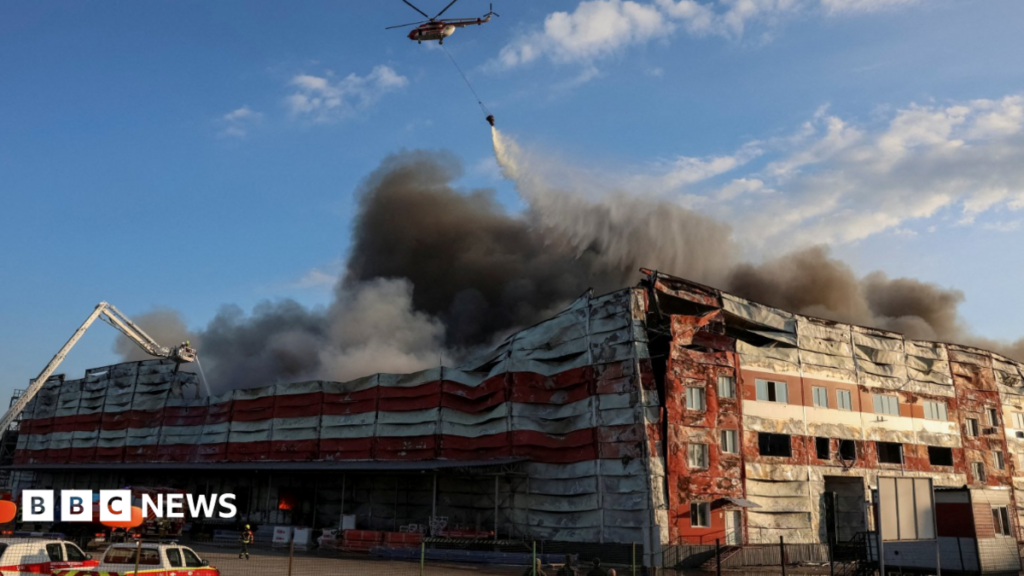
Russia launches major ballistic missile attack on Kyiv
The conflict between Russia and Ukraine has entered a new and alarming phase as Russia executed a major ballistic missile strike targeting Kyiv, the heart of Ukraine's political and administrative infrastructure. This unprecedented attack has caused extensive damage, heightened international tensions, and raised urgent questions about regional security and global diplomatic responses. This article explores the details of the missile attack, its immediate and long-term impacts, and the broader implications for the ongoing war and international relations.
Overview of the Ballistic Missile Attack on Kyiv
On a recent day marked by escalating hostilities, Russia launched a coordinated ballistic missile assault on Kyiv, Ukraine's capital city. The attack involved multiple missile types, reportedly including long-range ballistic missiles capable of causing significant destruction over a wide area. The strike was aimed at critical infrastructure and military targets within the city, signaling a strategic intent to undermine Ukraine’s defense capabilities and morale.
The timing of the attack was notable, coinciding with a period of intensified diplomatic efforts aimed at mediating the conflict. The missile barrage resulted in widespread damage to civilian and government buildings, triggering emergency responses from Ukrainian authorities. Early reports indicated casualties, although exact figures remain unconfirmed due to ongoing rescue operations.
This attack represents one of the most significant escalations since the conflict began, underscoring Russia’s willingness to leverage advanced missile technology to exert pressure on Kyiv. The use of ballistic missiles, as opposed to conventional artillery or airstrikes, marks a dangerous intensification and raises concerns about potential further escalations.
Technical Details of the Missiles Used
The ballistic missiles deployed in the Kyiv attack reportedly included the Iskander-M system, known for its high precision and ability to evade missile defense systems. These missiles have a range of up to 500 kilometers and can carry conventional or nuclear warheads, although the latter has not been used in this conflict. Their deployment in urban areas demonstrates a shift towards more aggressive military tactics.
Experts have noted that the missile strike’s accuracy suggests advanced targeting capabilities, possibly supported by real-time intelligence and satellite data. The use of such sophisticated weaponry reflects Russia’s strategic priorities in the conflict and its focus on debilitating Ukrainian command and control centers.
The attack also involved the use of multiple launch rocket systems (MLRS) to create a saturation effect, overwhelming Ukrainian air defenses. This combination of missile types highlights the complexity and scale of the operation, aiming to maximize damage and disrupt Kyiv’s ability to coordinate defense efforts.
Impact on Kyiv’s Infrastructure and Civilian Population
The missile attack caused extensive damage to Kyiv’s infrastructure, including power grids, transportation networks, and communication facilities. Several residential areas were hit, leading to significant civilian casualties and displacement. Emergency services have been stretched thin responding to fires, building collapses, and medical emergencies resulting from the strikes.
Hospitals and schools suffered damage, raising concerns about the long-term humanitarian impact on Kyiv’s population. The disruption of essential services has compounded the difficulties faced by residents, who now contend with power outages, water shortages, and limited access to medical care.
The psychological impact on the civilian population has also been profound. Air raid sirens and missile explosions have created an atmosphere of fear and uncertainty, contributing to increased trauma and stress among residents. Humanitarian organizations have called for urgent aid to support those affected by the attack.
Ukraine’s Military and Government Response
In response to the missile attack, Ukrainian military forces have intensified their air defense operations around Kyiv, deploying additional missile interception systems and increasing patrols to prevent further strikes. The government has also issued heightened security alerts and mobilized emergency response teams to manage the crisis.
President Volodymyr Zelenskyy condemned the attack as an act of aggression targeting civilians and essential infrastructure, vowing to hold Russia accountable. Ukrainian officials have appealed to international allies for increased military support, including advanced air defense systems and intelligence sharing.
The government has simultaneously launched public information campaigns to educate citizens about safety measures during missile attacks, emphasizing the importance of seeking shelter and following official guidance. Efforts to maintain morale and public order remain a key priority amid the ongoing threat.
International Reactions and Diplomatic Implications
The ballistic missile attack on Kyiv has elicited widespread condemnation from the international community. Western governments, including the United States, European Union, and NATO members, have denounced the strike as a violation of international law and a dangerous escalation of the conflict.
Diplomatic channels have been activated to coordinate responses, including discussions on imposing further sanctions on Russia and increasing military aid to Ukraine. The attack has also renewed calls for intensified diplomatic efforts to achieve a ceasefire and negotiate a peaceful resolution.
However, the missile strike has complicated diplomatic negotiations, with Russia framing its actions as defensive and necessary to counter perceived threats. This divergence in narratives has deepened geopolitical divides, making consensus on conflict resolution more challenging.
Historical Context and Previous Missile Attacks in the Conflict
Missile attacks have been a recurring feature of the Russia-Ukraine conflict since its escalation in 2022. Previous strikes targeted military bases, infrastructure, and key cities, but the recent ballistic missile assault on Kyiv represents a new level of intensity and strategic targeting.
Historically, Kyiv has been relatively shielded from direct missile attacks compared to other regions like Donbas and Kharkiv. This attack marks a significant shift in the conflict’s geography, bringing the war directly to Ukraine’s capital and political center.
The use of ballistic missiles in this conflict echoes tactics seen in other modern warfare scenarios, where precision strikes are employed to disrupt command structures and civilian morale. Analysts suggest that these attacks aim to coerce political concessions by demonstrating military superiority.
Potential Long-term Consequences for Regional Security
The ballistic missile attack on Kyiv raises profound concerns about regional security in Eastern Europe. Neighboring countries have increased their alert levels, fearing potential spillover effects or further escalation that could destabilize the broader region.
NATO has reiterated its commitment to collective defense, with member states reinforcing their eastern flank through troop deployments and increased military exercises. The attack has also prompted discussions on enhancing missile defense capabilities across allied nations.
Long-term consequences may include a prolonged conflict with increased militarization and a potential arms race in the region. The attack underscores the urgent need for robust diplomatic engagement to prevent further deterioration of security and to protect civilian populations.
Humanitarian Challenges and the Path Forward
The aftermath of the missile attack has exacerbated humanitarian challenges in Kyiv and surrounding areas. Displacement, infrastructure damage, and limited access to essential services have created urgent needs for food, medical aid, and shelter among affected populations.
International humanitarian organizations are mobilizing resources to support relief efforts, but ongoing hostilities complicate access and delivery. The conflict’s persistence continues to strain Ukraine’s capacity to respond effectively to civilian needs.
Looking forward, addressing humanitarian concerns will require sustained international cooperation, increased funding, and a concerted effort to protect civilians. A peaceful resolution to the conflict remains critical to preventing further suffering and restoring stability to the region.
Conclusion
The major ballistic missile attack on Kyiv by Russia represents a pivotal moment in the ongoing conflict, illustrating a dangerous escalation with far-reaching military, political, and humanitarian consequences. The strike has not only inflicted severe damage on Ukraine’s capital but also heightened global tensions and underscored the fragility of regional security. As Kyiv and its people grapple with the immediate aftermath, the international community faces an urgent imperative to intensify diplomatic efforts, provide humanitarian assistance, and support Ukraine’s resilience. The path forward demands a careful balance of strategic defense, humanitarian aid, and robust diplomacy to prevent further devastation and work towards lasting peace.
Thousands of young protesters in Delhi continue to demand education reforms and the resignation of Education Minister Dharmendra Pradhan after a police crackdown. The…
Facing a looming financial collapse, Thames Water’s main lenders have offered the UK government a ‘golden share’ and increased local authority involvement to avoid…
Facing record-breaking temperatures and severe drought, Thames Water has introduced a hosepipe ban impacting over 10 million customers across parts of southern England to…