Business
Nigeria’s Economic Performance: Domestic Debt Rise and Agriculture Trade Shift in Q2 2026
Nigeria's economic landscape in the second quarter of 2026 presents a mixed picture of fiscal press...
TAMFIS NIG LTDRC 8067447CAC ACTIVEFinima, Bonny Island, Rivers State

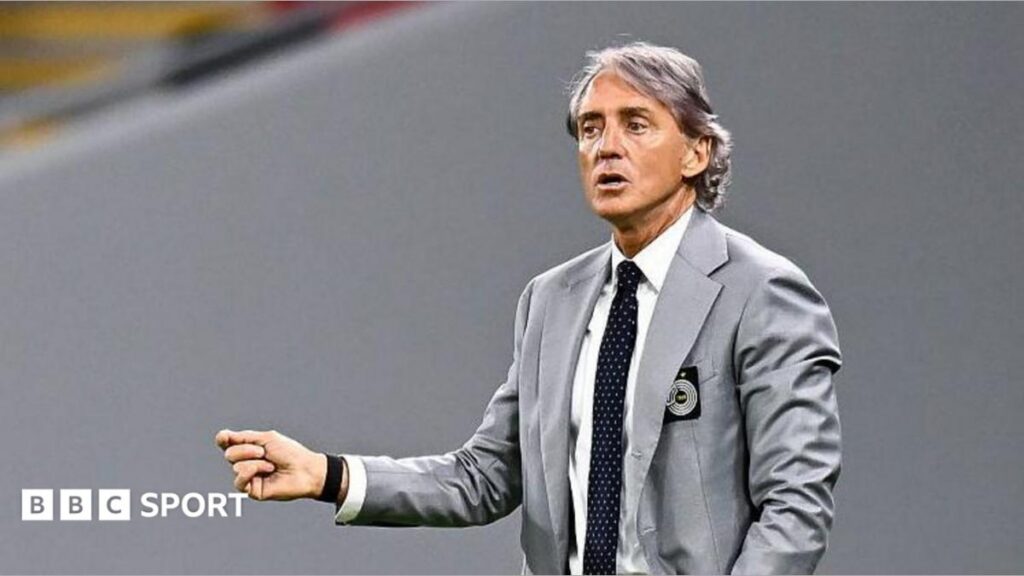
The Italian Football Federation (FIGC) has confirmed the reappointment of Roberto Mancini as the manager of the Italy national football team. This decision comes after a period of instability in the coaching position, highlighted by Italy's failure to qualify for the 2022 FIFA World Cup and the withdrawal of Andrea Pirlo from the managerial role amid controversy. Mancini, who previously led Italy to success, is seen by FIGC president Giovanni Malago as the best candidate to guide the team forward. This article provides an in-depth look at the circumstances surrounding this appointment, the implications for Italian football, and what fans and stakeholders can expect moving ahead.
Italy, a nation with a rich footballing heritage and four World Cup titles, has faced significant challenges in recent years. The national team failed to qualify for the 2022 FIFA World Cup, marking the third consecutive tournament they will miss. This unprecedented absence from football's biggest stage has led to intense scrutiny of the team's management and strategy.
In April, Gennaro Gattuso stepped down as Italy's head coach following the qualification failure. His departure left a void that the Italian Football Federation sought to fill quickly to stabilize the team and prepare for upcoming competitions.
Andrea Pirlo, a former Italian international and World Cup winner, was initially appointed to take over the managerial role. However, his tenure was short-lived as he withdrew from the position amid controversy regarding his association with a Russian betting company. This unexpected development further complicated the search for a new coach.
In light of the coaching turmoil, the FIGC president Giovanni Malago publicly endorsed Roberto Mancini as the most suitable candidate to lead the national team. Mancini’s previous tenure as Italy’s manager was marked by a resurgence in the team’s performance, including winning the UEFA European Championship in 2021.
Mancini’s induction into the Italian Football Hall of Fame in 2015 underscores his significant contributions to Italian football both as a player and a manager. His return is viewed as a strategic move to restore stability and confidence within the squad and among supporters.
The decision reflects FIGC’s desire to build on Mancini’s proven leadership and tactical acumen, especially as Italy looks to rebuild and qualify for future international tournaments.
Despite Mancini’s credentials, the challenges facing the Italian national team are substantial. The failure to qualify for the last World Cup has exposed underlying issues, including squad depth, tactical adaptability, and integration of emerging talent.
Mancini will need to address these concerns while managing expectations from fans and the media. Rebuilding team morale and fostering a winning mentality will be essential components of his approach.
Moreover, the competitive landscape of international football continues to evolve, with other national teams investing heavily in youth development and tactical innovation. Italy must keep pace with these changes to regain its position among the elite.
The coaching staff will also have to navigate the complexities of player selection, balancing experienced veterans with promising young players to create a cohesive and dynamic squad.
Mancini’s reappointment has been met with cautious optimism among Italian football fans and analysts. His previous success provides a foundation of hope that Italy can recover from recent setbacks.
For the FIGC, this move signals a commitment to continuity and experience rather than experimentation. It also highlights the federation’s recognition of the importance of strong leadership in national team management.
Fans will be eager to see how Mancini’s strategies evolve and whether he can replicate or surpass his past achievements. The upcoming qualification campaigns and international tournaments will serve as critical tests of his renewed tenure.
Additionally, this appointment may influence the development pathways for young Italian players, as Mancini has shown a willingness to integrate youth into the national team during his prior stint.
Roberto Mancini’s return as the head coach of Italy’s national football team marks a pivotal moment for Italian football. His proven track record and deep understanding of the team’s dynamics offer a promising path forward amid recent disappointments. However, the road ahead is fraught with challenges that will test his managerial skills and the resilience of the squad. Success will depend on his ability to blend experience with innovation, rebuild team spirit, and adapt to the evolving demands of international football. For fans and stakeholders, Mancini’s reappointment is a hopeful sign that Italy is committed to reclaiming its status as a football powerhouse.
Originally reported by bbc.co.uk. Adapted for our readers with AI assistance.
Keep reading
Business
Nigeria's economic landscape in the second quarter of 2026 presents a mixed picture of fiscal press...
Business
Liverpool manager Andoni Iraola is confronting a significant selection headache as two key forwards, Cod...
News
Health News tamfitronics [Editor’snote:[Editor’snote: This transcript was generated using both transcription ...
TAMFIS NIG LTD
Electrical and instrumentation engineering, bid preparation and consulting, IT and software.