Reform UK would use Royal Navy to stop small boats
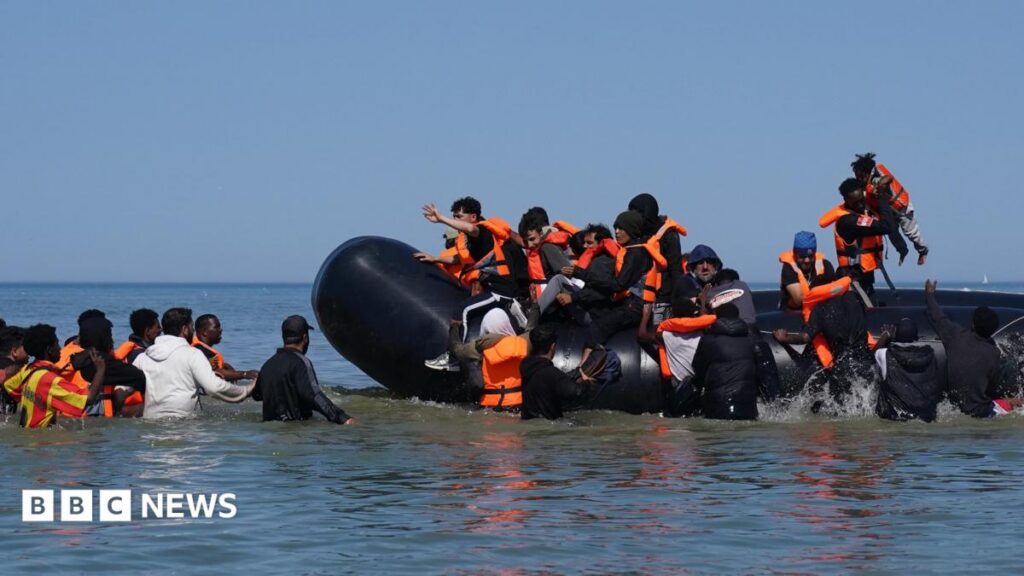
Image source, PA MediaByAdam GoldsmithPublished3 August 2026, 09:55 BSTUpdated 6 minutes agoReform UK says it would use the Royal Navy to "intercept" small boats crossing the English Channel and return them to France or Belgium.Under plans to be announced at a news conference, the party says it would form the "largest military operation" in the Channel since World War Two.When it was put to the party that the UK could not return migrants without French agreement, home affairs spokesman Zia Yusuf claimed it would be possible. Prime Minister Andy Burnham…
Reform UK would use Royal Navy to stop small boats
What happened
Image source, PA MediaByAdam GoldsmithPublished3 August 2026, 09:55 BSTUpdated 6 minutes agoReform UK says it would use the Royal Navy to "intercept" small boats crossing the English Channel and return them to France or Belgium.Under plans to be announced at a news conference, the party says it would form the "largest military operation" in the Channel since World War Two.When it was put to the party that the UK could not return migrants without French agreement, home affairs spokesman Zia Yusuf claimed it would be possible. Prime Minister Andy Burnham has pledged to be "relentless" on tackling small boat crossings, and stressed the UK needs to build a system that offers asylum seekers "safe routes". More than 2,000 migrants have arrived in the UK on small boats since Burnham became prime minister, and 326 people crossed the English Channel on Saturday. Home Office figures show crossings so far this year are down around 43% compared to the same period in 2025.Reform's plan called "operation fortress" has been endorsed by "former senior members of our armed forces", Yusuf told BBC Radio 4 Today programme.It would see Royal Navy vessels intercept all migrant boats in the Channel as part of a humanitarian response. Yusuf described the scheme as "humanitarian missions" and insisted it would be compatible with rules under the European Convention…
Editor’s note: The following is AI-generated commentary and context on this topic, not original reporting.
This piece, headlined “Reform UK would use Royal Navy to stop small boats,” touches on a subject that has drawn considerable public attention. While the core details are set out above, it is worth stepping back to look at the wider context that surrounds a story like this one.
As reported: “Image source, PA MediaByAdam GoldsmithPublished3 August 2026, 09:55 BSTUpdated 6 minutes agoReform UK says it would use the Royal Navy to “intercept” small boats crossing the English Channel and return them to France or…”
Political Context
Newspaper front pages and editorial framing often shape the initial public conversation around a political story, sometimes ahead of all relevant facts being established. Ongoing coverage from established outlets remains valuable as a story like this develops further. Candidate profile and turnout can both affect results in ways that do not always generalise to the wider national picture.
Devolution and regional governance have been recurring themes in UK politics, with continuing debate over how much authority should sit with regional mayors, councils, and assemblies. Understanding the wider context can help readers form a more complete picture of what is being described. Stories of this kind often sit within broader trends that are not always immediately visible from a single report.
The Wider Policy Debate
Select committees and independent regulators play an important role in holding elected officials accountable outside of the electoral cycle itself. Public interest in stories such as this one reflects broader questions about accountability, safety, or public interest that extend beyond the specific facts of any single event. Scrutiny of political conduct, including declarations of interest and standards in public life, forms an important part of the UK’s system of democratic accountability.
How devolved and national governments coordinate on shared policy areas
How opposition parties typically respond to government announcements
The role of public consultation in shaping final decisions
Formal investigations into matters of political conduct typically follow established parliamentary or regulatory procedures before any findings are made public. By-elections and local contests are frequently treated as bellwethers for broader national sentiment, even though local factors can significantly affect the outcome. By-elections and local contests are frequently treated as bellwethers for broader national sentiment, even though local factors can significantly affect the outcome.
What May Follow
Candidate profile and turnout can both affect results in ways that do not always generalise to the wider national picture. Institutions involved in stories of this kind typically respond through established communication channels rather than informal statements. Migration policy remains one of the most contested areas of UK politics, with parties proposing markedly different approaches to border enforcement and asylum processing.
Ongoing coverage from established outlets remains valuable as a story like this develops further. Understanding the wider context can help readers form a more complete picture of what is being described. Domestic political developments of this kind are often shaped by long-running debates over policy priorities and the balance of power between local, regional, and national government.
Local government funding and its relationship to national policy continues to be a significant point of contention among councils of different political control. Public opinion on migration tends to be closely divided and highly sensitive to how individual cases are reported in the media. Newspaper front pages and editorial framing often shape the initial public conversation around a political story, sometimes ahead of all relevant facts being established.
Newspaper front pages and editorial framing often shape the initial public conversation around a political story, sometimes ahead of all relevant facts being established. Public reaction tends to divide along familiar lines, with different parties and commentators framing the same facts in different ways. Context and background are often as important as the immediate headline in understanding why a story has resonated with the public.
Public reaction tends to divide along familiar lines, with different parties and commentators framing the same facts in different ways. Domestic political developments of this kind are often shaped by long-running debates over policy priorities and the balance of power between local, regional, and national government. Candidate profile and turnout can both affect results in ways that do not always generalise to the wider national picture.
Any shift in the balance between central and regional power tends to attract close scrutiny from across the political spectrum. Public opinion on migration tends to be closely divided and highly sensitive to how individual cases are reported in the media. By-elections and local contests are frequently treated as bellwethers for broader national sentiment, even though local factors can significantly affect the outcome.
Select committees and independent regulators play an important role in holding elected officials accountable outside of the electoral cycle itself. Local government funding and its relationship to national policy continues to be a significant point of contention among councils of different political control. Scrutiny of political conduct, including declarations of interest and standards in public life, forms an important part of the UK’s system of democratic accountability.
The coming days and weeks will likely bring further clarity. Until then, this overview is intended to provide useful context rather than new factual claims beyond what has already been reported.
Originally reported by bbc.co.uk. Adapted for our readers with AI assistance.
Thousands of young protesters in Delhi continue to demand education reforms and the resignation of Education Minister Dharmendra Pradhan after a police crackdown. The…
Facing a looming financial collapse, Thames Water’s main lenders have offered the UK government a ‘golden share’ and increased local authority involvement to avoid…
Facing record-breaking temperatures and severe drought, Thames Water has introduced a hosepipe ban impacting over 10 million customers across parts of southern England to…