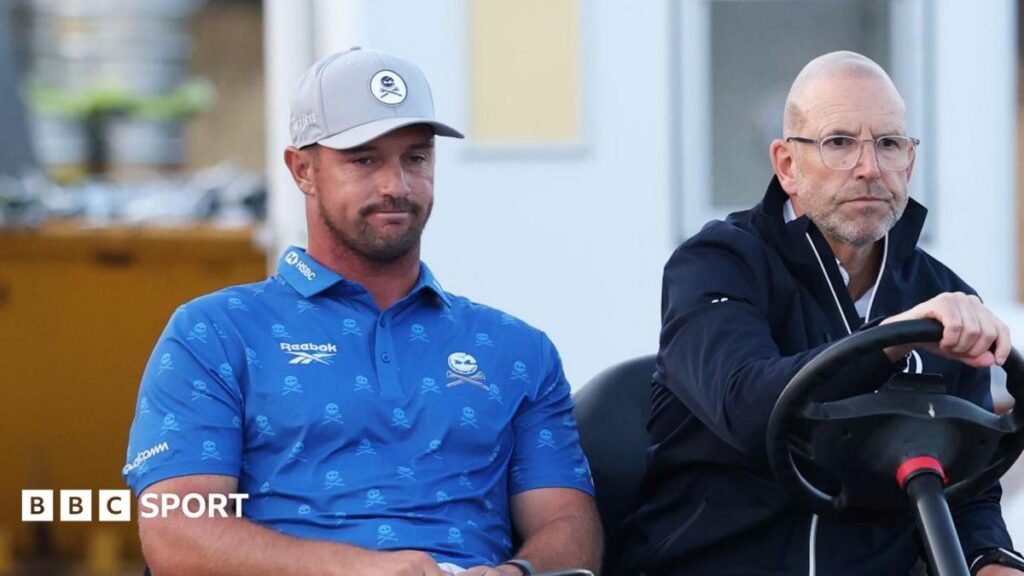
R&A Chief Defends Clear-Cut Penalty on Bryson DeChambeau at The Open Championship
Bryson DeChambeau’s quest for The Open Championship’s Claret Jug faced a significant hurdle after a two-shot penalty was imposed during the second round at Royal Birkdale. The penalty, resulting from an infraction involving trampling long grass near his ball, has been described by R&A chief executive Mark Darbon as a straightforward and justified decision. This article examines the circumstances surrounding the penalty, the reactions from key figures, and what it means for DeChambeau’s chances in one of golf’s most prestigious tournaments.
R&A Chief Defends Clear-Cut Penalty on Bryson DeChambeau at The Open Championship
The Incident: What Led to the Penalty
During the second round of The Open Championship, Bryson DeChambeau was penalized two shots after officials determined that he had stepped on long grass close to his ball on the fifth hole. This action violated the tournament's rules, which protect the integrity of the playing conditions.
DeChambeau had been performing strongly, finishing the round with a four-under 66, which initially placed him just one shot behind the leader. However, the penalty pushed him back to three shots behind Australian leader Lucas Herbert, altering the competitive landscape as the tournament progressed.
R&A’s Position: A Clear-Cut Decision
Mark Darbon, the chief executive of the R&A, emphasized that the penalty was a clear-cut decision from a rules perspective. Speaking to BBC Radio 5 Live, Darbon acknowledged the unfortunate timing but maintained that the ruling was fair and consistent with the governing body's standards.
Darbon also highlighted the emotional nature of the situation, noting that DeChambeau’s reaction was understandable given the stakes involved. However, the R&A’s focus remained on ensuring a fair assessment of the incident rather than the emotions surrounding it.
Despite the high-profile nature of the penalty, Darbon confirmed that he had not been contacted by former US President Donald Trump, who is known to have a close relationship with DeChambeau and has previously intervened in sports disciplinary matters.
DeChambeau’s Response and Continued Contention
Initially, there was uncertainty about whether DeChambeau would continue competing after the penalty was imposed. However, he later stated that the ruling would serve as motivation, fueling his determination for the remaining rounds.
DeChambeau’s resilience was evident as he prepared to tee off for the third round, maintaining a position within striking distance of the leader. His ability to stay focused despite the setback underscores his competitive spirit and experience as a two-time US Open champion.
The penalty, while a setback, does not preclude DeChambeau from mounting a strong challenge for the Claret Jug, especially given his proven track record in major championships.
Broader Implications for Golf Rules and Player Conduct
This incident highlights the strict enforcement of rules regarding player conduct and course conditions in major golf tournaments. The R&A’s decision underscores the importance of adhering to these rules to maintain fairness and integrity in the game.
The controversy also brings attention to how emotional responses from players are managed by governing bodies. While empathy for player frustrations is acknowledged, the priority remains on consistent rule application.
Furthermore, the involvement or potential involvement of high-profile figures like Donald Trump in sports disciplinary matters raises questions about external influences and the independence of sports governing bodies.
Balancing Rule Consistency With Player Reaction
Governing bodies overseeing major championships generally maintain that consistent application of the rules, even when a specific ruling proves unpopular with players or fans, is essential to preserving the integrity of the competition. Officials typically emphasise that rules are communicated to players in advance, including any local or event-specific interpretations, which is part of the justification often given when a contentious penalty decision is upheld under review.
Public defences of this kind from a governing body chief are relatively common after high-profile penalty controversies, serving both to reassure the wider playing field that rules will be applied evenly and to pre-empt further debate once the tournament moves on. Such statements are typically followed by a period of reflection within the sport about whether existing rules or their communication could be improved for future events, even when the specific ruling itself is defended as correct.
Historical precedent within the sport is often cited by governing bodies defending contentious rulings, with officials pointing to similarly firm enforcement in past championships as evidence of consistent, rather than selective, application of the rules. Sponsors and tournament organisers generally avoid public comment on individual rulings, leaving governing body officials as the primary voice defending decisions once controversy emerges during a live broadcast.
Governing bodies typically review rules officials’ performance after each major championship as part of a standard post-tournament debrief, a process that applies regardless of whether any single ruling attracted significant public controversy during the event itself.
Media training for rules officials has expanded in recent years, reflecting the reality that a clear, confident public explanation of a ruling can significantly shape how a controversial decision is ultimately received by players, sponsors and fans alike.
What this means
The two-shot penalty imposed on Bryson DeChambeau at The Open Championship serves as a reminder of the uncompromising nature of golf’s rules and the challenges players face in adhering to them under pressure. While the decision was met with disappointment from DeChambeau and his supporters, the R&A’s stance reflects a commitment to fairness and the integrity of the sport. As the tournament moves into its final stages, DeChambeau’s response to this setback will be closely watched, offering a compelling narrative of resilience and competitive spirit in one of golf’s most prestigious events.
Originally reported by bbc.co.uk. Adapted for our readers with AI assistance.
Thousands of young protesters in Delhi continue to demand education reforms and the resignation of Education Minister Dharmendra Pradhan after a police crackdown. The…
Facing a looming financial collapse, Thames Water’s main lenders have offered the UK government a ‘golden share’ and increased local authority involvement to avoid…
Facing record-breaking temperatures and severe drought, Thames Water has introduced a hosepipe ban impacting over 10 million customers across parts of southern England to…