
Business
Nigeria’s Broken Systems: Why Failure Persists and What Must Change
An analysis of the structural and institutional factors that entrench governance failures in Nigeria, from patronage politics and weakened oversight to the urgent need…
TAMFIS NIG LTDRC 8067447CAC ACTIVEFinima, Bonny Island, Rivers State

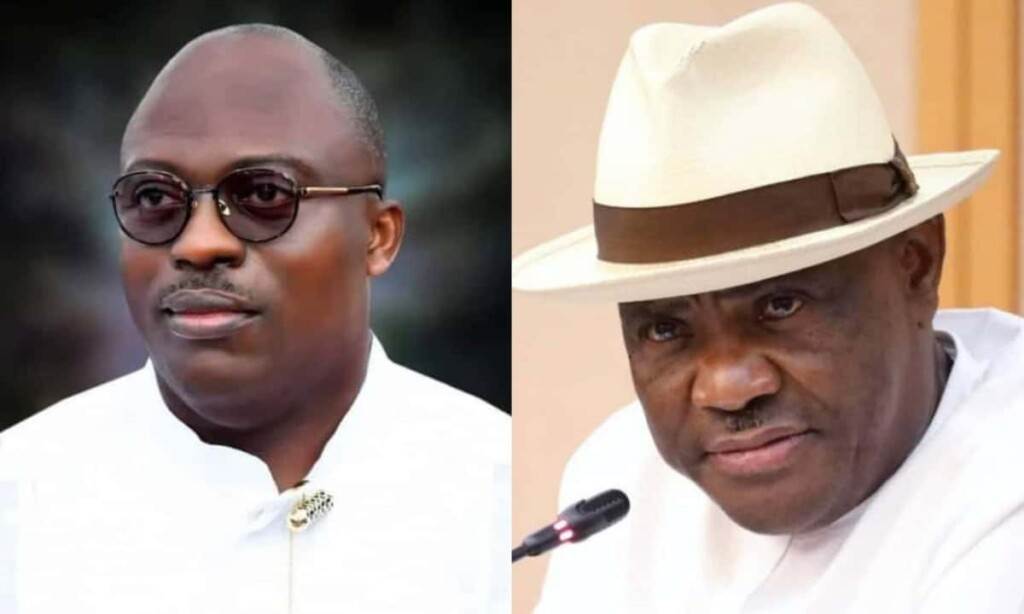
Rivers State politics has long been one of Nigeria's most combustible political theatres. The feud between Governor Siminalayi Fubara and his erstwhile political godfather, Nyesom Wike, has for nearly two years paralysed governance, split the Peoples Democratic Party (PDP) at state and national levels, and kept the South-South state in a condition of permanent crisis. Now, a dramatic reconciliation appears to have swung the pendulum decisively in Wike's favour. The agreement, reached under pressure from President Bola Ahmed Tinubu, is expected to pave the way for the lifting of the emergency rule imposed on 18 March 2025 and the return of the governor, his deputy and the suspended House of Assembly. Yet the terms of the rapprochement suggest that Rivers State is entering a new political phase in which Wike's authority has been substantially reinforced.
The rift between Wike and Fubara first became public in August 2023 and rapidly metastasised into a full-blown institutional crisis. Commissioners resigned, the State House of Assembly split into rival factions, and the PDP in Rivers became a battleground for competing loyalties. For months, the governor publicly signalled his estrangement from his predecessor, even remarking at one point that his spirit had left Government House in Port Harcourt.
The crisis eventually prompted the federal government to declare a state of emergency, suspending Fubara, Deputy Governor Prof. Ngozi Odu and the 32-member legislature. That intervention created both a stick and a carrot: it removed the governor from office, but it also made his return conditional on a durable settlement with Wike. President Tinubu, according to well-placed sources, issued a direct ultimatum to both men to resolve their differences before his return from Rome, where he attended the inauguration of Pope Leo. The deadline concentrated minds and produced the accord now taking shape.
The terms of the settlement are striking for their asymmetry. Insiders say Governor Fubara was required to swear an oath of allegiance to Wike, a condition he reportedly resisted before eventually yielding to political and institutional pressure. The governor has also been barred from further political contact with several figures Wike regards as antagonists, among them former PDP National Chairman Prince Uche Secondus, former Transport Minister Dr. Abiye Sekibo, former Deputy Speaker of the House of Representatives Chief Austin Opara, former Governor Celestine Omehia, and Senator Lee Maeba.
The restriction effectively prunes Fubara's independent political network and places his future alliances under Wike's veto. In addition, pro-Fubara groups such as the Movement for SIM, Rivers Women for SIM and the Grassroots Development Initiative are expected to be dismantled as part of a broader harmonisation process. Analysts say these provisions amount to more than a peace deal; they are a reorganisation of the governor's political identity around Wike's continued dominance.
When civilian governance resumes, the institutional map of Rivers State will look different. Under the proposed arrangement, most former appointees and political officeholders, including commissioners, are not expected to return. Instead, a fresh power-sharing formula reportedly gives the governor 60 per cent of appointments while the Wike faction receives 40 per cent. The split is being presented as a conciliatory measure intended to unify the rival camps, but its practical effect is to formalise Wike's stake in the administration.
In line with a 28 February Supreme Court ruling, Fubara is also expected to present the 2025 budget—estimated at ₦1.28 trillion—to the State House of Assembly for approval shortly after resuming office. The budget process will be an early test of whether the legislature, once reconstituted, operates as a genuine check on the executive or as an extension of the Wike-Fubara accord.
Beyond the immediate restoration of offices, the deal is stirring speculation about a broader party realignment. There are indications that Fubara and his loyalists may defect from the PDP to the ruling All Progressives Congress (APC), a move widely interpreted as a strategy to secure President Tinubu's backing for the governor's re-election bid in 2027. APC state chairman Chief Charles Beke has already welcomed the prospect, praising Fubara as a "performing leader" who would add value to a party that has never controlled the Rivers governorship since the return to civil rule in 1999.
PDP chieftain Dare Glinstone Akinniyi has defended such a move as a strategic survival decision forced by unprecedented pressure. However, Chief Anabs Sara-Igbe of the Pan-Niger Delta Forum and Rivers Elders Council has struck a more sober note, insisting that the priority is the restoration of democratic governance rather than partisan manoeuvring. His intervention underscores a tension that will likely persist: while political elites negotiate careers and party labels, ordinary citizens and civil society groups are chiefly concerned with stability and service delivery.
Despite the choreography of unity, the reconciliation remains fragile. Members of Fubara's Simplified Movement may chafe at the concessions he has made, particularly the oath of loyalty and the severing of ties with longtime allies. A backlash could manifest in public dissent, legal challenges, or the gradual erosion of the governor's independent base. Moreover, the dismantling of pro-Fubara platforms could leave his camp organisationally weaker ahead of the next electoral cycle, even if a defection to the APC opens access to federal resources.
The sustainability of the accord will ultimately depend on whether both men treat it as a permanent settlement or as a temporary armistice ahead of the 2027 contest. Wike, now installed as a federal minister with influence over the national capital, has every incentive to keep Rivers firmly within his political orbit. Fubara, by contrast, must govern under terms that limit his autonomy.
Rivers State is poised to exit emergency rule, but the settlement that enables that transition raises as many questions as it answers. The return of Governor Fubara and the legislature will restore the formal apparatus of democracy, yet the conditions attached to that return suggest that power in Port Harcourt will continue to flow through Wike's political machinery. For business observers, civil society and ordinary residents, the practical test will be whether the restored administration can deliver budget implementation, public services and economic confidence in a state that has been stuck in political limbo. The months ahead will reveal whether this reconciliation is a genuine turning point or merely a ceasefire before the next round of struggle.
Originally reported by citypeopleonline.com. Adapted for our readers with AI assistance.
Keep reading
Business
An analysis of the structural and institutional factors that entrench governance failures in Nigeria, from patronage politics and weakened oversight to the urgent need…
Politics
Yari says the APC will emphasise Tinubu’s achievements in 2027. This analysis explains how voters can examine outcomes, baselines and campaign evidence.
Lifestyle
Obi says his wife funds her own purchases. This analysis separates his explanation, unverified handbag prices and the evidence needed to assess public spending.
TAMFIS NIG LTD
Electrical and instrumentation engineering, bid preparation and consulting, IT and software.

