
Politics
How Minnesota Figures Into the Presidential Politics of Insulin Prices
Politics tamfitronics Minnesota Gov. Tim Walz attends a rally in Asheville, North Carolina, on Sept. 17. Minnesota led the way on in...
TAMFIS NIG LTDRC 8067447CAC ACTIVEFinima, Bonny Island, Rivers State

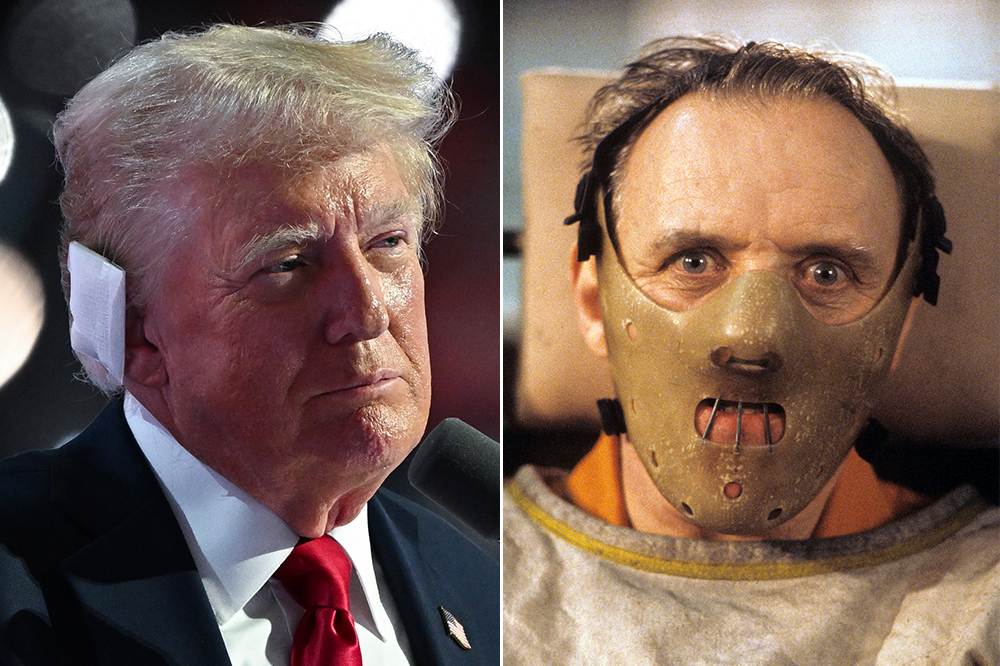
Donald Trump, the 45th President of the United States, has often interwoven popular culture into his political rhetoric. One particularly curious example is his repeated fascination with Hannibal Lecter, the infamous fictional cannibal from "The Silence of the Lambs" and related films. Over several public appearances and speeches, Trump has invoked Lecter’s name and quotes, sparking questions about why a political figure would fixate on such a dark character. This article delves into the multifaceted reasons behind Trump’s references to Hannibal Lecter, examining the cultural, psychological, and political layers that inform this unusual fixation.
Donald Trump’s fascination with Hannibal Lecter is not a one-off occurrence but a recurrent motif in his speeches and interviews, particularly during politically charged moments. His earliest known public reference dates back to May 2023, when he described Lecter as a "wonderful man" and quoted the character’s infamous line about having a friend "for dinner." This unusual compliment to a fictional cannibal immediately raised eyebrows and prompted analysis.
The character Hannibal Lecter, portrayed memorably by Anthony Hopkins, is a supervillain known for his intelligence, sophistication, and gruesome appetite. Trump’s admiration of Lecter’s cunning and eloquence aligns with his own self-image as a shrewd and articulate leader. The repeated references suggest that Trump sees Lecter as more than just a movie villain; rather, as a symbol or metaphor that fits his worldview.
It is also important to consider Trump’s longstanding interest in popular culture, especially action-packed and dramatic films. A 1997 New Yorker profile highlighted Trump’s penchant for watching violent movie highlights, such as the Jean-Claude Van Damme film “Bloodsport.” This broader cultural engagement helps explain why a character like Hannibal Lecter would resonate with him and become part of his political lexicon.
One of the most straightforward reasons Trump invokes Hannibal Lecter is to symbolize crime and societal danger. Lecter, as a character, represents the ultimate predator — intelligent, elusive, and deadly. Trump uses this image to illustrate his concerns about crime in America, often linking it to immigration and border security policies.
During the 2024 Republican National Convention, Trump referenced Lecter when discussing the challenges of crime control. He implied that potential "Lecters" — dangerous criminals — could be living among the population, particularly among immigrants who, in his rhetoric, threaten public safety. This metaphor serves to dramatize his political message and justify strict immigration enforcement.
By conjuring the image of a cannibalistic villain lurking within society, Trump taps into primal fears and anxieties about lawlessness. The Lecter analogy is a vivid narrative device to reinforce his political agenda of cracking down on crime and portraying himself as the protector against these hidden threats.
Beyond political utility, Trump’s fixation on Hannibal Lecter may have psychological dimensions. Lecter is not merely a villain; he is a character who combines intellectual superiority with a dark, complex personality. Trump often portrays himself as a uniquely clever and strategic individual, and Lecter’s persona may appeal to his self-perception.
Lecter’s eloquence and control over situations mirror traits Trump admires or aspires to embody. The character’s ability to manipulate and outthink opponents resonates with Trump’s combative style and his emphasis on winning and dominance. This identification could explain why Trump repeatedly brings up Lecter as an archetype.
Furthermore, Trump’s occasional difficulty in distinguishing entertainment from reality may blur the lines between his admiration for a fictional character and how he perceives real-world threats. Lecter’s dramatized villainy might function as an exaggerated lens through which Trump views political adversaries and challenges.
Trump’s invocation of Hannibal Lecter also reflects his broader strategy of integrating pop culture into his political narrative. From reality TV stardom to referencing popular music and movies, Trump leverages cultural touchstones to connect with audiences and frame his messages memorably.
Hannibal Lecter, as an iconic figure in American cinema, is instantly recognizable and carries strong emotional connotations. By referencing Lecter, Trump taps into a shared cultural understanding, making his points more vivid and accessible. This approach aligns with his style of using catchy phrases and dramatic imagery to engage supporters.
Moreover, Trump’s references to Lecter at high-profile events, such as the Republican National Convention, emphasize his desire to appear relatable through his love of entertainment while simultaneously projecting toughness and vigilance against crime and disorder.
The dynamic between Hannibal Lecter as a villain and Trump as a self-styled hero offers a compelling political symbolism. Lecter’s outsized monstrosity serves as a foil against which Trump can define his own perceived heroism and resilience in the face of adversity.
Trump often positions himself as a fighter against powerful, nefarious forces — whether the media, political opponents, or social unrest. Lecter, with his cunning and menace, embodies the archetype of the formidable adversary Trump claims to confront. This narrative helps frame Trump’s political identity as a battle between good and evil.
By evoking Lecter, Trump dramatizes the stakes of his political battles, casting himself as a protagonist who must outsmart and overcome dangerous enemies. This symbolism reinforces his messaging about strength, intelligence, and survival in a hostile environment.
Media coverage of Trump’s Hannibal Lecter references has amplified public curiosity and debate about his fixation. Journalists and commentators have analyzed the implications of likening crime to a fictional cannibal and questioned the appropriateness of such comparisons in political discourse.
The media’s focus on these references has also contributed to shaping public perception of Trump’s personality and rhetorical style. Some view the Lecter mentions as bizarre or unsettling, while others interpret them as strategic theatrics designed to capture attention and dominate headlines.
This interplay between Trump’s statements and media reporting underscores the importance of symbolism and spectacle in modern politics. The Hannibal Lecter fixation is as much about generating buzz and reinforcing Trump’s brand as it is about the literal content of his speeches.
Trump’s repeated references to Hannibal Lecter reveal aspects of his broader political strategy, which relies heavily on vivid imagery and emotionally charged narratives. By invoking a culturally resonant villain, Trump seeks to mobilize his base around themes of law and order and national security.
The Lecter motif also allows Trump to differentiate himself from opponents by framing the political landscape as a battleground against monstrous threats. This framing can rally supporters who feel anxious about crime and social change, reinforcing loyalty through shared fears and dramatic storytelling.
However, this strategy carries risks, as it may alienate moderate voters or critics who see the references as sensationalist or inappropriate. Balancing theatricality with credibility remains a delicate challenge for Trump’s campaign as he navigates a complex political environment.
Given the persistence of Hannibal Lecter references in Trump’s rhetoric, it is likely that this fixation will continue to appear in future speeches and campaigns. The character serves as a versatile symbol that Trump can adapt to various political narratives, especially around crime, immigration, and cultural conflict.
As Trump’s political career evolves, the Lecter analogy may deepen or shift in meaning, potentially becoming a signature element of his style. Observers will watch closely to see how this motif influences public discourse and voter perceptions.
Ultimately, understanding why Trump is so fixated on Hannibal Lecter offers insight into his unique blend of politics, entertainment, and psychological self-fashioning. This fixation exemplifies how cultural icons can be repurposed in the arena of political identity and communication.
Donald Trump’s fixation on Hannibal Lecter is a complex phenomenon that intertwines cultural fascination, political symbolism, and psychological identification. By invoking the character of Hannibal Lecter, Trump dramatizes his political narratives about crime, danger, and heroism, while also connecting with audiences through shared cultural references. This unusual focus reveals much about Trump’s approach to politics as performance and storytelling. As his career continues, the Lecter motif will likely remain a distinctive and revealing element of his rhetoric, providing insight into how popular culture shapes political identity in the contemporary era.
Originally reported by variety.com. Adapted for our readers.
Keep reading
Politics
Politics tamfitronics Minnesota Gov. Tim Walz attends a rally in Asheville, North Carolina, on Sept. 17. Minnesota led the way on in...
Politics
Nigerian human rights lawyer Deji Adeyanju has joined a Federal Government inquiry into the deaths of 37...
Politics
Democracy, Featured, Global, Global Governance, Headlines, International Justice, IPS UN: Insid...
TAMFIS NIG LTD
Electrical and instrumentation engineering, bid preparation and consulting, IT and software.