
Politics
Science vs politics: Kiwi’s long road to EU health-claim approval
In August 2025, Zespri, the world’s largest marketer of kiwifruit, announced that the European Commission had approved what it described as the first health…
TAMFIS NIG LTDRC 8067447CAC ACTIVEFinima, Bonny Island, Rivers State

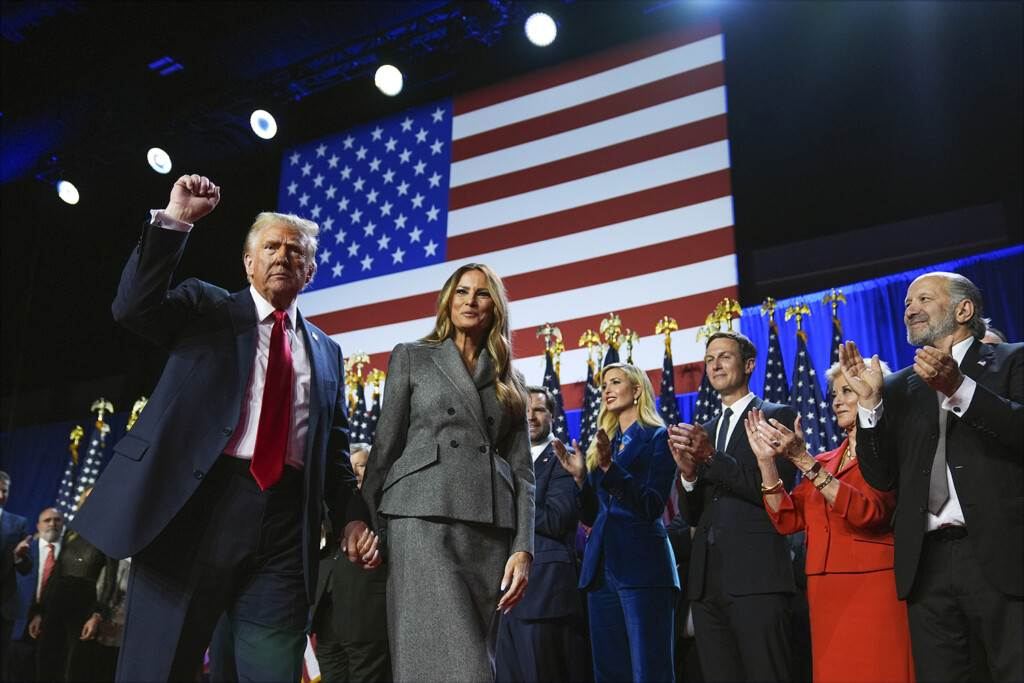
Despite growing religious diversity in the United States, white Christians remain the largest religious group, comprising approximately 42% of the population. In the 2024 presidential election, their continued support proved decisive in securing Donald Trump’s victory. This article explores the voting patterns among white Christians, the evolving role of Hispanic Christian voters, and the broader cultural and economic factors that shaped the election results.
White Christians, including both Protestants and Catholics, have long been a significant voting bloc in American politics. In 2024, exit polls revealed that 72% of white Protestants and 61% of white Catholics voted for Donald Trump. Among white born-again or evangelical Christians, support for Trump rose to 81%, surpassing his 76% share in 2020 and aligning closely with his 80% support in 2016.
Political analysts highlight the difficulty of overcoming this level of support in key battleground states such as Pennsylvania, Michigan, and Wisconsin. These states, often referred to as part of the Rust Belt, were critical to Trump’s electoral success. The strong alignment of white Christian voters with Trump’s candidacy in these regions underscores their continued political influence.
Trump’s 2024 campaign saw an increase in support from Catholic voters overall, with 58% backing him compared to 50% in 2020. This shift may be partly attributed to changes within the Hispanic Catholic community. Exit polls indicated that nearly two-thirds of Hispanic Protestant voters (64%) and just over half of Hispanic Catholic voters (53%) supported Trump, a notable rise from previous elections where Hispanic Catholic support for Trump was around one-third.
Experts suggest that economic concerns played a significant role in this shift. Hispanic voters, regardless of religious affiliation, expressed dissatisfaction with their economic situation over the past four years, which may have influenced their decision to support Trump. The president’s messaging combined a tough stance on immigration and crime, appealing to white Christians, with a focus on economic issues that resonated with Hispanic Christians.
Social issues such as abortion and LGBTQ rights also appear to have influenced voting behavior among Hispanic Christians. Some political scientists speculate that the Harris campaign’s strong support for abortion rights may have alienated moderate Hispanic voters, who tend to hold more conservative views on these topics.
While many states supported abortion rights in the 2024 election, this support did not necessarily translate into broader backing for the Democratic ticket. Economic concerns like inflation and the rising cost of living were paramount for many voters, overshadowing social controversies. For many, immediate financial pressures outweighed ideological considerations.
Beyond economics and social issues, cultural anxieties about America’s evolving identity and the perceived decline of religious influence in society also motivated voters. While few Americans advocate for an official Christian religion, many white and Hispanic Christians express a sense of nostalgia for a cultural environment where Christianity holds greater sway.
This sentiment was particularly strong in swing states with large populations of white mainline Protestants and Catholics who supported Trump. The interplay between cultural identity and political allegiance remains a powerful force in American elections.
The growth of nondenominational and Pentecostal churches, which often have multiethnic congregations, may have influenced voting patterns in 2024. Sociologists note that rather than minority Christians joining predominantly Black or Hispanic churches, many are affiliating with majority-white congregations that tend to lean Republican.
This dynamic creates a multiethnic conservative Christian bloc that aligns closely with the Republican Party, transcending traditional ethnic voting patterns. Such religious communities emphasize conservative values and political loyalty, contributing to the sustained Republican support among white Christians and increasingly among Christians of color.
The 2024 election reaffirmed the strong connection between white Christian voters and the Republican Party. Meanwhile, other religious groups, including Jews, Muslims, Black Protestants, and until recently Hispanic Catholics, have predominantly supported the Democratic Party.
This religious polarization mirrors broader political divides in the United States. White Christians have remained steadfast in their Republican allegiance, consistently turning out to vote and influencing election outcomes. Understanding these religious dynamics is essential for comprehending the evolving political landscape.
The 2024 presidential election underscored the enduring political influence of white Christians in the United States. Their strong support for Donald Trump, combined with shifting patterns among Hispanic Christian voters and overarching economic and cultural concerns, shaped the electoral landscape. As America’s religious composition continues to evolve, the interplay between faith, identity, and politics will remain a critical factor in future elections. Recognizing these dynamics can provide valuable insights for policymakers, political strategists, and voters seeking to understand the complex forces at work in American democracy.
Originally reported by religionnews.com. Adapted for our readers with AI assistance.
Keep reading
Politics
In August 2025, Zespri, the world’s largest marketer of kiwifruit, announced that the European Commission had approved what it described as the first health…
News
By Engr. Tamunofiniarisa BrownReading Time: 6 Minutes The conflict between Russia and Ukraine is often framed in the media as a simple battle between…
Politics
Twenty-five years after the September 11 attacks, the family of Marine Travis Fuller reflects on his death in the Iraq War, grappling with the…
TAMFIS NIG LTD
Electrical and instrumentation engineering, bid preparation and consulting, IT and software.