
Business
Nigeria’s Broken Systems: Why Failure Persists and What Must Change
An analysis of the structural and institutional factors that entrench governance failures in Nigeria, from patronage politics and weakened oversight to the urgent need…
TAMFIS NIG LTDRC 8067447CAC ACTIVEFinima, Bonny Island, Rivers State

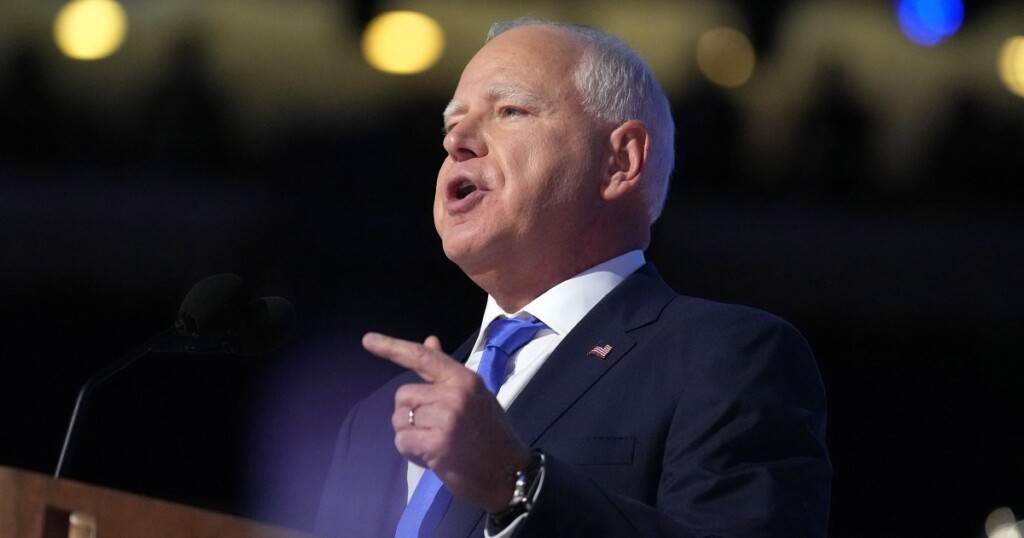
Minnesota Governor Tim Walz addressed his largest audience yet on the third night of the Democratic National Convention in Chicago, accepting the party's vice presidential nomination with a speech that centred on a redefinition of "freedom" and a deliberate emphasis on his small-town roots. The address, the capstone of an evening titled "A Fight for Our Freedoms," was designed to introduce Walz to a national electorate while reinforcing Vice President Kamala Harris's central campaign message. Walz's remarks drew sharp contrasts between Democratic and Republican interpretations of liberty, highlighted his legislative record in Minnesota, and positioned him as a bridge to rural and working-class voters who have moved away from the party in recent cycles.
The third night opened with a lineup chosen to amplify the evening's theme. Speakers included abortion-rights advocates, an LGBTQ rights activist, and leaders of liberal groups focused on outreach to women and Latinos. Their remarks built toward Walz's finale, which cast Harris as the "freedom" candidate. That framing is the organising idea of her run, presenting Democratic priorities as defenders of personal liberty while painting Republican proposals as threats to autonomy in health care, schools, and the economy.
Walz framed the election as a contest over the meaning of freedom, directly challenging Republican usage of the term. "When Republicans use the word 'freedom,' they mean that the government should be free to invade your doctor's office, corporations free to pollute your air and water, and banks free to take advantage of customers," he told delegates. He countered with a Democratic vision encompassing the freedom to make personal health care decisions, the safety of children in schools, and protection from predatory corporate power. The strategy aligns with the Harris campaign's effort to reclaim the language of liberty from conservative discourse.
The governor's personal narrative was woven throughout. Walz entered to John Mellencamp's "Small Town" and spoke of growing up in a rural community of roughly 400 people, signalling familiarity with small-town America. He highlighted his roles as a teacher, football coach, Army National Guard veteran, and gun owner — identities allies believe can reach rural white men who have shifted toward the GOP. Convention organisers distributed "Coach Walz" signs, turning his coaching years into a political metaphor.
Beyond biography, allies see Walz as a running mate with governing heft: a governor halfway through his second term who served twelve years in the House, giving the ticket both executive and legislative experience.
Walz pointed to his gubernatorial record as evidence of Democratic governance. With full control of state government for two years, Minnesota enacted gun safety measures, universal free school meals, paid family leave, and reproductive rights protections. He contrasted this with book bans elsewhere: "Other states were banning books from their schools; we were banishing hunger from ours." On reproductive rights, he invoked a "golden rule: Mind your own damn business," framing the issue as personal autonomy and neighbourly respect. The record serves as a tangible model for a Harris-Walz administration and a rebuttal to claims that Democratic rule curtails freedom.
Former Speaker Nancy Pelosi also addressed the convention, receiving a hero's welcome despite lingering tensions among a small circle of power brokers over her role in President Biden's withdrawal. In the rapid reordering that produced Harris as nominee, Pelosi has been cast by some Biden loyalists as a villain who pushed aside a sitting president, even as most delegates see her as the leader who improved the party's chances. A two-time speaker who voluntarily relinquished her gavel last year after helping deliver the agendas of Presidents Obama and Biden, she framed the election as a defence of democracy. She cited the January 6 Capitol attack and Trump's attempts to overturn the 2020 results. "Let us not forget who assaulted democracy on Jan. 6: He did," she said, adding that "the choice couldn't be clearer." Her speech underscored the party's prevailing sentiment that defeating Trump remains the overriding priority.
While the convention proceeded, other currents shaped the race. Reports indicate Tucker Carlson and Donald Trump Jr. have been working behind the scenes to lobby Robert F. Kennedy Jr. to drop out and endorse Trump, a development that could scramble third-party calculations in tight states. In North Carolina, the lone battleground state Trump is defending, the former president has ramped up advertising and campaign activity since Harris replaced Biden, telling supporters his focus is less on turning out voters and more on ensuring Democrats "don't cheat." Separately, a federal judge laid out the schedule for Hunter Biden's impending criminal tax trial. These storylines illustrate the broader, often chaotic, electoral environment the Harris-Walz ticket will navigate.
Tim Walz's convention address was a calculated introduction to a national audience, blending personal narrative with a thematic reframing of freedom that the Harris campaign hopes will resonate across ideological and geographic lines. By anchoring abstract values in a concrete gubernatorial record and a relatable biography, the speech attempted to make the Democratic ticket's case in terms that reach beyond the party's existing base. Whether the "Coach Walz" persona and the Minnesota model can persuade voters in the decisive battlegrounds will be tested in the weeks ahead, as the campaign contends with a fluid electoral map, third-party variables, and a relentless news cycle. For now, the third night offered a clear statement of contrast and a bet that the language of liberty can still win elections.
Originally reported by nbcnews.com. Adapted for our readers with AI assistance.
Keep reading
Business
An analysis of the structural and institutional factors that entrench governance failures in Nigeria, from patronage politics and weakened oversight to the urgent need…
Politics
Yari says the APC will emphasise Tinubu’s achievements in 2027. This analysis explains how voters can examine outcomes, baselines and campaign evidence.
Lifestyle
Obi says his wife funds her own purchases. This analysis separates his explanation, unverified handbag prices and the evidence needed to assess public spending.
TAMFIS NIG LTD
Electrical and instrumentation engineering, bid preparation and consulting, IT and software.

