
News
RUSSIA versus NATO and BRICS vs. NATO Military SWOT
Recall that Poland’s Minister Sikorski’s core claim is partially supported by the numbers, but the framing “quite quickly” and “without the U.S.” does not…
TAMFIS NIG LTDRC 8067447CAC ACTIVEFinima, Bonny Island, Rivers State

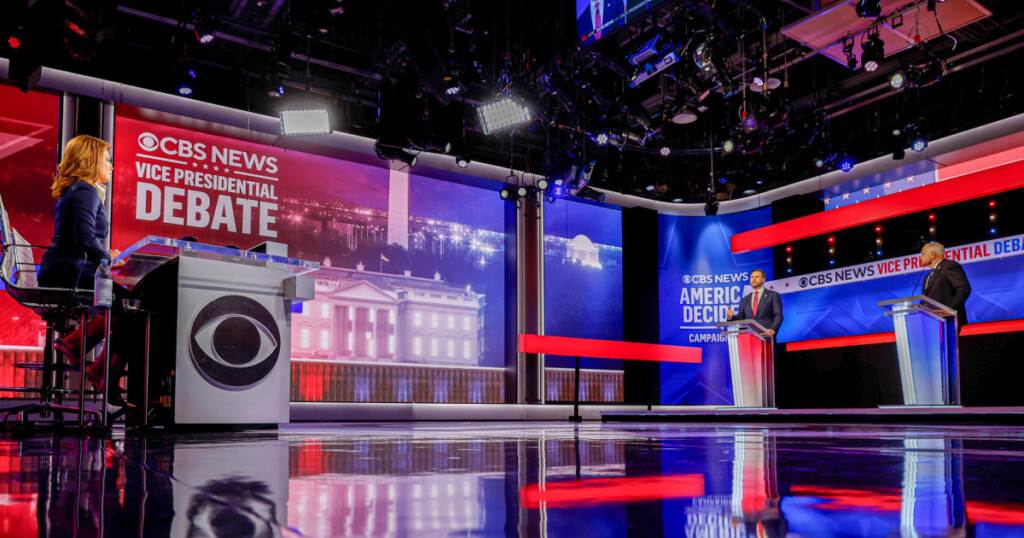
As the 2024 election cycle intensifies, political campaigns often become arenas of fierce confrontations and heated exchanges. However, the recent debate between Senator JD Vance of Ohio and Minnesota Governor Tim Walz provided a refreshing contrast. Meeting face-to-face for the first time, the two running mates exemplified a level of civility and mutual respect that is increasingly rare in American politics. Their debate, hosted by CBS News, was not only a platform to discuss pressing national issues but also a testament to the possibility of constructive political discourse. This article explores the highlights of their exchange, the key policy points debated, and the broader implications of their cordial approach amid a contentious campaign season.
On a night when political debates often spiral into acrimony, the interaction between JD Vance and Tim Walz was marked by a distinct tone of politeness and restraint. Both politicians, representing opposing ends of the political spectrum, engaged in a debate that was more about finding common ground than scoring points. Their demeanor reflected a Midwestern ethos of respect and decency, which resonated with viewers seeking a more substantive and less confrontational political dialogue.
Throughout the debate, Vance and Walz frequently acknowledged areas of agreement, employing phrases such as "I agree" or "we need to do better" to underline shared concerns. This approach softened the partisan edges typically seen in such debates and suggested a willingness to work collaboratively on certain issues despite ideological differences. Their exchanges were peppered with polite disagreements rather than personal attacks, setting a tone that was both mature and refreshing.
This civility was not merely performative; it was reflective of their broader campaign strategies. Vance, a right-wing Republican, and Walz, a progressive Democrat with moderate appeal, both appear to be navigating the complex political landscape by emphasizing respect and dialogue. Their debate served as a reminder that political opponents can engage in earnest discussions without descending into hostility.
Immigration policy stood out as a key topic where both candidates demonstrated a nuanced understanding of the complexities involved. Governor Walz expressed skepticism about former President Donald Trump’s commitment to solving the immigration crisis, questioning whether Trump’s approach truly addresses the nation’s challenges. Conversely, Vance acknowledged the need to resolve immigration issues but cast doubt on Vice President Kamala Harris’s dedication to the cause.
Despite their partisan differences, both candidates recognized the urgency of reforming immigration policies in a way that balances national security with humanitarian considerations. Their discussion highlighted a rare moment of bipartisan acknowledgement that the current system requires substantial improvement, even if their proposed solutions diverge.
This segment of the debate underscored the broader theme of mutual respect, with both candidates refraining from incendiary rhetoric. Instead, they focused on policy critiques and the practical implications of immigration reform, offering voters a clearer picture of their respective stances without descending into divisive attacks.
Gun violence remains a deeply polarizing issue in American politics, yet Vance and Walz found common ground during their debate. Both conceded that existing measures have fallen short and expressed a commitment to doing better in addressing this critical public safety concern. Vance acknowledged that more effective policies are needed, while Walz concurred that bipartisan solutions must be explored.
Their conversation on gun control avoided the typical partisan extremes, instead focusing on pragmatic approaches to reduce violence. This included discussions about enhancing background checks, supporting community-based interventions, and promoting responsible gun ownership. The mutual recognition of the problem’s gravity was a notable departure from the often rigid partisan stances seen in other forums.
By emphasizing collaboration and shared responsibility, the candidates presented a united front against gun violence, signaling to voters that despite political differences, protecting communities is a priority that transcends party lines.
Economic issues took center stage as Walz sought to criticize the Trump administration’s handling of the economy, particularly highlighting the manufacturing sector’s decline and the impact of the COVID-19 pandemic. He painted a picture of economic distress, noting millions out of work and a recession that predated the pandemic. Walz aimed to connect these challenges to the Biden-Harris administration’s efforts to rebuild the economy.
In response, Vance defended the economic record of the Republican leadership, describing the Biden-Harris economic performance as "atrocious" and arguing that wage growth and inflation improvements occurred under Trump. He accused Walz of having to "play Whac-A-Mole" by defending policies that, in Vance’s view, failed to deliver tangible benefits to working Americans.
This exchange illustrated the starkly different economic narratives each candidate embraces. While Walz emphasized recovery and reform, Vance focused on economic security and conservative fiscal policies. Despite their differences, both candidates recognized the economy’s central role in voters’ concerns and sought to present clear visions for the future.
Trade policy, especially regarding manufacturing jobs, emerged as an area where Vance and Walz found surprising alignment. Both criticized the decades-long trend of outsourcing manufacturing jobs overseas, acknowledging the detrimental impact on American workers and communities. Walz conceded agreement with Vance on the failures of past trade agreements, which contributed to economic decline in the Midwest.
Their discussion reflected a bipartisan understanding of the need to revitalize American manufacturing through fair trade practices and strategic economic investments. This consensus is particularly significant given the centrality of manufacturing to both Ohio and Minnesota’s economies, regions deeply affected by globalization and industrial shifts.
By addressing trade policy with a shared sense of urgency, Vance and Walz tapped into a key voter concern, demonstrating that despite ideological differences, economic revitalization remains a unifying priority for politicians representing the Midwest.
Foreign policy was a critical topic where the candidates used their platform to critique their opponents’ running mates. Walz criticized Donald Trump’s leadership on the world stage, questioning his age and consistency, and expressing concerns about the administration’s handling of international crises, including tensions in the Middle East. He emphasized the need for steady, reliable leadership during turbulent times.
Vance, in turn, defended Trump’s foreign policy record, highlighting efforts to strengthen global security and portraying the Biden-Harris administration as less effective. He pointedly reminded viewers that Kamala Harris has been vice president for years, implying responsibility for current global challenges.
This exchange underscored the candidates’ roles as proxies, focusing their critiques on the top of the ticket rather than each other. It illuminated the broader partisan divide on foreign policy while maintaining the debate’s overall tone of respect and measured disagreement.
The respectful tone set by Vance and Walz offers a compelling case for the value of civility in political campaigns. In an era where polarization often dominates, their debate demonstrated that candidates can engage in rigorous policy discussions without resorting to personal attacks or inflammatory language. This approach may help restore public faith in political processes and encourage more informed voter engagement.
Their performance also challenges the notion that aggressive, combative debates are necessary to energize the electorate. Instead, Vance and Walz showed that authenticity, respect, and a focus on substantive issues can resonate powerfully with voters tired of partisan rancor. Their debate may serve as a model for future political contests seeking to elevate discourse.
Ultimately, their civility does not imply weakness or lack of conviction; rather, it emphasizes a commitment to democratic ideals and constructive dialogue. This refreshing approach highlights the potential for politics to be a forum for problem-solving rather than division.
The debate between Senator JD Vance and Governor Tim Walz provided a rare glimpse into a political contest conducted with dignity, respect, and a shared commitment to addressing the nation’s challenges. Their mutual civility amid ideological differences signals a potential shift in campaign dynamics, where constructive dialogue can replace acrimony. As voters prepare to cast their ballots, the Vance-Walz debate stands as a testament to the power of respectful political engagement and the enduring possibility of bipartisan cooperation. In a divided America, their example offers hope that even the most heated campaigns can embrace civility without sacrificing conviction.
Originally reported by nbcnews.com. Adapted for our readers.
Keep reading
News
Recall that Poland’s Minister Sikorski’s core claim is partially supported by the numbers, but the framing “quite quickly” and “without the U.S.” does not…
Politics
In August 2025, Zespri, the world’s largest marketer of kiwifruit, announced that the European Commission had approved what it described as the first health…
News
By Engr. Tamunofiniarisa BrownReading Time: 6 Minutes The conflict between Russia and Ukraine is often framed in the media as a simple battle between…
TAMFIS NIG LTD
Electrical and instrumentation engineering, bid preparation and consulting, IT and software.