
News
RUSSIA versus NATO and BRICS vs. NATO Military SWOT
Recall that Poland’s Minister Sikorski’s core claim is partially supported by the numbers, but the framing “quite quickly” and “without the U.S.” does not…
TAMFIS NIG LTDRC 8067447CAC ACTIVEFinima, Bonny Island, Rivers State

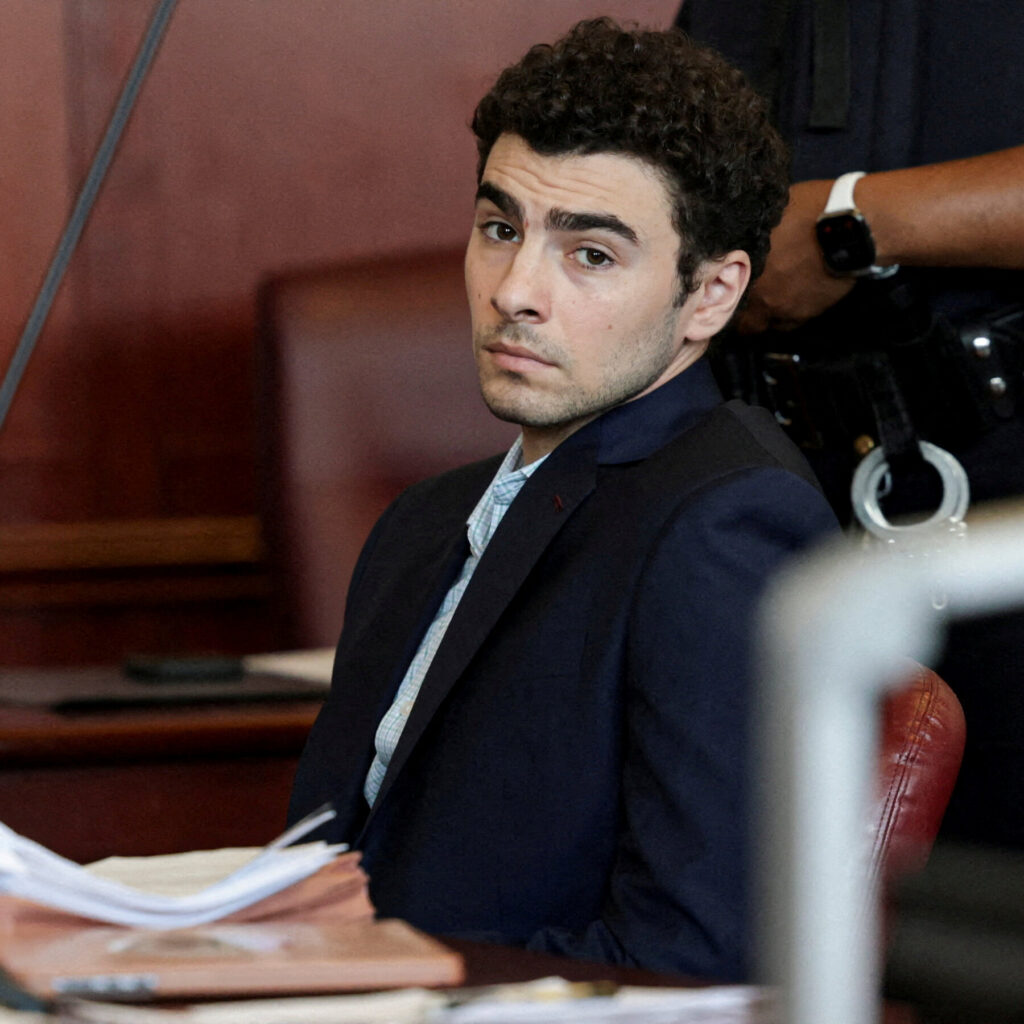
Double jeopardy is a foundational legal principle in the United States that prohibits an individual from being prosecuted twice for the same crime. This protection, enshrined in the Fifth Amendment to the U.S. Constitution, serves as a critical safeguard against government abuse and ensures fairness in the legal process. Yet, the practical application of this principle can be intricate, as demonstrated by the ongoing legal proceedings involving Luigi Mangione. Facing two separate trials, Mangione’s case raises important questions about how double jeopardy operates in practice and the ways the judicial system navigates overlapping charges and jurisdictional complexities.
Double jeopardy is a legal doctrine that prevents a person from being tried again on the same or similar charges following a legitimate acquittal or conviction. Its core purpose is to protect individuals from the emotional strain, financial burden, and potential injustice of repeated prosecutions for the same act. This principle ensures finality in criminal proceedings and prevents the government from using its resources to wear down defendants through successive trials.
The Fifth Amendment explicitly states, “No person shall… be subject for the same offence to be twice put in jeopardy of life or limb.” This constitutional protection applies uniformly in both state and federal courts, thereby maintaining consistency across jurisdictions. It is a fundamental aspect of American criminal law that underscores the importance of fairness and legal certainty.
However, the principle is not absolute. There are important exceptions and nuances that can complicate its application, especially when different jurisdictions or distinct charges are involved. Understanding these subtleties is essential to grasp how double jeopardy functions within the broader legal framework.
Luigi Mangione, a resident of New York, is currently facing two separate trials related to alleged criminal conduct. Although the full details of the charges have not been publicly disclosed, the situation has attracted attention due to concerns about potential double jeopardy violations. Mangione’s case serves as a real-world example of how complex and multifaceted the application of double jeopardy can be.
This case exemplifies how multiple prosecutions can arise from a single set of facts or incidents. Such situations often occur when different charges stem from the same event or when state and federal authorities bring separate cases against the same individual. The overlapping nature of these prosecutions can create legal challenges regarding the protection against double jeopardy.
The complexity of Mangione’s situation underscores the challenges courts face in balancing the constitutional rights of defendants with the pursuit of justice. It highlights the need for careful judicial analysis to ensure that legal protections are upheld without hindering legitimate prosecution efforts.
A common misconception is that any two trials related to the same conduct automatically constitute double jeopardy. In reality, the law distinguishes between different types of charges and jurisdictions, which can permit multiple prosecutions under certain circumstances.
One key exception is the “separate sovereigns” doctrine, which allows state and federal governments to prosecute the same person for the same conduct without violating double jeopardy protections. This doctrine is based on the principle that state and federal governments are distinct sovereigns with separate legal interests, allowing each to enforce its own laws independently.
Additionally, charges that address different offenses—even if arising from the same act—may lead to multiple trials. For example, a defendant could face one trial for assault and another for related property damage. These are considered distinct offenses requiring separate legal consideration.
In Mangione’s case, the two trials may involve different charges or be brought by different authorities, which can legally justify separate proceedings. This distinction is critical in understanding why facing multiple trials does not necessarily violate double jeopardy.
To determine whether double jeopardy applies, courts employ various tests and legal standards. One such test is the Blockburger test, which examines whether each offense requires proof of a fact that the other does not. If each charge contains an element that the other does not, the charges are considered separate for double jeopardy purposes.
Judges also assess whether the prosecutions are part of a coordinated effort or whether they unfairly subject the defendant to multiple punishments for the same conduct. This involves evaluating the intent and scope of the prosecutions to prevent abuse of the legal process.
Despite these safeguards, the application of double jeopardy can be highly complex and fact-specific, often requiring detailed legal analysis and interpretation. The intricacies of overlapping charges, jurisdictional issues, and procedural nuances can make these cases challenging to resolve.
Legal experts emphasize that cases like Mangione’s highlight the importance of clear legal guidelines and vigilant judicial oversight. Such oversight is essential to protect defendants’ rights while allowing legitimate prosecutions to proceed, maintaining the delicate balance between fairness and justice.
Facing multiple trials can be daunting for defendants, both emotionally and financially. The prospect of enduring repeated legal battles raises concerns about fairness and the potential for prosecutorial overreach, which could undermine public confidence in the justice system.
At the same time, the justice system must balance these concerns with the need to address all aspects of criminal conduct, especially when different offenses or jurisdictions are involved. Ensuring that all relevant charges are prosecuted is vital for comprehensive accountability.
Mangione’s case serves as a reminder of the delicate balance courts must maintain between protecting individual rights and ensuring accountability. It illustrates the challenges of applying constitutional protections in complex legal contexts.
For the public, understanding the nuances of double jeopardy can foster greater trust in the legal process and awareness of constitutional safeguards. Educating citizens about these legal principles helps promote transparency and confidence in the judicial system.
The principle of double jeopardy remains a cornerstone of American criminal law, safeguarding individuals from repeated prosecutions for the same offense. However, as the case of Luigi Mangione demonstrates, its application is not always straightforward. Multiple trials can arise from different charges or jurisdictions, complicating the legal landscape and requiring nuanced judicial interpretation. Understanding these complexities is essential for appreciating how the justice system functions to protect rights while addressing criminal behavior comprehensively. As courts continue to navigate these challenges, cases like Mangione’s will remain important touchstones for evaluating and refining the balance between legal protections and effective prosecution.
Originally reported by nytimes.com. Adapted for our readers with AI assistance.
Keep reading
News
Recall that Poland’s Minister Sikorski’s core claim is partially supported by the numbers, but the framing “quite quickly” and “without the U.S.” does not…
Politics
In August 2025, Zespri, the world’s largest marketer of kiwifruit, announced that the European Commission had approved what it described as the first health…
News
By Engr. Tamunofiniarisa BrownReading Time: 6 Minutes The conflict between Russia and Ukraine is often framed in the media as a simple battle between…
TAMFIS NIG LTD
Electrical and instrumentation engineering, bid preparation and consulting, IT and software.