
News
RUSSIA versus NATO and BRICS vs. NATO Military SWOT
Recall that Poland’s Minister Sikorski’s core claim is partially supported by the numbers, but the framing “quite quickly” and “without the U.S.” does not…
TAMFIS NIG LTDRC 8067447CAC ACTIVEFinima, Bonny Island, Rivers State

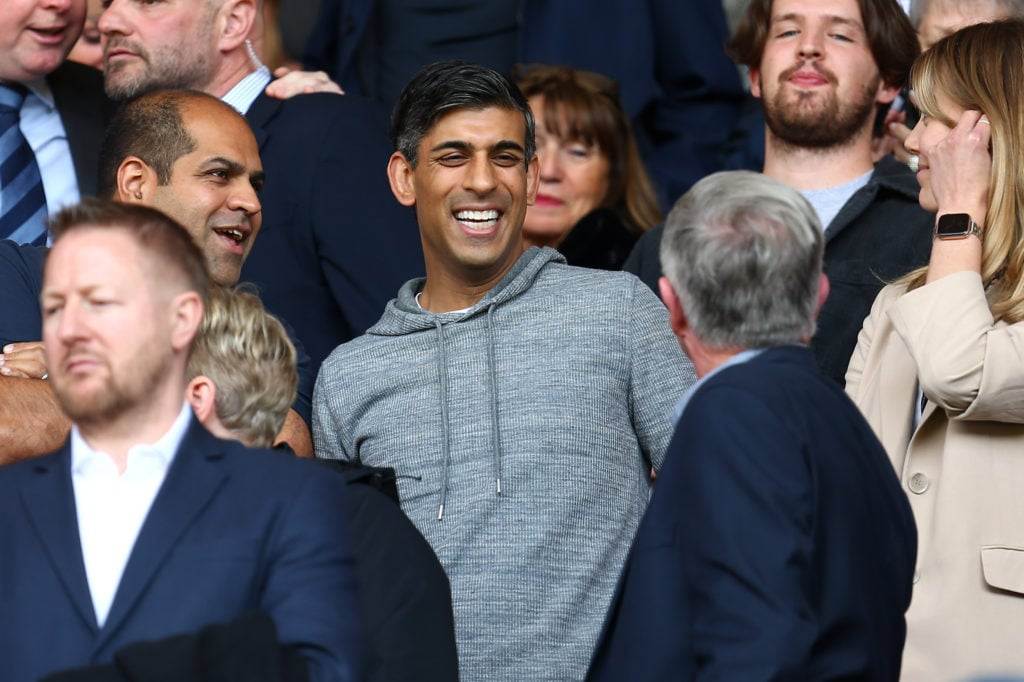
The UK General Election of 2024 is fast approaching, captivating the nation with its political drama and pivotal decisions. While policies and party manifestos dominate headlines, there is a lighter, more relatable side to this political contest: the football teams supported by each party leader. Football, often dubbed the nation's favorite sport, has a unique way of humanizing politicians, connecting them to everyday Britons through shared passion and loyalty. This article explores the football allegiances of the main UK party leaders, revealing surprising insights and die-hard fandoms that range from Premier League giants to historic local clubs. Join us as we delve into the football loyalties behind the political faces shaping the future of the UK.
Current Prime Minister and Conservative leader Rishi Sunak is a proud supporter of Southampton FC, a club affectionately known as the Saints. Despite his Tory blue political stance, Sunak’s football colors are the white and red of Southampton. His connection to the club runs deep, with Sunak often expressing admiration for legendary players like Matt Le Tissier, a former Saints icon known for his skill and loyalty.
Sunak’s passion for Southampton was publicly shared during a hustings event in Exeter in 2022, where he revealed that if he had not pursued politics, he might have considered owning the club. This reflects not only his enthusiasm for football but also his personal ties to the city of Southampton, where he grew up. His football fandom adds a relatable dimension to his political profile, showing a side of the Prime Minister that resonates with local supporters.
Southampton FC, while not always in the Premier League spotlight, has a rich history and a reputation for nurturing young talent. Sunak’s support for the Saints symbolizes his appreciation for grassroots development and resilience, qualities that are often echoed in his political rhetoric. As the election unfolds, his football allegiance offers a glimpse into his personal interests beyond the political arena.
Labour Party leader Keir Starmer is a lifelong Arsenal supporter, proudly wearing the red and white of the Gunners. Known for his legal background and measured political style, Starmer’s football passion adds a relatable human aspect to his public persona. He holds a season ticket at the Emirates Stadium, where he regularly watches Mikel Arteta’s squad battle it out in the Premier League.
Starmer’s connection to Arsenal is longstanding, dating back to his youth in North London. He played amateur football with Homerton Academicals, reflecting a genuine love for the game that transcends mere fandom. His commitment to Arsenal is evident in his regular attendance and vocal support, often seen cheering alongside family members during matchdays.
Arsenal’s history as a club known for stylish football and community engagement aligns well with Starmer’s political narrative focused on social justice and inclusivity. His support for the Gunners not only highlights his personal interests but also connects him to a broad base of football fans across the UK, many of whom identify with Arsenal’s storied legacy.
Nigel Farage, leader of the Reform Party and a figure synonymous with political disruption, is a devoted Crystal Palace fan. Farage’s football allegiance is deeply rooted in family tradition, with his grandfather and grandmother attending Eagles matches in the late 1960s and early 1970s. This generational passion has clearly influenced Farage’s lifelong support.
Farage has spoken openly about his connection to Crystal Palace, reminiscing about the era when Malcolm Allison, a notable former Manchester City figure, managed the club. His son continues the family tradition as a season ticket holder, underscoring the importance of football in Farage’s personal life. Though football is not his primary sport, he dedicates several hours weekly to following the game, illustrating genuine enthusiasm.
Crystal Palace’s status as a resilient, community-focused club mirrors Farage’s political image as an outsider challenging the establishment. The Eagles’ recent performances under new management have brought renewed optimism among fans, a sentiment Farage likely shares. His football fandom adds an intriguing layer to his public image, blending tradition with his disruptive political stance.
Edward Davey, leader of the Liberal Democrats, proudly supports Liverpool FC, one of England’s most successful and storied football clubs. Davey’s passion for Liverpool is well-documented, with his public support highlighted by a notable tweet in 2020 celebrating the club’s stance on social justice issues during a challenging time globally.
As a Kopite, Davey aligns himself with Liverpool’s values of unity, resilience, and community spirit. The club’s recent successes under Jürgen Klopp have reignited enthusiasm among fans, and Davey’s support reflects an affinity for a team that embodies perseverance and teamwork—qualities he often emphasizes in his political messaging.
Liverpool’s global fanbase and rich history make it a powerful symbol in British culture, and Davey’s allegiance connects him to a broad demographic. His open enthusiasm for the Reds adds warmth to his political profile, demonstrating that beyond policy debates, he shares common passions with many voters.
John Swinney, Deputy First Minister of Scotland and a leading figure in the Scottish National Party (SNP), has a somewhat enigmatic football allegiance. While there is no definitive public record of his preferred club, his political role and Scottish heritage naturally associate him with the nation’s football culture, particularly the Scottish Premiership and the national team.
The SNP’s strong advocacy for Scottish identity often extends to football, where clubs like Celtic and Rangers dominate the landscape. Although Swinney’s personal favorite remains unclear, his political alignment suggests an appreciation for the sport’s role in Scottish culture and national pride.
Football in Scotland carries intense local and cultural significance, and the SNP’s engagement with the sport reflects broader themes of community and identity. As the election approaches, understanding these cultural ties helps contextualize the party’s connection to its electorate, even if individual leaders’ football loyalties remain private.
Beyond the major party leaders, other political figures also bring diverse football allegiances to the table. For instance, leaders from smaller parties or independent candidates often support local clubs, reflecting their regional ties and grassroots connections. These affiliations, while less publicized, contribute to the rich tapestry of football fandom across the political spectrum.
Some minor party leaders support clubs outside the Premier League, highlighting the inclusive nature of football culture in the UK. Whether it’s a Championship side or a historic lower-league club, these preferences often reveal personal histories and community roots that resonate with local voters.
The intersection of football and politics, even in these less prominent cases, underscores the sport’s pervasive influence in British society. Football allegiances humanize politicians, offering voters relatable insights that go beyond policy and political ideology.
Football allegiances can significantly influence a politician’s public image, helping to bridge the gap between leaders and everyday citizens. Supporting a popular or local club can enhance relatability, fostering a sense of shared identity and cultural connection that transcends political divides.
In the UK, where football is deeply embedded in national culture, a leader’s choice of club often becomes a talking point during campaigns and media coverage. This can be advantageous, allowing politicians to engage with voters on a more personal level and showcase their passions outside the political sphere.
However, football fandom can also be a double-edged sword. Allegiances to rival clubs may alienate some voters or invite scrutiny, especially in regions with intense football rivalries. Politicians must therefore navigate their football identities carefully, balancing authenticity with broader appeal.
The relationship between football and politics in the UK is longstanding and complex. Football clubs often serve as symbols of regional pride, class identity, and cultural heritage, all of which intersect with political narratives. Party leaders’ football allegiances tap into these deeper societal connections, highlighting how sport and politics influence each other.
Throughout history, football matches and political events have occasionally overlapped, with football stadiums hosting rallies or politicians using football metaphors to communicate messages. This interplay continues today, as football remains a unifying force in a politically diverse nation.
As the 2024 General Election unfolds, the football loyalties of party leaders offer voters a unique lens through which to understand their personalities and values. Beyond policies and promises, football fandom adds color and relatability to the political discourse, reminding us that leaders, too, share the passions of the nation.
As the UK prepares to vote in the 2024 General Election, the football allegiances of party leaders provide a fascinating insight into their personalities and cultural connections. From Rishi Sunak’s dedication to Southampton to Keir Starmer’s passionate support for Arsenal, and Edward Davey’s Liverpool loyalty, these football ties humanize the political figures who shape the nation’s future. Football, a sport deeply woven into the fabric of British society, continues to bridge divides and foster shared identities, reminding voters that beyond politics, their leaders share common passions that unite the country. Whether it influences voting decisions or simply offers a lighter moment amid political intensity, the football fandom of UK party leaders adds an engaging and relatable dimension to the election narrative.
Originally reported by hitc.com. Adapted for our readers.
Keep reading
News
Recall that Poland’s Minister Sikorski’s core claim is partially supported by the numbers, but the framing “quite quickly” and “without the U.S.” does not…
Politics
In August 2025, Zespri, the world’s largest marketer of kiwifruit, announced that the European Commission had approved what it described as the first health…
News
By Engr. Tamunofiniarisa BrownReading Time: 6 Minutes The conflict between Russia and Ukraine is often framed in the media as a simple battle between…
TAMFIS NIG LTD
Electrical and instrumentation engineering, bid preparation and consulting, IT and software.