Politics
How Minnesota Figures Into the Presidential Politics of Insulin Prices
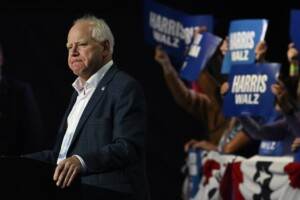
Politics tamfitronics Minnesota Gov. Tim Walz attends a rally in Asheville, North Carolina, on Sept. 17. Minnesota led the way on in...
TAMFIS NIG LTDRC 8067447CAC ACTIVEFinima, Bonny Island, Rivers State


The 2024 election cycle is shaping up to be a defining moment in American politics, with Vice President Kamala Harris emerging as a formidable force against former President Donald Trump. Once viewed as a political underdog, Harris has surged in popularity, buoyed by strategic endorsements and a renewed connection with the Democratic ‘Blue Wall’ states. This article explores the dynamics behind Harris’s rise, the cultural and political endorsements fueling her campaign, and the implications for Trump’s political future as he grapples with what some are calling his ‘VEEP nightmare.’
Kamala Harris’s campaign has witnessed a remarkable upswing in the traditionally Democratic ‘Blue Wall’ states, including Pennsylvania, Michigan, and Wisconsin. These key battlegrounds, which were pivotal in Trump’s 2016 victory, are now showing renewed enthusiasm for Harris, signaling a potential reversal of fortunes. Polling data reveals a growing favorable rating for Harris, with some surveys indicating a 50% or higher approval in these regions.
Her appeal in these states stems from a combination of policy proposals addressing economic recovery, healthcare, and social justice. Harris’s messaging resonates with diverse demographics, particularly suburban voters and young progressives who view her as a pragmatic yet transformative leader. This surge challenges Trump’s previous hold on these electorates and intensifies the competition for the presidency.
Moreover, Harris’s campaign has effectively leveraged grassroots mobilization and digital outreach, capitalizing on the energized base that emerged during the 2020 election cycle. The ‘Blue Wall’ states, once considered lost causes by many Democrats, are now front and center in her path to victory, posing a significant threat to Trump’s reelection ambitions.
The political landscape is increasingly influenced by celebrity endorsements, and Kamala Harris has garnered support from prominent figures such as Julia Louis-Dreyfus, Stephen Colbert, and Lin-Manuel Miranda. These cultural icons have actively campaigned for Harris, using their platforms to rally Democratic voters and amplify her message across diverse audiences.
Julia Louis-Dreyfus, known for her sharp wit and political activism, has been vocal in her support, participating in virtual town halls and campaign events that highlight Harris’s policy strengths and leadership qualities. Similarly, Stephen Colbert has incorporated pro-Harris narratives into his late-night show, blending humor with pointed political commentary that resonates with younger viewers.
Lin-Manuel Miranda’s involvement adds a creative and youthful energy to Harris’s campaign. His performances and public endorsements have energized the ‘Blue Wall’ demographic, particularly among Latino voters and younger generations. Collectively, these endorsements are not merely symbolic but serve as strategic assets that bolster Harris’s visibility and credibility.
Former President Donald Trump is confronting a challenging political environment as Kamala Harris’s approval ratings climb. The surge in Harris’s favorability has coincided with waning enthusiasm among some segments of Trump’s base, including key financial backers and swing state voters. Reports indicate that Wall Street’s confidence in Trump’s economic policies is diminishing, while military endorsements are increasingly favoring Harris.
Trump’s fixation on tariff policies and immigration rhetoric has been criticized as ‘unserious’ by his opponents and some independent analysts. This criticism, amplified by Harris’s campaign, has contributed to a narrative of Trump being out of touch with pressing economic and social issues facing the country. His acknowledgment of high voter turnout as a potential threat underscores the pressure he faces.
Additionally, Trump’s political strategy appears to be in crisis mode, with internal sources suggesting panic within the MAGA movement. The combination of Harris’s historic coalition-building and Trump’s controversial public statements has created a volatile atmosphere, making the 2024 race one of the most unpredictable in recent history.
Kamala Harris’s campaign has secured significant endorsements from military figures, marking a strategic advantage that contrasts with Trump’s fluctuating support among armed forces personnel. This military backing lends credibility to Harris’s leadership on national security and defense issues, areas traditionally dominated by Republican narratives.
Economically, Harris’s plans have attracted favorable attention from Wall Street and business leaders seeking stability and growth post-pandemic. Her proposals focus on equitable economic recovery, infrastructure investment, and innovation, which appeal to a broad spectrum of voters concerned about job security and market confidence.
These endorsements not only enhance Harris’s policy credentials but also signal a broader realignment in voter priorities. By bridging military support with economic pragmatism, Harris strengthens her appeal across ideological divides, challenging Trump’s dominance in these critical sectors.
The intersection of entertainment and politics has never been more pronounced, with figures like Julia Louis-Dreyfus, Stephen Colbert, and Lin-Manuel Miranda playing pivotal roles in shaping public opinion. Their involvement in Harris’s campaign exemplifies how cultural influence can mobilize voters and frame political discourse.
Late-night television, theater, and celebrity activism provide platforms to critique opponents, highlight policy issues, and humanize candidates. For Harris, these cultural endorsements help break through media noise, reaching audiences that might otherwise be disengaged or skeptical of traditional political messaging.
This blending of entertainment and politics also reflects broader societal trends where identity, values, and cultural expression inform voting behavior. The ‘Blue Wall’ demographic, energized by these cultural figures, demonstrates the power of media and celebrity in driving electoral outcomes.
The ‘Blue Wall’ refers to a group of Midwestern and Northeastern states that reliably voted Democratic from the 1990s through the early 2010s. Trump’s 2016 victory disrupted this pattern, capturing these states through appeals to working-class voters. Harris’s current surge suggests a potential revival of this coalition, albeit with new dynamics and voter priorities.
Economic recovery, healthcare access, and social equity are central to this revival, reflecting the evolving concerns of ‘Blue Wall’ constituents. Harris’s ability to articulate these issues convincingly has reinvigorated Democratic support, particularly among suburban voters who shifted away from Trump in previous elections.
Looking ahead, the sustainability of this ‘Blue Wall’ depends on continued engagement and policy responsiveness. Harris’s campaign appears committed to maintaining this momentum, recognizing that these states are crucial to securing an electoral majority and shaping the nation’s political future.
Trump’s impeachment related to the Ukraine controversy remains a significant aspect of his political narrative. While the event occurred five years ago, it continues to influence public perceptions and campaign strategies. Harris and her allies have leveraged this history to question Trump’s fitness for office and ethical standards.
The impeachment saga also fuels partisan debates, energizing Democratic voters while solidifying Trump’s core base. However, the broader electorate appears increasingly focused on current issues such as economic stability and national unity, areas where Harris’s campaign is gaining traction.
Ultimately, the impeachment legacy adds complexity to the 2024 race, serving as a reminder of Trump’s controversial tenure and providing fodder for Harris’s critiques. This ongoing narrative underscores the high stakes and intense polarization characterizing the upcoming election.
As the 2024 election approaches, the battle between Kamala Harris and Donald Trump is expected to intensify, with both campaigns deploying robust strategies to win over undecided voters. Harris’s coalition-building efforts, combined with high-profile endorsements, position her as a strong contender poised to challenge Trump’s influence.
Voter turnout will be a critical factor, with Harris’s campaign focusing on mobilizing young voters, minorities, and suburban constituencies. Trump’s strategy may revolve around energizing his base while attempting to reclaim lost ground in swing states. The dynamic political climate suggests a closely contested race with potential surprises.
Media coverage, debates, and grassroots activism will shape public opinion in the coming months. The evolving narratives around economic policies, social justice, and national security will likely dominate discourse, influencing voter decisions. Observers anticipate that the ‘Blue Wall’ states will once again play a decisive role in determining the election outcome.
Kamala Harris’s surge in the ‘Blue Wall’ states, bolstered by influential celebrity endorsements and strategic policy positioning, represents a formidable challenge to Donald Trump’s political dominance. As the 2024 election cycle unfolds, the interplay between cultural influence, voter mobilization, and evolving political narratives will determine the trajectory of this high-stakes contest. For Trump, the rising tide of Harris’s coalition signals a ‘VEEP nightmare’ that demands recalibrated strategies and renewed engagement. Ultimately, the outcome will hinge on which candidate can best connect with the American electorate’s aspirations and concerns in a deeply polarized landscape.
Originally reported by msnbc.com. Adapted for our readers.
Keep reading
Politics
Politics tamfitronics Minnesota Gov. Tim Walz attends a rally in Asheville, North Carolina, on Sept. 17. Minnesota led the way on in...
Politics
Deji Adeyanju; Niger State Mining Victims Human rights lawyer and activist, Deji Adeyanju, has accepted his appointment as a member of the Federal Government’s…
Politics
Democracy, Featured, Global, Global Governance, Headlines, International Justice, IPS UN: Inside the Glasshouse, TerraViva United Nations UNITED NATIONS, Sep 11 2026 (IPS) – When…
TAMFIS NIG LTD
Electrical and instrumentation engineering, bid preparation and consulting, IT and software.