Politics
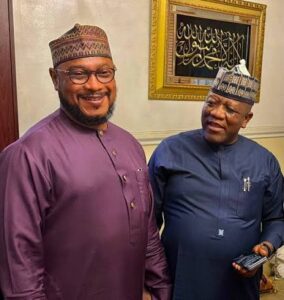
Yari’s 2027 Campaign Strategy: How to Evaluate Claims About Tinubu’s Record
Yari says the APC will emphasise Tinubu’s achievements in 2027. This analysis explains how voters can examine outcomes, baselines and campaign evidence.
TAMFIS NIG LTDRC 8067447CAC ACTIVEFinima, Bonny Island, Rivers State


Washington, D.C., is preparing for increased security measures as the political and legal challenges facing former President Donald Trump deepen. Three additional states—Maryland, Virginia, and Pennsylvania—have authorized National Guard deployments to support the capital’s security infrastructure. This expansion aims to address concerns about potential unrest linked to Trump’s ongoing legal proceedings and the heightened political atmosphere, underscoring the city’s fragile stability amid a contentious national landscape.
In a coordinated effort involving federal agencies and the District of Columbia’s mayor’s office, Maryland, Virginia, and Pennsylvania have each approved sending National Guard units to Washington, D.C. This decision, announced late Monday evening, expands the security crackdown already in place. The new deployments are intended to support crowd control, protect federal buildings, and manage logistics, thereby allowing local law enforcement to focus on rapid-response duties.
Although no explicit threats have been publicly identified, officials emphasize that the move is a precautionary measure in light of the tense political climate. A senior Department of Homeland Security official highlighted the volatile mix of ongoing legal trials, political demonstrations, and the heated presidential campaign cycle as factors that create a potentially combustible environment. The National Guard’s presence is seen as a stabilizing force to maintain public order.
The increased security measures coincide with a series of criminal and civil cases involving Donald Trump across multiple jurisdictions. In Washington, D.C., Trump faces charges related to alleged efforts to overturn the 2020 presidential election results—a case that has become a focal point for debates about democratic accountability.
Trump’s legal team continues to challenge the charges, while the former president himself remains vocally defiant. At a recent rally in Iowa, he framed the investigations as politically motivated attacks not only against him but also against his supporters, declaring, “They are not just coming after me—they are coming after you, and I am standing in the way.” This rhetoric has energized his base but also heightened concerns among security officials about the potential for politically charged demonstrations to escalate into violence.
Washington, D.C., has long been the stage for political conflict, but the current situation is particularly sensitive given the events of January 6, 2021. Since the Capitol riot, federal authorities have been vigilant about the risks posed by large-scale gatherings, especially those connected to Trump and his supporters.
In anticipation of possible disruptions, businesses near the Capitol and federal courts have boarded up windows, and some have shifted to remote work. Schools in certain districts have been placed on alert, reflecting widespread concern about public safety. Mayor Muriel Bowser has sought to reassure residents, emphasizing that the National Guard’s presence is meant to provide security and reassurance rather than intimidation, and encouraging citizens to remain calm and vigilant.
The decision to increase National Guard deployments has sparked divided responses along political lines. Democratic officials generally support the move as a prudent precaution to safeguard public safety and democratic processes. Senator Chris Van Hollen of Maryland described the deployments as necessary to prevent being caught unprepared again and to uphold the rule of law.
Conversely, Republican allies of Trump have criticized the expanded security presence as excessive and politically motivated. Representative Jim Jordan, a close Trump confidant, labeled the National Guard deployments as an “unnecessary show of force” intended to send a political message.
Beyond partisan debate, civil liberties organizations have voiced concerns about the implications of frequent military involvement in domestic political situations. The American Civil Liberties Union cautioned that normalizing military presence on city streets risks eroding public trust and blurring the distinction between civilian law enforcement and military operations.
With Trump’s next court date approaching and the 2024 presidential campaign gaining momentum, Washington’s security landscape remains uncertain. Officials emphasize that the National Guard deployments are temporary and subject to ongoing review based on intelligence assessments.
Political analysts note that the expanded military presence in the capital reflects the complex challenge of protecting democratic institutions while managing the polarizing influence of Trump’s continuing political prominence. Political scientist Dr. Emily Carter observed that Trump’s dual role as a defendant and a political figure ensures that issues of security, legality, and political legitimacy will remain intertwined in the capital for the foreseeable future.
The National Guard’s role is part of a broader strategy to maintain peace and order amid a highly charged environment, balancing the need for security with respect for civil liberties.
As legal proceedings against Donald Trump continue and the 2024 presidential campaign unfolds, Washington, D.C., stands at a crossroads of heightened security and political tension. The expanded deployment of National Guard units from multiple states reflects a cautious approach to preventing unrest and safeguarding democratic institutions. While these measures aim to maintain order, they also highlight the delicate balance between ensuring public safety and preserving civil liberties. The coming weeks will test how effectively the capital can navigate this complex intersection of law, politics, and security, with the National Guard playing a critical but carefully measured role in upholding peace.
Originally reported by theguardian.com. Adapted for our readers with AI assistance.
Keep reading
Politics
Yari says the APC will emphasise Tinubu’s achievements in 2027. This analysis explains how voters can examine outcomes, baselines and campaign evidence.
Lifestyle
Obi says his wife funds her own purchases. This analysis separates his explanation, unverified handbag prices and the evidence needed to assess public spending.
Politics
Politics tamfitronics Minnesota Gov. Tim Walz attends a rally in Asheville, North Carolina, on Sept. 17. Minnesota led the way on in...
TAMFIS NIG LTD
Electrical and instrumentation engineering, bid preparation and consulting, IT and software.