
News
RUSSIA versus NATO and BRICS vs. NATO Military SWOT
Recall that Poland’s Minister Sikorski’s core claim is partially supported by the numbers, but the framing “quite quickly” and “without the U.S.” does not…
TAMFIS NIG LTDRC 8067447CAC ACTIVEFinima, Bonny Island, Rivers State

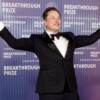
Tesla has long been a dominant player in the electric vehicle (EV) market, widely praised for its innovation and performance. Recently, some narratives have emerged suggesting that Elon Musk’s increasingly vocal political stance is negatively impacting Tesla’s sales, particularly among liberal and left-leaning consumers. However, a closer examination of the evidence and market realities reveals that such claims may be oversimplified or even misguided. This article explores the complexities behind Tesla’s sales trends, the role of product quality, and the influence of consumer behavior beyond politics.
Despite the political noise surrounding Elon Musk, Tesla’s vehicles continue to receive high praise from reputable sources. For instance, Consumer Reports recently named the Tesla Model Y as one of the best electric vehicles available today. The Model Y is lauded not only for its rapid acceleration, a hallmark of many electric cars, but also for its responsible steering, frequent over-the-air software updates, and access to Tesla’s extensive Supercharger Network. This network significantly reduces range anxiety, a common concern among EV buyers, by providing convenient and reliable charging options for long-distance travel.
Such features are critical considerations for prospective buyers who prioritize performance, convenience, and reliability. The Model Y’s status as a mature product from a company with years of experience in electric powertrains further strengthens Tesla’s appeal. These attributes suggest that the vehicle’s intrinsic qualities remain a primary driver of consumer interest, independent of external factors such as the CEO’s personal views.
The New York Times recently published a story proposing that Tesla’s sales declines in early 2024 could be attributed to Elon Musk’s increasingly right-wing public persona. The article suggests that liberal and left-leaning buyers, who statistically show greater interest in battery-powered vehicles, might be deterred by Musk’s politics. While this narrative is compelling on the surface, it raises important questions about causation versus correlation.
Professional automotive analyses, including those from Consumer Reports, do not factor in Musk’s political beliefs when evaluating Tesla’s products. This omission is telling; it implies that the vehicle’s performance and features stand on their own merit. If expert reviews and buyer decisions are primarily influenced by tangible product attributes, why should the CEO’s personal politics carry significant weight in purchasing decisions?
Moreover, Elon Musk’s business model does not discriminate based on customers’ political affiliations. Whether a buyer supports MSNBC or a different media outlet, or holds conservative or liberal views, Tesla’s sales process treats all customers equally. Financial transactions are indifferent to political ideology, underscoring the notion that consumer politics and CEO politics operate in largely separate spheres.
The purported impact of Musk’s politics on Tesla sales may partly stem from confirmation bias. The New York Times article references data gathered from a questionnaire on its website, where respondents were asked if Musk’s behavior influenced their views on Tesla. It is reasonable to infer that the sample of respondents may skew toward readers who are more politically engaged or hold particular views about Musk, potentially amplifying perceptions that politics are a decisive factor.
In reality, most consumers do not filter every aspect of their lives through a political lens. For many, practical considerations such as vehicle cost, performance, reliability, and convenience dominate purchasing decisions. The idea that a Tesla owner is “driving around a giant red MAGA hat,” as quoted from a Microsoft product designer in the NYT story, exemplifies an overly politicized interpretation that may not reflect the broader market reality.
This tendency to politicize consumer choices can obscure more nuanced understandings of why people buy the products they do. It also risks alienating potential buyers who might otherwise be interested in Tesla’s offerings but are wary of politicized narratives.
Tesla’s sales fluctuations must also be viewed within the broader context of the automotive industry and economic factors. Market dynamics such as supply chain challenges, competition from other EV manufacturers, and changes in consumer preferences all play significant roles in shaping sales outcomes.
Furthermore, the EV market is evolving rapidly, with new entrants and innovations continually reshaping consumer options. Tesla’s ability to maintain a competitive edge depends on ongoing product development, infrastructure expansion, and pricing strategies rather than the personal politics of its CEO.
In this light, attributing sales performance primarily to Musk’s political stance oversimplifies the complex interplay of factors influencing the EV market. It also overlooks Tesla’s continued commitment to improving its vehicles and charging network, which remain key selling points.
While it is natural for public figures’ political views to attract attention, it is crucial to distinguish between personal beliefs and the tangible qualities of the products they represent. Tesla’s electric vehicles continue to offer compelling advantages that resonate with a broad spectrum of consumers. The suggestion that Elon Musk’s politics are a primary factor in Tesla’s sales trends lacks robust evidence and overlooks the multifaceted nature of consumer behavior and market dynamics. Buyers seeking an electric vehicle should focus on attributes such as performance, reliability, and infrastructure support, rather than the political affiliations of a company’s leadership.
Originally reported by bgr.com. Adapted for our readers with AI assistance.
Keep reading
News
Recall that Poland’s Minister Sikorski’s core claim is partially supported by the numbers, but the framing “quite quickly” and “without the U.S.” does not…
Politics
In August 2025, Zespri, the world’s largest marketer of kiwifruit, announced that the European Commission had approved what it described as the first health…
News
By Engr. Tamunofiniarisa BrownReading Time: 6 Minutes The conflict between Russia and Ukraine is often framed in the media as a simple battle between…
TAMFIS NIG LTD
Electrical and instrumentation engineering, bid preparation and consulting, IT and software.