
Politics
Science vs politics: Kiwi’s long road to EU health-claim approval
In August 2025, Zespri, the world’s largest marketer of kiwifruit, announced that the European Commission had approved what it described as the first health…
TAMFIS NIG LTDRC 8067447CAC ACTIVEFinima, Bonny Island, Rivers State

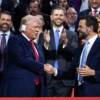
American politics is traditionally characterized by gradual shifts, extended debates, and a slow grind toward change. However, the past 18 days have shattered this expectation, presenting a rapid succession of dramatic developments that have left observers both stunned and uncertain about the future. From high-profile legal decisions to violent incidents at political rallies and transformative Supreme Court rulings, the political environment has become a volatile mix of spectacle and substantive shifts. This article explores the key events that have unfolded, their implications for the political system, and the challenges they pose for understanding what lies ahead.
The last few weeks have seen an extraordinary series of political developments that have rapidly transformed the landscape. Less than three weeks ago, former President Donald Trump was facing sentencing on 34 felony counts in New York, with his political future and potential legal consequences hanging in the balance. The stakes were high, as a presidential election victory appeared to be his best hope to avoid further criminal convictions and possible incarceration.
However, the narrative shifted dramatically with President Joe Biden’s underwhelming performance in a critical debate, which left many Democratic supporters questioning his viability as a nominee. This moment of uncertainty was quickly overshadowed by landmark Supreme Court decisions that have far-reaching implications for the regulatory state and the constitutional balance of power.
In a series of rulings, the Supreme Court dismantled established precedents like Chevron, altering the scope of federal regulatory authority. More strikingly, the Court issued a ruling that effectively granted former presidents expanded immunity from prosecution, a decision widely viewed as tailored to benefit Trump by delaying his sentencing and potentially shielding him from legal consequences regardless of the election outcome.
The legal saga surrounding Trump has been marked by unexpected twists. A notable development was the dismissal of the Mar-a-Lago case by U.S. District Judge Aileen Cannon, a decision that surprised many legal experts who had considered the case strong based on evidence. This ruling temporarily relieved Trump from one of the most serious legal threats he faced, fueling perceptions of judicial bias and corruption.
Simultaneously, political violence has escalated, underscoring the volatile atmosphere. An assassination attempt on Trump by a young assailant was swiftly neutralized, while a separate violent episode at a campaign rally in Pennsylvania resulted in fatalities and injuries. These incidents, widely disseminated through media, have contributed to a charged and polarized environment, with Trump’s defiant public appearances and calls to “Fight!” energizing his base and deepening political divisions.
The Republican National Convention further amplified this spectacle, with Trump making a highly symbolic appearance shortly after the dismissal of the Mar-a-Lago case and his announcement of a running mate. The event was marked by chants and fervor that underscored the emotional intensity of the moment.
The Supreme Court’s recent rulings have fundamentally altered the political and legal framework in ways that will resonate beyond the immediate election cycle. By overturning established precedents and expanding presidential immunity, the Court has shifted the balance of power between branches of government, raising questions about accountability and the rule of law.
These decisions have not only affected Trump’s legal standing but also set new standards that could influence future administrations and the regulatory state for years to come. The Court’s intervention in these politically charged cases highlights its growing role as a pivotal actor in shaping the political economy and governance structure.
The long-term consequences of these rulings remain uncertain, but they represent a significant departure from traditional checks and balances envisioned by the nation’s founders, potentially enabling greater executive power and complicating efforts to hold officials accountable.
The current political turbulence invites comparisons to 1968, a year widely regarded as a watershed moment in American politics marked by assassinations, social upheaval, and deep partisan divisions. While the context differs—the Vietnam War and civil rights struggles then versus climate change and far-right political movements now—the intensity and unpredictability of events bear striking similarities.
The persistent undercurrent of racial and cultural backlash remains a defining feature of the political landscape, suggesting that some societal tensions are deeply entrenched and resistant to resolution. Unlike past eras, today’s challenges are compounded by a digital media environment that amplifies polarization and accelerates the spread of information and misinformation alike.
These historical echoes serve as a reminder that political crises often emerge from complex and overlapping factors, making simple explanations or predictions inadequate.
The rapid pace and complexity of recent events have made it difficult to gauge their ultimate impact on the upcoming election and the broader political trajectory. Each development carries potential consequences, but their combined effects are difficult to decipher amid the noise and spectacle.
Observers and participants alike grapple with uncertainty, often resorting to speculation or hopeful assumptions to make sense of the chaos. Yet, the reality is that the political future remains unpredictable, shaped by forces that may defy conventional logic or expectations.
Embracing this uncertainty requires acknowledging the limits of current knowledge and preparing for a range of possible outcomes. It also calls for vigilance in safeguarding democratic institutions against erosion amid rapid and disruptive change.
The whirlwind of events that have defined American politics over the past 18 days illustrates a departure from the familiar slow grind of political processes toward a more volatile and unpredictable era. Legal rulings, political violence, and dramatic public displays have combined to create a landscape where traditional rules seem suspended and outcomes remain uncertain. As the nation approaches a pivotal election, understanding these dynamics is crucial for citizens, policymakers, and observers alike. While the pace of change may not be sustainable, the implications of recent developments will likely reverberate for years, demanding careful attention and thoughtful engagement with the evolving political reality.
Originally reported by talkingpointsmemo.com. Adapted for our readers with AI assistance.
Keep reading
Politics
In August 2025, Zespri, the world’s largest marketer of kiwifruit, announced that the European Commission had approved what it described as the first health…
News
By Engr. Tamunofiniarisa BrownReading Time: 6 Minutes The conflict between Russia and Ukraine is often framed in the media as a simple battle between…
Politics
Twenty-five years after the September 11 attacks, the family of Marine Travis Fuller reflects on his death in the Iraq War, grappling with the…
TAMFIS NIG LTD
Electrical and instrumentation engineering, bid preparation and consulting, IT and software.