
Politics
Science vs politics: Kiwi’s long road to EU health-claim approval
In August 2025, Zespri, the world’s largest marketer of kiwifruit, announced that the European Commission had approved what it described as the first health…
TAMFIS NIG LTDRC 8067447CAC ACTIVEFinima, Bonny Island, Rivers State

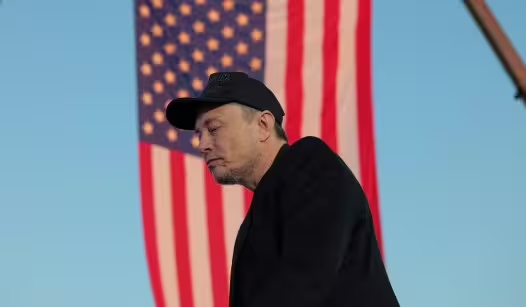
Elon Musk, one of the most influential entrepreneurs of the 21st century, has become a polarizing figure in global discourse. While Musk’s innovations in electric vehicles, space exploration, and renewable energy are indisputable, his public persona increasingly attracts intense criticism and vilification. However, much of this hostility is rooted not in his business practices or technological achievements but in political motivations. This article delves into the political dynamics that fuel Musk’s vilification, exploring how ideological conflicts overshadow his contributions and why understanding this context is essential for a balanced perspective.
Elon Musk’s ventures, such as Tesla and SpaceX, symbolize groundbreaking innovation that challenges established industries. However, these achievements have coincided with a period of heightened political polarization globally, especially in the United States. This environment has transformed how public figures like Musk are perceived, with opinions often shaped more by political affiliation than objective evaluation.
Musk’s outspoken presence on social media and his willingness to engage in contentious political debates amplify this polarization. His statements on various political issues, from free speech to government regulation, have alienated segments of the population aligned with opposing ideologies. Consequently, his business accomplishments are frequently overshadowed by political controversies.
This blending of innovation and politics means that Musk is not merely a tech entrepreneur but a symbol within broader ideological battles. Supporters view him as a visionary disrupting the status quo, while detractors portray him as a figure representing political agendas they oppose. Understanding this dynamic is crucial to unpacking the vilification he faces.
Media coverage plays a pivotal role in shaping public perception of Elon Musk. News outlets often frame stories about him through political lenses, emphasizing controversies that align with their editorial biases. This selective reporting can amplify negative portrayals, contributing to a vilified image that may not fully reflect reality.
Left-leaning media frequently criticize Musk for his libertarian-leaning views and skepticism of regulatory frameworks, framing him as reckless or irresponsible. Conversely, right-leaning outlets sometimes attack his environmental initiatives or question his business ethics, reflecting their ideological stances. This polarization in media narratives creates a fragmented public understanding.
The rapid spread of misinformation and opinion masquerading as fact further complicates Musk’s public image. Social media platforms, where Musk is highly active, serve as battlegrounds for ideological conflicts, magnifying misunderstandings and vilification. Recognizing media bias and its impact is essential for discerning the political motivations behind attacks on Musk.
Musk’s engagement in political discourse is often a catalyst for his vilification. His comments on free speech, government intervention, and cultural issues provoke strong reactions across the political spectrum. While some praise his candor, others interpret his statements as provocative or divisive, fueling further criticism.
For example, Musk’s skepticism towards certain COVID-19 restrictions and his critiques of media narratives during the pandemic positioned him against mainstream consensus, leading to backlash from public health advocates and political figures. These stances, while rooted in his personal views, have been politicized extensively.
Moreover, Musk’s support for deregulation and market-driven solutions aligns him with libertarian and conservative ideals, alienating progressive audiences who favor more government oversight. This ideological alignment intensifies the vilification, as opponents view him as a representative of political agendas they oppose rather than a neutral businessman.
Beyond politics, economic interests also underlie some of the hostility towards Musk. His disruptive technologies threaten entrenched industries such as fossil fuels and traditional automotive manufacturing, creating powerful adversaries with vested interests in maintaining the status quo.
Competitors and stakeholders in legacy sectors may leverage political channels to challenge Musk’s influence, framing him negatively to sway public opinion and regulatory decisions. This intersection of economic rivalry and political advocacy contributes to the vilification narrative.
Additionally, Musk’s unconventional management style and public persona sometimes draw criticism from within the business community. However, much of this scrutiny is amplified by political motivations seeking to undermine his market dominance and technological leadership.
Social media platforms have become central to Musk’s public engagement but also to the polarized reactions he elicits. His tweets and online interactions often spark viral debates that quickly transcend the original context, becoming proxies for broader political conflicts.
The algorithm-driven nature of social media promotes sensationalism and conflict, incentivizing extreme reactions and vilification. Musk’s provocative style, whether intentional or not, fuels these dynamics, making him a lightning rod for political criticism.
Furthermore, organized online campaigns and coordinated attacks by politically motivated groups magnify negative portrayals. This digital battleground reflects the deep ideological divisions in society, with Musk caught at the center as a symbol rather than just an individual.
Elon Musk’s status as a celebrity entrepreneur contributes to the intensity of his vilification. His charismatic and sometimes controversial public persona invites both admiration and animosity, often detached from his actual business or technological merits.
The cult of personality around Musk means that criticisms frequently target him personally rather than his companies or ideas. This personalization of conflict simplifies complex debates into binary good-versus-evil narratives driven by political allegiances.
Such dynamics polarize public perception, making balanced discussion difficult. Supporters may overlook legitimate critiques, while detractors may dismiss achievements due to political bias. This environment perpetuates a cycle of vilification rooted more in identity politics than substantive analysis.
The politicization of Elon Musk’s image has broader consequences for innovation and public discourse. When technological pioneers become entangled in ideological battles, it risks discouraging open dialogue and collaboration necessary for progress.
Polarized vilification can deter investors, policymakers, and the public from engaging constructively with emerging technologies. It also fosters an environment where innovation is judged through partisan lenses rather than objective criteria, hindering balanced assessment.
Moreover, the focus on personal attacks rather than ideas undermines the quality of public debate. Cultivating a more nuanced understanding that separates political biases from factual evaluation is essential for fostering an environment conducive to technological advancement.
To transcend the vilification of Elon Musk, it is important to recognize the political motivations underlying much of the criticism and strive for balanced perspectives. Acknowledging both his contributions and legitimate critiques without ideological distortion is key.
Encouraging media literacy and critical consumption of news can help audiences discern bias and avoid being swayed by politicized narratives. Promoting open, fact-based discussions about Musk’s ventures and statements can reduce polarization.
Ultimately, separating the individual from political symbolism allows society to appreciate innovation on its merits and engage in constructive dialogue. This approach benefits not only Musk but the broader landscape of technological progress and public discourse.
Elon Musk’s public vilification is less about his business practices or technological contributions and more a reflection of contemporary political divisions. His role as a disruptive innovator intersects with polarized media narratives, political ideologies, and economic rivalries, creating a complex environment where objective evaluation is often sidelined. Understanding the political motivations behind the attacks on Musk is essential for fostering balanced discourse and appreciating the true impact of his work. By moving beyond partisan vilification, society can better support innovation and engage in meaningful conversations about the future of technology.
Originally reported by nationalreview.com. Adapted for our readers.
Keep reading
Politics
In August 2025, Zespri, the world’s largest marketer of kiwifruit, announced that the European Commission had approved what it described as the first health…
News
By Engr. Tamunofiniarisa BrownReading Time: 6 Minutes The conflict between Russia and Ukraine is often framed in the media as a simple battle between…
Politics
Twenty-five years after the September 11 attacks, the family of Marine Travis Fuller reflects on his death in the Iraq War, grappling with the…
TAMFIS NIG LTD
Electrical and instrumentation engineering, bid preparation and consulting, IT and software.