
Politics
Science vs politics: Kiwi’s long road to EU health-claim approval
In August 2025, Zespri, the world’s largest marketer of kiwifruit, announced that the European Commission had approved what it described as the first health…
TAMFIS NIG LTDRC 8067447CAC ACTIVEFinima, Bonny Island, Rivers State

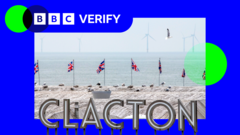
The upcoming Clacton by-election on August 13 is set to be one of the most crowded parliamentary contests in British history, with 34 candidates vying for the seat. Notably, Nigel Farage, leader of Reform UK and former MP for Clacton, faces no opposition from the main political parties, leaving the field open to a diverse group of smaller party representatives and independents. Among these are a number of serial candidates—individuals who have repeatedly stood for election across the UK, often with limited electoral success but persistent determination. This article examines these repeat contenders, their backgrounds, and what their participation reveals about the dynamics of modern British elections.
The Clacton by-election has attracted an unprecedented 34 candidates, making it the longest ballot paper in UK parliamentary election history. This surge in candidates is partly due to the absence of the main political parties, who have chosen not to stand against Nigel Farage, the Reform UK leader and former MP for Clacton.
With the major parties stepping aside, the ballot includes a mix of smaller party representatives and independents, many of whom are serial candidates with multiple previous runs in parliamentary or mayoral elections. Their presence adds a unique dimension to the contest, reflecting both political diversity and the challenges of electoral success outside the mainstream.
Among the 34 candidates, eight have stood in at least three parliamentary or London mayoral elections, marking them as serial candidates. These include figures such as Laurence Fox, leader of the Reclaim Party; Howling Laud Hope, leader of the Official Monster Raving Loony Party; Count Binface, a satirical candidate; and John Stevens of the Rejoin EU Party.
These candidates have gained varying levels of public attention, often standing out for their persistence rather than electoral victories. Their repeated participation raises questions about their motivations and the role of fringe candidates in British democracy.
Howling Laud Hope, whose real name is Alan Hope, leads the Official Monster Raving Loony Party and has contested 37 parliamentary elections since 1983. Despite his long history, he has never secured enough votes to reclaim his £500 deposit, with his highest vote share being 1.6% in the 2011 Leicester South by-election.
Nick the Incredible Flying Brick (Nick Delves), also from the Monster Raving Loony Party, has stood in 13 parliamentary contests. His best performance was in the 2001 West Derbyshire election, where he earned 0.9% of the vote, but like Hope, he has never retained his deposit.
Joseph 77, the pseudonym of Tom Darwood, has entered seven parliamentary elections, with his strongest showing being 1.2% of the vote in Southend West during the 2019 general election. He too has not managed to save his deposit.
Count Binface, a satirical candidate created by comedian Jon Harvey, has participated in four parliamentary and two London mayoral elections. He has competed alongside sitting prime ministers Boris Johnson and Rishi Sunak but has never reached the 5% vote threshold needed to retain his deposit.
Baron Von Thunderclap (Peter Berry), another Monster Raving Loony Party member, has stood in six parliamentary elections, mostly in Mid Sussex. His best result was 1.3% of the vote in 2001, and he has not saved a deposit.
John Stevens, representing the Rejoin EU Party, is a former Conservative MEP who has stood in four parliamentary elections. Notably, in the 2010 Buckingham election, he ran as an independent against the Speaker of the House, John Bercow, securing 21.4% of the vote and finishing second—outperforming Nigel Farage in the same race. Stevens is the only serial candidate in Clacton to have saved his deposit.
William Clouston, leader of the Social Democratic Party, has stood twice in parliamentary elections, with his best result being 2.3% in Hexham during the 2024 general election. He has not saved a deposit.
Laurence Fox, actor turned political commentator and leader of the Reclaim Party, has contested a parliamentary by-election and a London mayoral election. His previous run in the 2023 Uxbridge and South Ruislip by-election yielded 2.3% of the vote, insufficient to retain his deposit.
UK electoral law allows registered political parties to field multiple candidates in a parliamentary by-election, provided each candidate has a valid nomination and authorization from the party's nominating officer. Candidates must be nominated by at least 10 registered voters in the constituency and pay a £500 deposit, refundable only if they secure more than 5% of the vote.
For London mayoral elections, eligibility is stricter: candidates must have a connection to London through residence, work, or property ownership, and must obtain at least 10 nominations from each London borough and the City of London. The deposit is £10,000, also refundable only if the candidate receives over 5% of the vote.
Nigel Farage, the Reform UK leader, has stood in seven parliamentary elections since 1994 and won the Clacton seat in the 2024 general election. His absence of major party opposition in this by-election underscores his established political presence in the constituency.
Serial candidates often bring attention to niche issues, satire, or protest votes, contributing to the richness of democratic expression. However, their repeated low vote shares and inability to save deposits highlight the challenges of breaking through in a system dominated by major parties.
In Clacton, the presence of multiple serial candidates may fragment the vote further but is unlikely to threaten Farage's position given the lack of mainstream opposition. Their participation, though, keeps alive the tradition of political diversity and provides voters with a broad spectrum of choices.
The inclusion of satirical candidates like Count Binface and the Monster Raving Loony Party also reflects a uniquely British approach to political engagement, blending humor and critique with the electoral process.
The Clacton by-election stands out not only for its record number of candidates but also for the presence of several serial contenders who have repeatedly sought election across the UK. While these candidates rarely achieve significant electoral success, their persistent participation enriches the democratic process by offering voters a wide array of choices and perspectives. As Nigel Farage faces no major party opposition, the by-election is unlikely to alter the political balance in Clacton significantly. However, the contest serves as a fascinating case study of electoral dynamics, the role of fringe and satirical candidates, and the enduring appeal of political participation beyond mainstream politics.
Source: The serial candidates standing against Farage in the Clacton by-election via www.bbc.co.uk.
This article was curated with AI assistance.
Keep reading
Politics
In August 2025, Zespri, the world’s largest marketer of kiwifruit, announced that the European Commission had approved what it described as the first health…
News
By Engr. Tamunofiniarisa BrownReading Time: 6 Minutes The conflict between Russia and Ukraine is often framed in the media as a simple battle between…
Politics
Twenty-five years after the September 11 attacks, the family of Marine Travis Fuller reflects on his death in the Iraq War, grappling with the…
TAMFIS NIG LTD
Electrical and instrumentation engineering, bid preparation and consulting, IT and software.