
Politics
How Minnesota Figures Into the Presidential Politics of Insulin Prices
Politics tamfitronics Minnesota Gov. Tim Walz attends a rally in Asheville, North Carolina, on Sept. 17. Minnesota led the way on in...
TAMFIS NIG LTDRC 8067447CAC ACTIVEFinima, Bonny Island, Rivers State

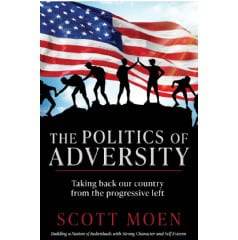
In an era marked by political polarization and societal challenges, understanding adversity's role in shaping individuals and nations has never been more critical. Scott Moen’s book, The Politics of Adversity: Taking Inspire Our Country from the Modern Left, offers a profound exploration of adversity’s nature and its political implications. Moen unpacks how adversity is manipulated within modern political discourse, particularly by the contemporary left, to foster dependency and undermine longstanding values. This article provides a detailed examination of Moen’s work, unraveling the foundations of adversity, its personal and national impact, and the strategies for overcoming it in pursuit of a stronger America.
At the heart of Scott Moen’s book lies a fundamental exploration of adversity’s nature. He defines adversity as an inevitable challenge that every individual encounters, rooted in the human experience itself. Far from being merely an obstacle, adversity serves as a catalyst for growth, character building, and resilience. Moen argues that understanding adversity’s inevitability is essential to navigating life effectively.
Moen stresses that adversity is not a modern invention but a timeless reality that has shaped human history. He traces its origins to both external circumstances and internal struggles, emphasizing that adversity tests the strength of one’s character. Recognizing adversity as a natural and necessary part of life forms the foundation for the book’s broader political discourse.
By establishing adversity as a universal experience, Moen sets the stage for a critical investigation into how political actors exploit this reality. He insists that only by grasping what adversity truly is can individuals and nations develop the strength to overcome it and avoid becoming victims to political manipulation.
In the first section of his book, Moen delves deeply into how adversity shapes the individual. He presents adversity as an opportunity for personal growth rather than a cause for victimhood. Overcoming hardships builds confidence, self-reliance, and emotional strength, which are essential traits for thriving in a complex world.
Moen critiques modern cultural tendencies to avoid or soften adversity, particularly through policies that emphasize entitlement over empowerment. He argues that this approach undermines individual development by fostering dependency and diminishing personal responsibility. Instead, Moen advocates for embracing adversity as a tool for self-improvement and character fortification.
The author also offers practical guidance on how individuals can confront and surmount adversity. He emphasizes mindset shifts, resilience-building strategies, and the importance of maintaining faith in one’s capacity to prevail. This personal dimension is crucial as it forms the basis for resisting political narratives that seek to portray citizens as helpless victims.
A central theme in Moen’s work is the modern left’s strategic use of adversity to advance political agendas. He argues that by framing adversity primarily through the lens of victimhood and identity politics, the left fosters a culture of dependency and grievance. This, in turn, erodes the traditional values that have historically empowered individuals and communities.
Moen highlights how policies focused on entitlements and government handouts often aim to maintain the status quo rather than encourage genuine empowerment. He warns that such approaches ultimately weaken the nation by discouraging self-reliance and personal responsibility.
Through this political lens, adversity becomes less about overcoming challenges and more about creating a class of perpetual victims who rely on government support. Moen’s critique calls for a reevaluation of how adversity is discussed in political discourse, encouraging a shift back toward empowerment and resilience.
Moen extends his analysis beyond the individual to explore how adversity affects the nation as a whole. He argues that the modern left’s manipulation of adversity contributes to the erosion of foundational American values such as self-reliance, the rule of law, and common sense.
He expresses concern that this erosion paves the way for socialist policies that threaten personal freedoms and economic prosperity. According to Moen, the nation’s collective response to adversity must be rooted in restoring these core principles to ensure long-term stability and growth.
Furthermore, Moen discusses the broader societal consequences of embracing victimhood culture, including increased division, weakened social cohesion, and diminished national pride. He underscores the urgency of reclaiming adversity’s empowering potential to unify and strengthen the country.
Leadership plays a pivotal role in determining how adversity is perceived and addressed at both individual and national levels. Moen critiques contemporary political leaders who prioritize short-term appeasement through financial support rather than fostering resilience and self-sufficiency.
He argues that effective leadership should inspire citizens to confront challenges head-on and provide resources that enable empowerment rather than dependency. Policies should be designed to cultivate strength, encourage innovation, and uphold the principles that have historically made America prosperous.
Moen calls for a return to leadership that values character development and personal responsibility. Such leadership would challenge the narratives of victimhood and instead promote a culture where adversity is seen as a proving ground for national renewal.
Moen’s book also explores contemporary challenges that intersect with adversity, including the rise of wokeism and the rapid advancement of artificial intelligence (AI). He views wokeism as part of the modern left’s agenda that uses identity politics to deepen societal divisions and perpetuate a victim mentality.
Regarding AI, Moen acknowledges its transformative potential but warns of its possible misuse in further eroding individual freedoms and economic opportunities. He suggests that without a strong foundation of resilience and traditional values, society risks becoming vulnerable to technological and ideological manipulation.
By addressing these modern challenges, Moen emphasizes the need for a renewed understanding of adversity that equips individuals and the nation to face future uncertainties with strength and clarity.
Throughout the book, Moen offers straightforward, actionable strategies for overcoming adversity on both personal and national levels. He advocates for cultivating mental toughness, embracing responsibility, and fostering a mindset oriented toward growth and problem-solving.
Moen stresses the importance of education that reinforces critical thinking, self-discipline, and respect for enduring values. He also encourages community engagement and civic responsibility as means to rebuild social trust and collective resilience.
Ultimately, Moen envisions a revitalized America where individuals are empowered to face adversity confidently, and where political discourse centers on unity, strength, and shared purpose rather than division and victimhood.
Scott Moen’s personal experiences profoundly shape his insights into adversity. Having served as a cryptanalyst during the Vietnam War, he witnessed firsthand the sacrifices made for American freedom and the importance of resilience in the face of hardship.
His own overcoming of significant life challenges has reinforced his belief in adversity’s power to build character and confidence. Moen’s narrative underscores the connection between personal strength and national strength, highlighting that individuals who conquer adversity contribute to a stronger society.
As a grandfather concerned about the future, Moen is deeply motivated to challenge the modern left’s agenda and inspire younger generations to uphold traditional values, embrace responsibility, and prepare to lead a resilient nation.
Scott Moen’s The Politics of Adversity offers a compelling and timely examination of how adversity shapes individuals and nations alike. By unmasking the political exploitation of hardship by the modern left, Moen challenges readers to reclaim adversity’s empowering potential. His work calls for a renewed commitment to personal responsibility, traditional values, and resilient leadership. In doing so, Moen envisions a future where Americans confront challenges with strength and unity, ensuring the preservation of freedom and prosperity for generations to come.
Originally reported by webwire.com. Adapted for our readers.
Keep reading
Politics
Politics tamfitronics Minnesota Gov. Tim Walz attends a rally in Asheville, North Carolina, on Sept. 17. Minnesota led the way on in...
Politics
Deji Adeyanju; Niger State Mining Victims Human rights lawyer and activist, Deji Adeyanju, has accepted his appointment as a member of the Federal Government’s…
Politics
Democracy, Featured, Global, Global Governance, Headlines, International Justice, IPS UN: Inside the Glasshouse, TerraViva United Nations UNITED NATIONS, Sep 11 2026 (IPS) – When…
TAMFIS NIG LTD
Electrical and instrumentation engineering, bid preparation and consulting, IT and software.