
Business
Nigeria’s Broken Systems: Why Failure Persists and What Must Change
An analysis of the structural and institutional factors that entrench governance failures in Nigeria, from patronage politics and weakened oversight to the urgent need…
TAMFIS NIG LTDRC 8067447CAC ACTIVEFinima, Bonny Island, Rivers State

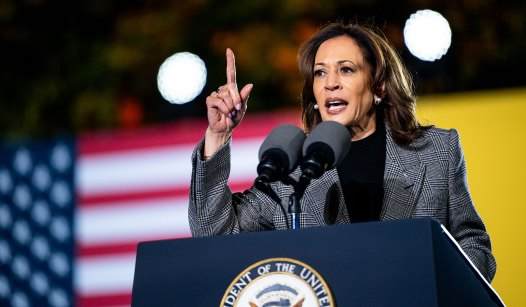
In recent years, the rise of 'woke politics' has reshaped the landscape of American political discourse, often stirring controversy and division. The Kamala Harris campaign, initially perceived as embracing progressive ideals, has found itself navigating the complex and often toxic waters of woke ideology. This article examines how the Harris campaign serves as a microcosm of the broader challenges and pitfalls associated with woke politics, revealing its implications on political strategy, public perception, and the unity of the electorate.
Woke politics emerged as a cultural and political movement focused on social justice, equality, and confronting systemic discrimination. While its intentions are rooted in promoting inclusivity and awareness, the term 'woke' has evolved to carry a polarizing connotation, often criticized for fostering division and intolerance toward differing viewpoints.
The influence of woke politics extends beyond social movements into the political arena, where campaigns and politicians feel pressured to adopt or reject certain progressive stances. This dynamic creates a challenging environment where messaging must balance advocacy with broader electoral appeal.
The Harris campaign’s engagement with woke politics reflects this tension. Initially appealing to progressive voters through a platform emphasizing racial justice and equity, the campaign has faced backlash from both conservative critics and moderate Democrats uneasy with the perceived excesses of woke ideology.
Kamala Harris’s political ascent was marked by her vocal support for social justice causes, aligning with many principles associated with woke politics. Her record on criminal justice reform, advocacy for marginalized communities, and emphasis on diversity positioned her as a progressive figure within the Democratic Party.
During her presidential campaign, Harris highlighted issues such as systemic racism, gender equality, and LGBTQ+ rights, resonating with a base eager for transformative change. This approach initially garnered enthusiasm among younger voters and activists committed to woke ideals.
However, as the campaign progressed, the intensity of woke rhetoric sometimes alienated moderate voters and drew criticism from opponents who framed her policies as divisive or out of touch with mainstream concerns.
As public sentiment shifted, the Harris campaign attempted to moderate its tone, seeking to appeal to a wider electorate. This pivot involved downplaying some woke elements while emphasizing unity and pragmatic governance. However, such distancing proved difficult given her established political identity.
Critics on both sides seized on this ambiguity: conservatives accused Harris of pandering to woke extremists, while progressives viewed her moderation as a betrayal of core values. This dichotomy placed the campaign in a precarious position, struggling to maintain credibility across diverse voter groups.
The tension illustrates a broader political challenge where candidates must navigate the fine line between advocating for social justice and avoiding the pitfalls of alienating swing voters wary of woke excesses.
The association with woke politics has had a tangible impact on Harris’s electoral prospects. For some voters, her alignment with progressive ideals solidified loyalty, while others perceived it as emblematic of a divisive political climate, reducing her appeal.
Polling data and electoral analysis indicate that the campaign’s struggle to clearly define its stance on woke issues contributed to voter uncertainty. This ambiguity may have hindered efforts to galvanize support beyond the party’s progressive base.
Moreover, opponents have leveraged the narrative of woke toxicity to undermine Harris’s credibility, framing her campaign as out of touch with everyday American concerns, thereby influencing public opinion and media coverage.
Media coverage has played a significant role in shaping the narrative around Harris and woke politics. Outlets across the political spectrum have highlighted her campaign’s relationship with progressive ideals, often amplifying controversies related to woke rhetoric.
Right-leaning media frequently portray the campaign as emblematic of woke overreach, emphasizing conflicts and perceived ideological rigidity. Conversely, left-leaning media sometimes critique the campaign’s attempts to temper woke messaging as insufficient or politically motivated.
This polarized media environment complicates the campaign’s communication strategy, forcing it to constantly respond to narratives that may not fully capture the nuances of its platform or intentions.
The Harris campaign’s experience underscores the broader challenges faced by the Democratic Party in reconciling progressive activism with electoral pragmatism. The tension between embracing woke ideals and appealing to moderate voters is a persistent theme in contemporary politics.
Woke politics, while energizing certain segments of the electorate, risks deepening partisan divides and alienating those who view it as excessively ideological or exclusionary. This dynamic complicates efforts to build broad coalitions necessary for electoral success.
The campaign’s trajectory highlights the need for political actors to navigate identity politics carefully, striving for inclusivity without sacrificing the ability to unite diverse constituencies under common goals.
Politicians like Kamala Harris face the challenge of balancing progressive values with practical governance. Developing messaging that acknowledges social justice concerns while emphasizing unity and shared interests may help bridge divides.
Engagement with communities across the political spectrum, coupled with transparent communication about policy goals and compromises, can mitigate the perception of woke politics as inherently toxic or divisive.
Ultimately, successful navigation of woke politics requires adaptability, empathy, and a nuanced understanding of the electorate’s varied priorities, enabling campaigns to build trust and foster constructive dialogue.
The Kamala Harris campaign serves as a revealing case study of the complexities and challenges posed by woke politics in contemporary American elections. Its attempts to embrace, then distance from, woke ideology illustrate the difficulty of satisfying diverse voter expectations simultaneously.
Woke politics, while rooted in important social justice goals, can become a source of polarization and political toxicity if not managed carefully. The Harris campaign’s experience highlights the importance of strategic communication and coalition-building in overcoming these challenges.
As political discourse continues to evolve, the lessons from the Harris campaign emphasize the need for balance, inclusivity, and pragmatism to ensure that the pursuit of justice does not undermine unity and electoral viability.
The Kamala Harris campaign exemplifies the challenges inherent in engaging with woke politics within the current American political climate. Its journey from embracing progressive ideals to attempting a strategic distancing reveals the toxicity and divisiveness that woke politics can introduce into electoral processes. Moving forward, political leaders must learn from this experience, striving to balance the pursuit of social justice with the imperative of fostering unity and broad-based support. Only through thoughtful, inclusive, and pragmatic approaches can the toxicity associated with woke politics be mitigated, ensuring a healthier and more effective political discourse.
Originally reported by nationalreview.com. Adapted for our readers.
Keep reading
Business
An analysis of the structural and institutional factors that entrench governance failures in Nigeria, from patronage politics and weakened oversight to the urgent need…
Politics
Yari says the APC will emphasise Tinubu’s achievements in 2027. This analysis explains how voters can examine outcomes, baselines and campaign evidence.
Lifestyle
Obi says his wife funds her own purchases. This analysis separates his explanation, unverified handbag prices and the evidence needed to assess public spending.
TAMFIS NIG LTD
Electrical and instrumentation engineering, bid preparation and consulting, IT and software.

