
Politics
Science vs politics: Kiwi’s long road to EU health-claim approval
In August 2025, Zespri, the world’s largest marketer of kiwifruit, announced that the European Commission had approved what it described as the first health…
TAMFIS NIG LTDRC 8067447CAC ACTIVEFinima, Bonny Island, Rivers State

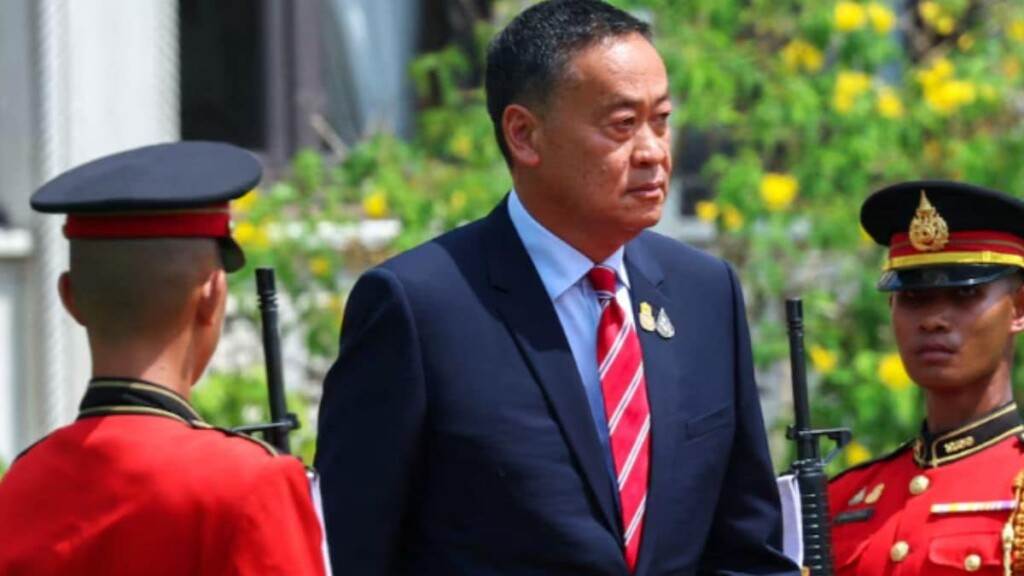
Thailand’s political arena is witnessing a profound transformation as the Constitutional Court prepares to deliver a landmark ruling on Prime Minister Srettha Thavisin’s fate. This development comes on the heels of the court’s controversial disbanding of the Move Forward party, signaling an intensified judicial influence over political processes. The judiciary’s increasing intervention reflects the country’s complex power struggles involving military-appointed senators, political coalitions, and the monarchy’s role. This article delves into the background and implications of these judicial decisions, offering a comprehensive understanding of Thailand’s evolving political scenario.
Prime Minister Srettha Thavisin finds himself at the center of a constitutional controversy that threatens his political survival. The case against him stems from accusations by a group of senators, appointed by a former military junta, who allege that his appointment of a former lawyer with a criminal record to the cabinet violated ethical and constitutional standards. This lawyer, Pichit Chuenban, had previously represented the influential Shinawatra family and was once found in contempt of court, although bribery charges were never conclusively proven.
Despite the senators’ claims, Srettha denies any wrongdoing and asserts that the appointment process was thoroughly vetted. His chief-of-staff has expressed confidence that the prime minister will withstand the legal challenge. However, the fact that these senators’ terms have expired adds a layer of complexity and controversy to the legitimacy of the complaint. The case is set to be decided by the Constitutional Court on August 14, a ruling that could dramatically alter Thailand’s political landscape.
This judicial scrutiny highlights the delicate balance of power in Thailand, where the courts have increasingly become arbiters in political disputes. The case against Srettha is emblematic of the broader tensions between elected officials, the military, and the judiciary, underscoring the challenges of governance in a country with a history of coups and judicial interventions.
Should the Constitutional Court rule against Prime Minister Srettha, it would trigger significant political upheaval. His dismissal would necessitate the formation of a new government, compelling the ruling Pheu Thai party to propose a new candidate for the premiership. This process could ignite power struggles within the coalition and the broader parliament, potentially destabilizing the current administration and delaying critical policy implementations.
Srettha’s government has already faced challenges in pushing forward its economic agenda, including a $12.8 billion stimulus package aimed at revitalizing Thailand’s economy. Political uncertainty fueled by the court ruling has exacerbated market volatility and public skepticism about the government’s stability. A change in leadership could either stall or reshape these economic initiatives, depending on the direction taken by any successor.
Furthermore, the dismissal could lead to realignments within Thailand’s political alliances. Coalition partners may leverage the situation to renegotiate terms or assert greater influence, possibly resulting in a cabinet reshuffle or shifts in policy priorities. The political fragmentation risks prolonging instability in a country that has seen frequent interruptions in democratic governance over the past two decades.
If Prime Minister Srettha is removed from office, only individuals officially designated as prime ministerial candidates by their parties before the last election are eligible to be nominated. Among potential successors within Pheu Thai and its affiliates are Paetongtarn Shinawatra, the party leader and daughter of former Prime Minister Thaksin Shinawatra, who remains a significant figure in Thai politics despite controversies surrounding her family.
Other notable candidates include former Justice Minister Chaikasem Nitisiri, Interior Minister and Deputy Premier Anutin Charnvirakul, Energy Minister Pirapan Salirathavibhaga, and Prawit Wongsuwon, a former army chief with strong military ties. Each candidate represents different factions and interests within Thailand’s complex political ecosystem, which could influence the direction of governance and policy.
The selection of a new prime minister would not only affect Pheu Thai’s internal dynamics but also the broader parliamentary landscape. Competing coalitions and alliances may emerge, as parties negotiate to secure parliamentary support. This could result in a reshaped political order, with new priorities and alliances that reflect the evolving balance of power in Thailand.
Just days before the scheduled ruling on Srettha, Thailand’s Constitutional Court disbanded the Move Forward party, the 2023 election’s biggest winner, over its campaign to amend the lèse-majesté law that protects the monarchy from criticism. The court ruled that the party improperly used the royal family for electoral advantage, leading to a 10-year political ban on its 11 executives.
The dissolution has been highly controversial, igniting debates about judicial overreach and the limits of political expression in Thailand. Move Forward had pledged to reform the law to prevent its abuse, maintaining that it did not intend to undermine the monarchy but to promote democratic freedoms. The court’s decision effectively removed a major opposition force from parliament, altering the political balance significantly.
This ruling underscores the judiciary’s pivotal role in Thailand’s political arena, where courts have repeatedly intervened in party politics. It raises questions about the independence of the judiciary and its influence in shaping electoral outcomes, particularly in relation to sensitive issues involving the monarchy and military interests.
In response to the Move Forward party’s dissolution, the remaining 143 lawmakers quickly regrouped under a new political entity called the People’s Party. This party now holds the largest number of seats in parliament and is led by Natthaphong Ruengpanyawut, a 37-year-old cloud software executive known for his role in Move Forward’s digital campaign strategy that mobilized widespread support.
Natthaphong has pledged to maintain the same political platform as Move Forward, including the controversial push to reform the lèse-majesté law. This continuation of policy goals signals a persistent challenge to the status quo and suggests that political tensions surrounding monarchy-related reforms will remain a defining feature of Thailand’s political discourse.
The establishment of the People’s Party represents both resilience and adaptation within Thailand’s opposition forces. However, the party faces the daunting task of navigating a parliamentary environment shaped by judicial decisions and military influence, while striving to maintain public support and advance its reform agenda.
Thailand’s politics have long been shaped by the military’s involvement, including multiple coups and the appointment of senators loyal to military interests. The current political turmoil reflects this enduring influence, as senators appointed by the military junta initiated the complaint against Prime Minister Srettha, illustrating how military-aligned institutions continue to exert pressure on civilian governments.
The judiciary, particularly the Constitutional Court, has emerged as a critical player in this power dynamic, often acting in ways that align with military and royalist interests. Its decisions to disband political parties and scrutinize government appointments reveal a pattern of judicial intervention that can override electoral mandates and parliamentary processes.
This intertwining of military and judicial power complicates Thailand’s democratic development. It creates an environment where political legitimacy is frequently contested not just at the ballot box but through legal and extra-parliamentary mechanisms, raising concerns about the sustainability of democratic governance in the country.
The ongoing political uncertainty in Thailand has significant economic repercussions. Investor confidence has been shaken by the prospect of government instability, delaying key economic reforms and stimulus measures aimed at recovery from the COVID-19 pandemic’s impact. The uncertainty surrounding Prime Minister Srettha’s position hampers the government’s ability to implement its $12.8 billion handout scheme designed to boost domestic consumption and growth.
Socially, the political turmoil exacerbates divisions within Thai society, particularly between younger, reform-minded voters and conservative, royalist factions. The dissolution of Move Forward and judicial challenges to the government fuel frustrations among those advocating for democratic reforms and greater political freedoms, potentially leading to increased protests and social unrest.
The combination of economic challenges and social tensions underscores the need for political stability and inclusive governance. Without it, Thailand risks prolonged disruptions that could impede development and deepen societal divides, threatening the country’s long-term prospects.
As Thailand awaits the Constitutional Court’s ruling on Prime Minister Srettha’s fate, the nation stands at a crossroads. The judiciary’s increasing role in political decision-making suggests that future governance will continue to be heavily influenced by legal interpretations and institutional power struggles rather than solely by electoral outcomes.
The political realignments following the dissolution of Move Forward and the potential changes in leadership within Pheu Thai will shape the country’s policy direction and stability. The resilience of opposition forces like the People’s Party indicates ongoing contestation over Thailand’s democratic future and the role of the monarchy in politics.
Ultimately, Thailand’s political trajectory will depend on how its institutions balance competing interests among the military, judiciary, political parties, and the public. The coming months will be critical in determining whether Thailand can achieve a more stable and inclusive political environment or remain trapped in cycles of judicial intervention and political uncertainty.
Thailand’s political future is increasingly shaped by its judiciary, which has asserted itself as a decisive force in determining the legitimacy and direction of government. As Prime Minister Srettha Thavisin awaits a critical ruling that could end his tenure, the country faces heightened uncertainty amid a backdrop of judicial interventions, military influence, and contested democratic reforms. The dissolution of the Move Forward party and the emergence of the People’s Party further illustrate the resilience and volatility of Thailand’s political opposition. Navigating these complexities will require careful negotiation among political actors, the judiciary, and the military to foster stability and democratic progress in a nation long marked by political turbulence.
Originally reported by firstpost.com. Adapted for our readers.
Keep reading
Politics
In August 2025, Zespri, the world’s largest marketer of kiwifruit, announced that the European Commission had approved what it described as the first health…
News
By Engr. Tamunofiniarisa BrownReading Time: 6 Minutes The conflict between Russia and Ukraine is often framed in the media as a simple battle between…
Politics
Twenty-five years after the September 11 attacks, the family of Marine Travis Fuller reflects on his death in the Iraq War, grappling with the…
TAMFIS NIG LTD
Electrical and instrumentation engineering, bid preparation and consulting, IT and software.