Politics
Yari’s 2027 Campaign Strategy: How to Evaluate Claims About Tinubu’s Record
Yari says the APC will emphasise Tinubu’s achievements in 2027. This analysis explains how voters can examine outcomes, baselines and campaign evidence.
TAMFIS NIG LTDRC 8067447CAC ACTIVEFinima, Bonny Island, Rivers State

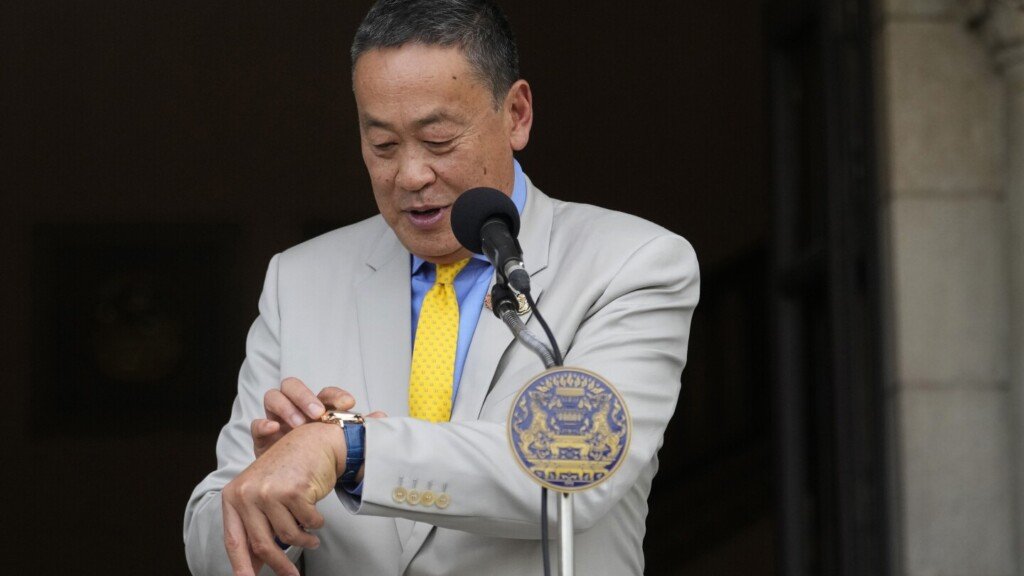
Thailand's Constitutional Court has removed Prime Minister Srettha Thavisin from office in a 5-4 ruling over an ethical violation, marking the second major judicial intervention in Thai politics within a week. The decision comes days after the court ordered the dissolution of the progressive Move Forward Party, which won last year's general election. The dual rulings have drawn international concern and raised fundamental questions about democratic governance in Southeast Asia's second-largest economy.
The court's decision centred on Srettha's appointment of Pichit Chuenban to his Cabinet during an April reshuffle. Pichit had served a six-month jail term in 2008 for contempt of court after allegedly attempting to bribe a judge with 2 million baht (approximately $55,000) in a grocery bag. The case involved former Prime Minister Thaksin Shinawatra, whose daughter Paetongtarn is now a leading candidate to succeed Srettha.
The Constitutional Court ruled that although Pichit had completed his sentence, his behaviour — as determined by the Supreme Court — was dishonest. As prime minister, Srettha bore sole responsibility for vetting Cabinet nominations. The court found that Srettha knew of Pichit's past but nominated him regardless, violating ethics codes embedded in the 2017 Constitution.
Pichit resigned from his post weeks after the controversy resurfaced, but the damage was done. The petition against Srettha was initiated by former members of the military-installed Senate, the same body that had blocked Move Forward's prime ministerial candidate after its election victory last year.
Last week's dissolution of the Move Forward Party and this week's removal of the sitting prime minister represent what political scientist Prajak Kongkirati of Thammasat University describes as "two judicial coups" that undermine democratic checks and balances. The Move Forward Party, which campaigned on reforming the lese-majeste law protecting the monarchy, was deemed to have violated the Constitution by proposing such amendments.
The party has since regrouped as the People's Party, but the signal is clear: Thailand's courts, particularly the Constitutional Court, function as a bulwark of the royalist establishment. The 2017 Constitution, drafted under the military government that seized power in the 2014 coup, granted the judiciary and nominally independent agencies such as the Election Commission sweeping powers that have been used repeatedly to sideline electoral winners.
The United Nations human rights office called the Move Forward dissolution "a setback to pluralism and democracy in Thailand." Deputy spokesman Farhan Haq urged that due process be followed in the wake of Srettha's removal.
The Cabinet remains in place on a caretaker basis under Phumtham Wechayachai, Srettha's first deputy prime minister and commerce minister, who is expected to serve as acting prime minister. Parliament has scheduled a vote for Friday to select a new premier, though there is no constitutional deadline to fill the position. The caretaker Cabinet also retains the power to dissolve Parliament and call a fresh election.
The leading contenders reflect Thailand's enduring power dynamics. From Pheu Thai, Paetongtarn Shinawatra — daughter of the polarising former premier Thaksin — is a frontrunner. Anutin Charnvirakul, head of the third-placed Bhumjaithai party and a powerful figure in the vote-rich northeast, is another. His family controls a major construction conglomerate, and he has served in both military-backed and civilian administrations.
Also in the frame are two former senior military officers: Prayuth Chan-ocha, who ruled for nine years after the 2014 coup, and Prawit Wongsuwan, one of his deputies. The presence of these figures underscores the military's continued influence over civilian politics.
Srettha, a former real estate executive, had positioned himself as a CEO-style leader focused on reopening Thailand after nearly a decade of military-backed rule. His administration prioritised trade negotiations abroad, launched a "soft power" agency to promote Thai cultural exports, and eased entry requirements to revive the critical tourism sector. A flagship populist policy — a 10,000 baht ($286) digital wallet handout — aimed to stimulate domestic consumption.
The political uncertainty now clouds these initiatives. Investors and trading partners face questions about policy continuity, particularly regarding the digital wallet scheme and foreign investment frameworks. The caretaker government's authority to implement new spending measures is limited, and any new prime minister will need to negotiate coalition agreements that could reshape economic priorities.
Thailand's stock market and currency have historically reacted negatively to political instability. The baht's trajectory and foreign capital flows will be closely watched in the coming weeks as Parliament navigates the selection process.
The UN's intervention signals growing international unease. The description of recent events as "judicial coups" by respected academics reflects a broader assessment that Thailand's democratic architecture remains fundamentally compromised. The 2017 Constitution's design — which empowers unelected senators and independent agencies to override electoral outcomes — continues to function as intended by its military drafters.
For businesses and investors, the lesson is clear: Thailand's political risk premium remains elevated. The cycle of elections followed by judicial or institutional interventions that nullify or constrain the winners has repeated across multiple cycles since 2006. Until the constitutional framework is reformed — a prospect that appears distant given the establishment's grip on the amendment process — this pattern is likely to persist.
Thailand's latest political upheaval reinforces a familiar pattern: electoral mandates are constrained by a constitutional architecture designed to preserve establishment control. For shoppers, business consumers, and investors watching Thai markets, the immediate concern is policy paralysis — the digital wallet stimulus, trade negotiations, and tourism reforms all hang in the balance while Parliament negotiates a new coalition. The deeper concern is structural. Until the 2017 Constitution's anti-democratic mechanisms are addressed, Thailand will remain trapped in a cycle where votes are cast but power is negotiated in courtrooms and backrooms. The UN's call for due process and the academic consensus on "judicial coups" signal that international patience is wearing thin. For now, the caretaker government holds the reins, but the direction of travel depends entirely on whether the next prime minister emerges from the Shinawatra orbit, the military establishment, or a fragile compromise between them.
Originally reported by apnews.com. Adapted for our readers with AI assistance.
Keep reading
Politics
Yari says the APC will emphasise Tinubu’s achievements in 2027. This analysis explains how voters can examine outcomes, baselines and campaign evidence.
Lifestyle
Obi says his wife funds her own purchases. This analysis separates his explanation, unverified handbag prices and the evidence needed to assess public spending.
Politics
Politics tamfitronics Minnesota Gov. Tim Walz attends a rally in Asheville, North Carolina, on Sept. 17. Minnesota led the way on in...
TAMFIS NIG LTD
Electrical and instrumentation engineering, bid preparation and consulting, IT and software.