
News
RUSSIA versus NATO and BRICS vs. NATO Military SWOT
Recall that Poland’s Minister Sikorski’s core claim is partially supported by the numbers, but the framing “quite quickly” and “without the U.S.” does not…
TAMFIS NIG LTDRC 8067447CAC ACTIVEFinima, Bonny Island, Rivers State

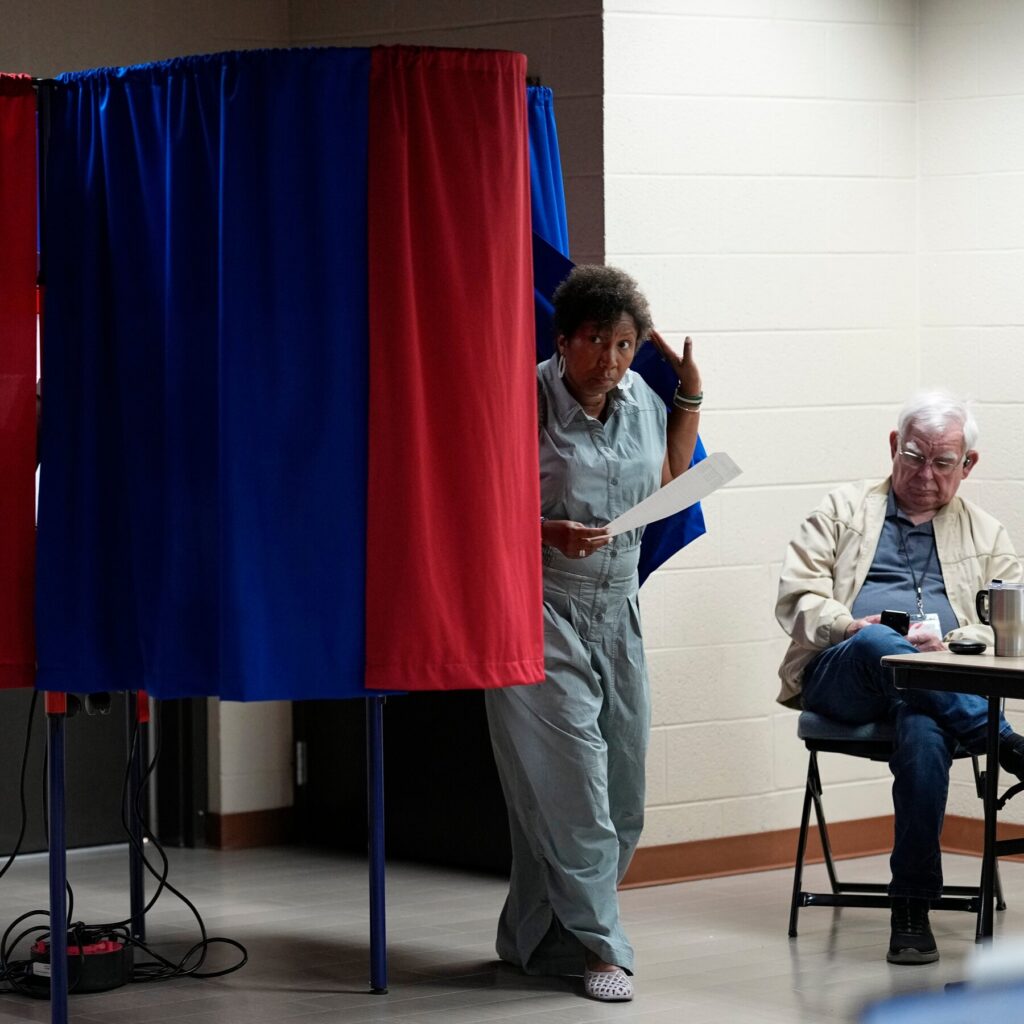
In August 2026, Tennessee held its primary elections under a new congressional map designed by Republican lawmakers. This redistricting notably altered the state’s only majority-Black district, a move widely seen as an attempt to consolidate Republican control over all nine of Tennessee’s House seats. Understanding the background, motivations, and consequences of this redistricting effort is essential for grasping the dynamics of Tennessee politics and the broader implications for representation and electoral competitiveness.
Every ten years, states redraw congressional district boundaries based on the latest census data to reflect population shifts and maintain equal representation. Following the 2020 census, Tennessee’s Republican-controlled legislature undertook the redistricting process ahead of the 2026 elections. Given the party’s dominance in the state, this presented an opportunity to reshape districts in a way that could maximize Republican electoral advantage.
The redistricting process in Tennessee was contentious, particularly because it targeted the state’s only majority-Black district. Historically, this district has served as a critical platform for Black voters to elect representatives who advocate for their community’s interests and priorities. However, the new map fragmented this district, dispersing its Black voting population across several districts, a move that significantly altered the political landscape.
The majority-Black district, once a Democratic stronghold, was effectively dismantled by the Republican-led redistricting. By splitting the concentrated Black population into multiple districts, the influence of Black voters was diluted, making it more difficult for candidates supported by these communities to win elections.
This tactic, known as “cracking,” involves dividing a cohesive voting bloc to weaken its electoral power. In Tennessee’s case, cracking the majority-Black district appears aimed at preventing Democrats from winning seats that previously leaned heavily Democratic due to the concentrated Black electorate.
The consequences of this fragmentation extend beyond election results. It raises serious questions about fair representation and the ability of minority communities to elect candidates who genuinely represent their interests. Civil rights organizations and political analysts have criticized the redistricting as a form of racial gerrymandering, arguing that it undermines the Voting Rights Act’s protections and disenfranchises Black voters.
The overarching goal of Tennessee’s Republican legislators in redrawing the congressional map was to secure all nine of the state’s U.S. House seats. By reshaping districts to favor Republican candidates, the party aims to solidify its dominance in the state’s congressional delegation for the foreseeable future.
The new district boundaries disperse Democratic-leaning voters, particularly those in the former majority-Black district, across multiple districts dominated by Republican voters. This effectively enhances the Republican voter base in key districts, making it more challenging for Democrats to mount successful campaigns.
This strategy reflects a broader national trend where partisan legislatures use redistricting as a tool to entrench party power. While it may yield short-term electoral gains for Republicans, it also risks exacerbating political polarization and diminishing electoral competitiveness. In heavily gerrymandered districts, voters often face limited choices, which can lead to voter apathy and decreased turnout.
The redistricting had a pronounced impact on the candidate fields in Tennessee’s 2026 primaries. With the majority-Black district fragmented, Democratic candidates confronted a more challenging electoral environment, facing diluted support and fewer safe districts.
In the newly drawn Republican-favored districts, the primaries featured a crowded field of GOP candidates competing vigorously for nominations, reflecting confidence in winning the general elections. This intra-party competition underscores the strength of the Republican base in these areas.
Conversely, Democratic candidates had to recalibrate their strategies, focusing on districts where Democratic-leaning voters remained concentrated or targeting newly competitive districts. Despite these efforts, preliminary election results showed Republicans maintaining strong leads in most districts, consistent with the intended effects of the redistricting.
The long-term implications of these changes remain uncertain. Key questions include how voter turnout might be affected by perceptions of reduced competitiveness and how community representation will evolve in districts where minority voters have been divided.
Tennessee’s redistricting highlights the delicate balance between political strategy and fair representation in the democratic process. While redistricting is a routine and necessary procedure to reflect population changes, the manner in which it is conducted can profoundly influence political power and minority representation.
Critics argue that partisan redistricting, especially when it involves cracking minority communities, undermines democratic principles by prioritizing party advantage over equitable representation. Supporters contend that redistricting reflects changing demographics and political realities, emphasizing the importance of electoral success.
This case also feeds into the ongoing national debate over redistricting reform. Many advocates call for independent commissions to draw district lines impartially, aiming to prevent gerrymandering and protect minority voting rights. Tennessee’s experience adds urgency to these discussions, illustrating the challenges of ensuring that redistricting processes promote fairness, inclusivity, and democratic integrity.
Tennessee’s 2026 primary elections underscore the profound impact that redistricting can have on political representation and electoral outcomes. By dismantling the state’s majority-Black district, Republican lawmakers have reshaped the political landscape to their advantage, prompting concerns about minority representation and democratic fairness. As debates over redistricting reform continue nationwide, Tennessee’s experience serves as a critical example of the challenges and consequences inherent in the redistricting process. Moving forward, ensuring that electoral maps reflect both demographic realities and principles of equitable representation remains a pressing issue for Tennessee and the broader United States.
Originally reported by nytimes.com. Adapted for our readers with AI assistance.
Keep reading
News
Recall that Poland’s Minister Sikorski’s core claim is partially supported by the numbers, but the framing “quite quickly” and “without the U.S.” does not…
Politics
In August 2025, Zespri, the world’s largest marketer of kiwifruit, announced that the European Commission had approved what it described as the first health…
News
By Engr. Tamunofiniarisa BrownReading Time: 6 Minutes The conflict between Russia and Ukraine is often framed in the media as a simple battle between…
TAMFIS NIG LTD
Electrical and instrumentation engineering, bid preparation and consulting, IT and software.