
Politics
How Minnesota Figures Into the Presidential Politics of Insulin Prices
Politics tamfitronics Minnesota Gov. Tim Walz attends a rally in Asheville, North Carolina, on Sept. 17. Minnesota led the way on in...
TAMFIS NIG LTDRC 8067447CAC ACTIVEFinima, Bonny Island, Rivers State

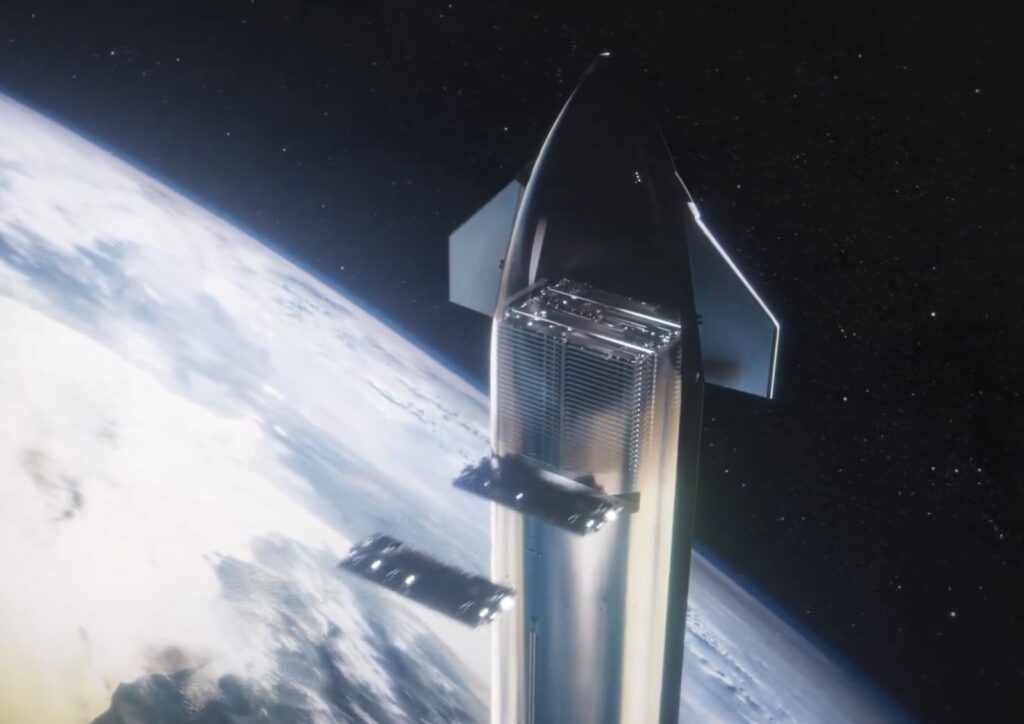
SpaceX’s Starlink project has evolved from an ambitious vision of global broadband connectivity into a formidable revenue engine, fundamentally altering the economics of space-based internet. With over 9,000 satellites deployed and a user base spanning 140 countries, Starlink is projected to generate tens of billions in revenue within the next few years. This article explores how SpaceX has leveraged technological innovation, economies of scale, and strategic investments to make Starlink its primary cash machine, outpacing traditional aerospace contracts and setting new standards in the satellite broadband industry.
Starlink has swiftly transitioned from a conceptual satellite constellation to a global broadband powerhouse, serving more than six million users worldwide. Its rapid deployment and expansive coverage have disrupted traditional satellite internet providers and challenged terrestrial broadband limitations, especially in underserved regions.
This expansive reach is supported by a constellation of over 9,000 satellites, with more being launched regularly. Starlink’s scale and speed have not only elevated SpaceX’s market position but also introduced new geopolitical implications, enabling connectivity in regions previously isolated or constrained by infrastructure.
Financially, Starlink dwarfs SpaceX’s government contracts, including those with NASA. With projected revenues reaching $15.5 billion in 2025 and potential to scale to $100-200 billion by 2027, Starlink has become the cornerstone of SpaceX’s profitability and future growth strategy.
SpaceX revolutionized satellite manufacturing by adopting production methodologies akin to consumer electronics and automotive industries. Unlike traditional aerospace, which emphasizes low-volume, highly reliable builds, SpaceX prioritized mass production with tolerable failure rates, leveraging economies of scale.
This approach enabled batch testing and rapid iteration, significantly reducing per-unit costs. Early Starlink satellites cost between $500,000 to $1 million each, but subsequent design simplifications and in-house component development cut costs to about $250,000 per satellite for newer models.
By producing roughly 2,000 satellites annually, SpaceX exceeded the total number of satellites launched globally before 2019. This high-volume strategy, combined with vertical integration, allowed SpaceX to avoid expensive off-the-shelf parts, slashing component costs by up to 50%.
A critical challenge for low Earth orbit (LEO) constellations like Starlink is the user terminal or antenna, which must dynamically track fast-moving satellites. SpaceX’s solution was to mass-produce flat-panel phased array antennas using automated assembly lines, dramatically reducing costs.
From prices of up to $1 million for early mechanically steered antennas to just $349 for the latest models, the cost reduction is staggering. Production facilities in Bastrop, Texas, churn out millions of these antennas annually, enabling affordability for millions of subscribers globally.
This cost efficiency opened new markets, including rural, maritime, and conflict zones such as Ukraine, where over 47,000 terminals are in use. The affordability and performance of these user terminals have been pivotal in Starlink’s rapid customer acquisition and revenue growth.
The backbone of Starlink’s rapid deployment is the Falcon 9 launch vehicle, whose partial reusability has drastically lowered launch costs. Early Falcon 9 launches cost around $60-70 million each, but advancements and multiple reuses have brought this down to approximately $30 million per launch by 2025.
Each Falcon 9 can deploy up to 29 Starlink satellites, adding significant network capacity with every flight. This cost efficiency allows SpaceX to maintain a high launch cadence, essential for replenishing aging satellites and scaling the constellation.
Looking forward, the Starship vehicle promises even greater launch capacities and cost reductions, with the potential to deploy hundreds of satellites per launch. This will further cement SpaceX’s competitive advantage in satellite deployment economics.
SpaceX’s strategy of vertical integration—manufacturing satellites, antennas, rockets, and engines in-house—has been a key factor in its cost leadership. This approach reduces dependency on external suppliers and allows rapid innovation cycles.
By developing proprietary components such as lasers, reaction wheels, and phased array antennas, SpaceX has optimized performance while controlling costs. This contrasts with traditional aerospace companies that rely heavily on third-party parts, inflating costs and timelines.
Vertical integration also enhances quality control and scalability, enabling SpaceX to produce at volumes hundreds of times greater than legacy satellite manufacturers. This synergy across production lines underpins Starlink’s rapid growth and profitability.
Starlink’s success has spurred rival efforts worldwide, notably China's mega-constellations like Qianfan and G60 Starlink, aiming to deploy tens of thousands of satellites. However, these programs face challenges due to the lack of reusable launch vehicles and the need for substantial funding.
China’s ambitions are supported by its global 5G infrastructure companies such as Huawei, which could facilitate integration of satellite broadband with terrestrial networks. Still, the cost and technical hurdles remain significant compared to SpaceX’s mature, vertically integrated model.
Beyond business, Starlink’s global coverage impacts geopolitics by providing connectivity in remote or contested areas, influencing information access, military communication, and economic development. This raises strategic considerations for governments worldwide.
Starlink is expanding beyond broadband internet to offer direct-to-cellphone services, including voice, text, and data connectivity without traditional cellular infrastructure. This move could unlock vast new markets, especially in regions lacking reliable cellular coverage.
Analysts project that these enhanced services could push Starlink’s revenue to between $40 billion and $100 billion in 2026, with potential growth to $200 billion by 2027. This growth trajectory underscores Starlink’s transformation into a diversified telecommunications powerhouse.
Additionally, Starlink’s technology may support emerging applications such as in-flight connectivity, maritime communications, and IoT networks, further broadening its revenue base and solidifying SpaceX’s leadership in space-based communications.
Starlink has transcended its initial goal of providing global broadband to become the financial powerhouse underpinning SpaceX’s future. Through pioneering manufacturing techniques, launch innovations, and strategic vertical integration, SpaceX has built a satellite broadband network that is not only technologically advanced but also economically transformative. As Starlink expands its services and global footprint, it is redefining the commercial space landscape and setting new benchmarks for revenue generation in the space sector. The coming years will be critical in observing how this juggernaut shapes global connectivity and space commerce.
Originally reported by nextbigfuture.com. Adapted for our readers.
Keep reading
Politics
Politics tamfitronics Minnesota Gov. Tim Walz attends a rally in Asheville, North Carolina, on Sept. 17. Minnesota led the way on in...
Politics
Deji Adeyanju; Niger State Mining Victims Human rights lawyer and activist, Deji Adeyanju, has accepted his appointment as a member of the Federal Government’s…
Politics
Democracy, Featured, Global, Global Governance, Headlines, International Justice, IPS UN: Inside the Glasshouse, TerraViva United Nations UNITED NATIONS, Sep 11 2026 (IPS) – When…
TAMFIS NIG LTD
Electrical and instrumentation engineering, bid preparation and consulting, IT and software.