Politics
How Minnesota Figures Into the Presidential Politics of Insulin Prices
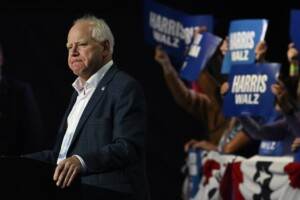
Politics tamfitronics Minnesota Gov. Tim Walz attends a rally in Asheville, North Carolina, on Sept. 17. Minnesota led the way on in...
TAMFIS NIG LTDRC 8067447CAC ACTIVEFinima, Bonny Island, Rivers State

The political landscape in Edo State has recently been marked by escalating tensions between Deputy Governor Philip Shaibu and Governor Godwin Obaseki. What began as a cooperative partnership has now soured, with Shaibu openly accusing Obaseki of sidelining him and denying his contributions to Obaseki’s rise to power. This feud has not only strained their working relationship but also has significant ramifications for the upcoming 2024 governorship election in Edo. This article delves into the roots of their conflict, the key issues at stake, and what this means for Edo State’s political future.
Philip Shaibu and Godwin Obaseki’s political alliance began with a shared goal: to transform Edo State’s governance. Shaibu, an experienced politician, was initially skeptical about Obaseki’s gubernatorial ambitions, citing Obaseki’s lack of political experience and financial resources. It was former Governor Adams Oshiomhole who played a pivotal role in persuading Shaibu and others to support Obaseki’s candidacy.
Despite initial reservations, Shaibu eventually agreed to back Obaseki, largely out of respect for Oshiomhole’s influence and vision. This alliance culminated in Shaibu being selected as Obaseki’s running mate, a strategic move meant to strengthen the political ticket and enhance their chances of winning the governorship.
The partnership appeared strong during their first term, with Shaibu actively supporting Obaseki’s administration. However, underlying tensions began to emerge as political ambitions and disagreements over governance approaches came to the fore, setting the stage for the current fallout.
The conflict escalated when Shaibu publicly criticized Obaseki for failing to acknowledge his reinstatement to office by the court. Shaibu emphasized that his political efforts were instrumental in making Obaseki governor, dismissing any notion that Obaseki’s success was independent of his support.
In a notable interview on Channels Television’s 'Politics Today,' Shaibu detailed how it took three months of persuasion by Oshiomhole to convince him to support Obaseki’s candidacy. He stressed that Obaseki was neither a politician nor financially equipped to run for governor at the time.
Shaibu’s statements challenged Obaseki’s narrative and highlighted the deputy governor’s crucial role in the political victory. This public airing of grievances has deepened the rift, making reconciliation between the two leaders more difficult.
A significant point of contention is the issue of financial support. Shaibu accused Obaseki of deliberately withholding government cheques and funds, which he claims has hampered his ability to operate effectively within the administration and prepare for the 2024 governorship election.
According to Shaibu, he has not received any government financial disbursements for over a year, a situation he decries as politically motivated and unfair. This financial blockade is seen as a tactic by Obaseki to limit Shaibu’s political influence and curb his ambitions.
The financial dispute underscores the deteriorating trust between the two politicians and reflects broader struggles over control and influence within Edo State’s ruling party. It also raises questions about internal party democracy and the management of political allies.
The feud between Shaibu and Obaseki has direct implications for the upcoming 2024 governorship election. Shaibu, having been a deputy governor, is positioning himself as a viable candidate, but Obaseki’s alleged attempts to undermine his campaign could affect his chances.
This internal conflict risks fragmenting the ruling party’s support base, potentially weakening their electoral prospects. Voters and party members may be divided in their loyalties, leading to challenges in rallying unified support for any candidate emerging from this faction.
Moreover, the public nature of their dispute has drawn media attention and public scrutiny, which could influence voter perceptions and impact the political dynamics of Edo State’s election landscape.
Former Governor Adams Oshiomhole remains a significant figure in the political drama unfolding in Edo State. His initial role in persuading Shaibu to support Obaseki demonstrates his influence over key political players in the state.
Oshiomhole’s involvement is seen as both a stabilizing and complicating factor. While he helped unite political interests in the past, his continued engagement in Edo politics adds another layer to the complex relationships and rivalries shaping the current conflict.
Observers speculate on whether Oshiomhole will intervene to mediate the dispute or if his alliances will shift, further altering the political balance in Edo State ahead of the crucial 2024 elections.
The dispute between Shaibu and Obaseki is emblematic of broader political strategies and power struggles within Edo State’s ruling party. Both leaders are maneuvering to consolidate power and influence ahead of the elections, leveraging political capital, resources, and alliances.
Shaibu’s public denunciations and claims of being sidelined suggest a strategy to galvanize support and assert his relevance. Conversely, Obaseki’s alleged withholding of financial support may be a calculated move to weaken Shaibu’s political base.
These tactics highlight the intense competition and factionalism within the party, reflecting challenges in managing internal cohesion and maintaining a united front in the face of electoral contests.
The ongoing conflict between Shaibu and Obaseki could lead to several possible outcomes. One scenario is a reconciliation facilitated by party elders or influential stakeholders aiming to preserve party unity and electoral strength.
Alternatively, the feud could deepen, resulting in party fragmentation or defections that might alter the political landscape in Edo State. This could open opportunities for opposition parties to capitalize on internal divisions.
For Shaibu, the conflict presents both risks and opportunities. While he faces obstacles from within the administration, his vocal stance may endear him to certain voter segments seeking change or reform. The 2024 election will be a critical test of his political resilience and strategy.
The intensifying conflict between Deputy Governor Philip Shaibu and Governor Godwin Obaseki underscores the fragile nature of political alliances in Edo State. What began as a promising partnership has devolved into a public battle marked by accusations, withheld support, and strategic power plays. As the 2024 governorship election approaches, the outcome of this feud will significantly influence Edo’s political trajectory. Whether through reconciliation or further division, the unfolding drama highlights the complexities of political loyalty, ambition, and governance in contemporary Nigerian politics.
Originally reported by newsdirect.ng. Adapted for our readers.
Keep reading
Politics
Politics tamfitronics Minnesota Gov. Tim Walz attends a rally in Asheville, North Carolina, on Sept. 17. Minnesota led the way on in...
Politics
Deji Adeyanju; Niger State Mining Victims Human rights lawyer and activist, Deji Adeyanju, has accepted his appointment as a member of the Federal Government’s…
Politics
Democracy, Featured, Global, Global Governance, Headlines, International Justice, IPS UN: Inside the Glasshouse, TerraViva United Nations UNITED NATIONS, Sep 11 2026 (IPS) – When…
TAMFIS NIG LTD
Electrical and instrumentation engineering, bid preparation and consulting, IT and software.