
News
RUSSIA versus NATO and BRICS vs. NATO Military SWOT
Recall that Poland’s Minister Sikorski’s core claim is partially supported by the numbers, but the framing “quite quickly” and “without the U.S.” does not…
TAMFIS NIG LTDRC 8067447CAC ACTIVEFinima, Bonny Island, Rivers State

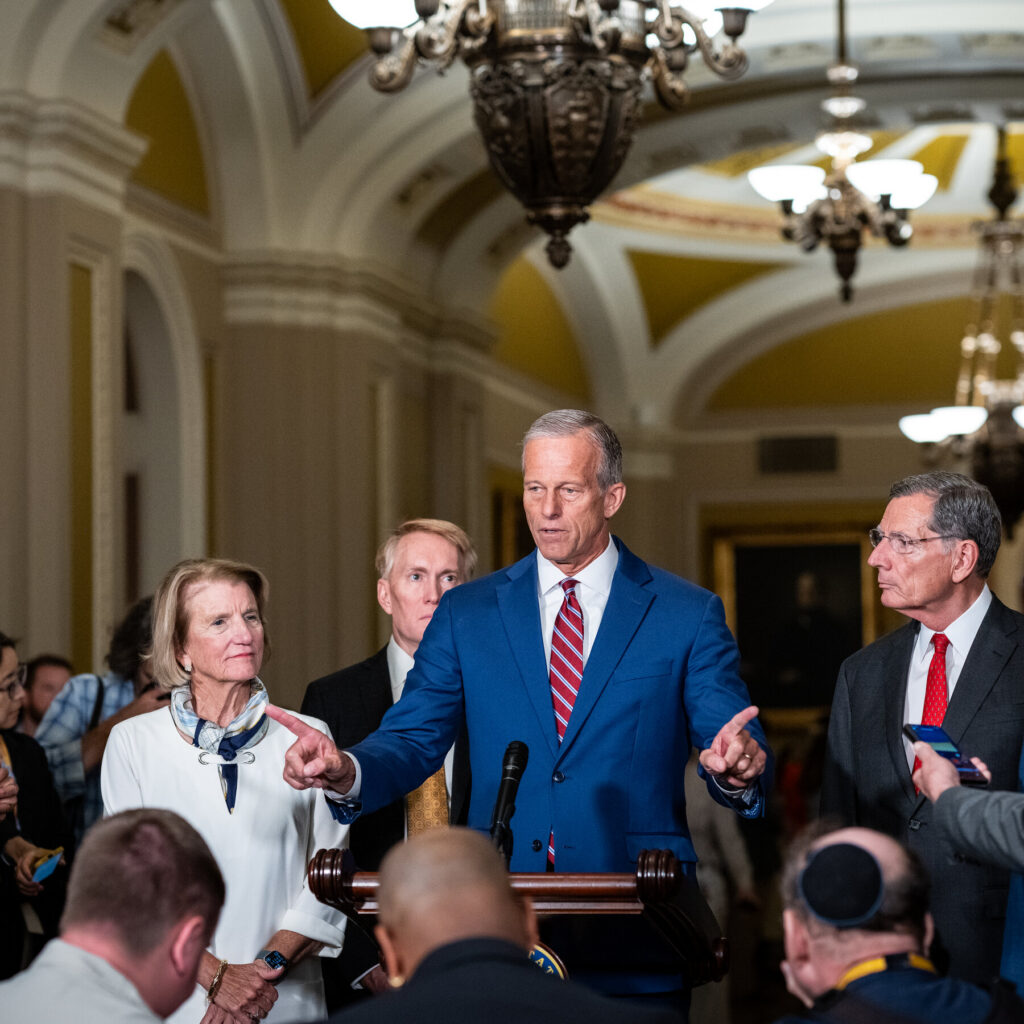
In a significant development during the summer legislative session, the Senate effectively acknowledged the impossibility of passing President Trump’s proposed voting restrictions bill. Despite the administration’s focus on this legislation as a key priority, Republican lawmakers found themselves unable to secure sufficient support, underscoring the entrenched partisan divisions and complex dynamics that characterize election law reform efforts in the current political landscape.
The Senate’s summer recess confirmed what political observers had anticipated for weeks: the Republican Party does not have the necessary votes to pass the voting restrictions bill championed by President Trump. This bill, positioned as a cornerstone of the administration’s agenda, aimed to introduce stricter regulations on voting procedures, including tighter voter identification requirements and limitations on mail-in and early voting. However, internal divisions within the Republican caucus and staunch Democratic opposition rendered the bill’s passage unattainable in the current Senate configuration.
The failure to advance the legislation reflects broader challenges in enacting voting reforms that satisfy the divergent priorities of lawmakers. Proponents argue that such measures are essential to safeguard election integrity and restore public confidence following the 2020 election. Opponents, however, view these efforts as attempts to suppress voter participation, particularly among minority and marginalized communities. This fundamental disagreement highlights the difficulty of finding common ground on such a polarizing issue, especially in a Senate evenly split between the two major parties.
The summer exit of the Senate session made clear that Republicans lacked the votes to push the bill through, confirming weeks of speculation and signaling a legislative deadlock that is unlikely to be resolved in the near future.
President Trump’s emphasis on voting restrictions stems from his persistent claims of widespread election fraud and a desire to tighten voting rules nationwide. The proposed legislation, often referred to as the 'Save America Act,' sought to impose uniform standards on voter identification, mail-in ballots, and early voting procedures across all states. These provisions were intended to address concerns raised by the administration regarding the integrity of recent elections and to prevent alleged irregularities.
However, the Republican Party itself is not monolithic on this issue. Some senators expressed reservations about the bill’s potential political repercussions, including fears that stricter voting laws could depress turnout among key constituencies or provoke backlash in upcoming elections. This internal skepticism, combined with unified Democratic opposition, resulted in a legislative deadlock. Given the Senate’s 50-50 split and the Vice President’s role as tie-breaker, passing contentious legislation requires either bipartisan cooperation or near-unanimous party support, neither of which materialized in this case.
This dynamic illustrates the complex interplay between party loyalty, electoral strategy, and policy priorities that shapes legislative outcomes in a deeply divided Senate.
The Senate’s retreat from the voting restrictions bill leaves the future of federal election law reform uncertain. With no immediate alternative proposals gaining traction, the status quo on voting regulations is likely to persist in the near term. This outcome may prompt advocates on both sides to reassess their strategies and seek more incremental or bipartisan approaches to address election-related concerns, rather than pursuing sweeping federal mandates.
Moreover, the legislative stalemate underscores the broader national debate over voting rights and election security. As states continue to enact their own voting laws—some expanding access, others imposing new restrictions—the absence of a federal standard could lead to increased variability and potential conflicts across jurisdictions. This patchwork approach may complicate efforts to ensure uniform access to voting and maintain public confidence in electoral outcomes, potentially exacerbating regional disparities and legal challenges.
The ongoing divergence in state-level voting laws highlights the challenges of balancing local autonomy with the need for consistent election standards, a tension that will likely shape future policy discussions.
The Senate’s inability to pass the voting restrictions bill elicited varied responses from political leaders and the public. Supporters of the legislation lamented the missed opportunity to fortify election security and expressed frustration with what they perceive as obstructionism by both Democrats and dissenting Republicans. They argue that stronger voting laws are necessary to prevent fraud and protect the integrity of future elections.
Conversely, critics celebrated the outcome as a victory for voting rights and a defense against measures they consider restrictive or discriminatory. They warn that such laws could disproportionately affect minority voters and undermine democratic participation. Public opinion on voting laws remains deeply divided along partisan lines, reflecting broader polarization in American politics.
The debate over the bill has also intensified discussions about the proper balance between federal oversight and state authority in managing elections. While some advocate for national standards to ensure fairness and consistency, others emphasize states’ rights and local control. This division suggests that voting legislation will continue to be a contentious and high-stakes issue in upcoming election cycles, with both sides mobilizing their constituencies around the issue.
The Senate’s decision to leave President Trump’s voting restrictions bill unpassed marks a pivotal moment in the ongoing national conversation about election integrity and voting rights. The legislative stalemate reveals the complexities of navigating partisan divides and the challenges inherent in crafting federal election laws that can garner broad support. As states continue to shape their own voting regulations, the debate over how best to balance security and accessibility in elections will remain a central and contentious issue in American democracy. Moving forward, stakeholders on all sides may need to explore more collaborative and nuanced approaches to reform that address concerns without deepening political fractures, potentially focusing on incremental changes and bipartisan dialogue to build consensus.
Originally reported by nytimes.com. Adapted for our readers with AI assistance.
Keep reading
News
Recall that Poland’s Minister Sikorski’s core claim is partially supported by the numbers, but the framing “quite quickly” and “without the U.S.” does not…
Politics
In August 2025, Zespri, the world’s largest marketer of kiwifruit, announced that the European Commission had approved what it described as the first health…
News
By Engr. Tamunofiniarisa BrownReading Time: 6 Minutes The conflict between Russia and Ukraine is often framed in the media as a simple battle between…
TAMFIS NIG LTD
Electrical and instrumentation engineering, bid preparation and consulting, IT and software.