Politics
How Minnesota Figures Into the Presidential Politics of Insulin Prices
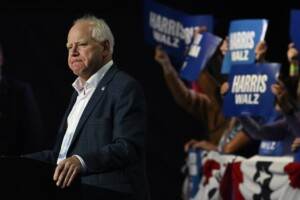
Politics tamfitronics Minnesota Gov. Tim Walz attends a rally in Asheville, North Carolina, on Sept. 17. Minnesota led the way on in...
TAMFIS NIG LTDRC 8067447CAC ACTIVEFinima, Bonny Island, Rivers State

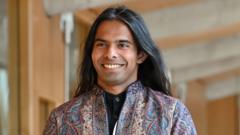
In August 2026, Q Manivannan, a recently elected Member of the Scottish Parliament (MSP) representing the Scottish Green Party, found themselves at the center of controversy following the resurfacing of podcast comments made prior to their election. The remarks, which discussed the concept of rape as a 'spectrum' and addressed the 'demonisation' of rape, ignited a fierce response from sexual violence survivors, advocacy groups, and political figures. This article examines the context of Manivannan’s comments, the ensuing backlash, and the broader implications for public discourse on sexual violence.
The comments in question were made during a podcast titled The Subjective Space, recorded before Manivannan was elected to the Scottish Parliament in May 2026. During the interview, the MSP discussed societal perceptions of care and rehabilitation, particularly focusing on the treatment of criminals, including those convicted of rape.
Manivannan, who identifies as non-binary and uses they/them pronouns, challenged the common stereotype of a rapist as a 'big burly man' and described the idea of rape as existing on a 'spectrum.' They argued that this spectrum encompasses various acts that are all serious but often homogenized under the single term 'rape.' The MSP emphasized that any individual could potentially commit such an act, a notion they acknowledged as difficult to confront.
These comments were intended to provoke thought about societal myths surrounding sexual violence and to highlight complexities in understanding and addressing it. However, the language used and the framing of rape as a spectrum sparked immediate concern and criticism from survivors and advocacy groups, who viewed the remarks as minimizing the severity and trauma of sexual violence.
The Scottish Rape Crisis Alliance (SRCA), which represents multiple rape crisis centers across Scotland, strongly condemned the remarks. In an open letter, the alliance emphasized that there is 'no hierarchy of rape' and warned against minimizing the severity and lifelong impact of sexual violence.
The SRCA stressed that rape should not be reduced to a theoretical debate or spectrum and urged politicians to avoid language that could normalize or diminish the gravity of sexual offenses. They highlighted the importance of recognizing and naming rape clearly and unequivocally, rather than framing it in ways that might cause survivors to question the legitimacy of their experiences.
Political figures across the spectrum also weighed in. Scotland’s Children’s Minister Siobhan Brown described the comments as 'misjudged.' The Scottish Labour Party and Scottish Liberal Democrats expressed concerns about the potential harm caused by such language. The Scottish Conservatives called for Manivannan’s suspension from the Green Party, with spokeswoman Meghan Gallacher labeling the remarks as deeply alarming and minimizing the seriousness of rape.
Additionally, Reem Alsalem, the United Nations Special Rapporteur on Violence against Women and Girls, posted on social media that rape should never be spoken about as a spectrum, reinforcing the global perspective on the issue.
In response to the backlash, Manivannan issued a statement expressing horror that their comments had been 'selectively edited' and taken out of context. They asserted that during the full interview, they had clearly stated that all rape is equally serious and harmful, a part of the conversation omitted from the clips that circulated online.
Manivannan apologized for the distress caused by the excerpts and the subsequent media coverage. They affirmed their commitment to standing with survivors and acknowledged their own experience as a survivor of sexual violence, which informs their understanding of the trauma involved.
They expressed regret over the hurt caused by their words and emphasized the importance of careful language when discussing sexual violence, recognizing the deeply personal and painful nature of the subject. Manivannan stated: 'Words matter, particularly when speaking about something as deeply personal and painful as sexual violence, and I regret this hurt caused.'
This controversy highlights the challenges politicians and public figures face when discussing sensitive topics such as sexual violence. The balance between fostering nuanced conversations and avoiding language that may inadvertently cause harm or minimize survivors’ experiences is delicate and complex.
The debate around the concept of a 'spectrum' of rape reflects ongoing tensions in how society understands and categorizes sexual offenses. While some seek to explore the complexities and varied contexts of such crimes, survivors’ advocates emphasize the need to maintain unequivocal condemnation and recognition of harm without creating hierarchies or distinctions that could invalidate survivors’ experiences.
The incident also underscores the importance of context and the risks of selective editing in media and public discourse. Misrepresentation can exacerbate misunderstandings and inflame public reactions, complicating efforts to engage in constructive dialogue and policy discussions.
Moreover, the response from political parties illustrates how sexual violence remains a highly charged issue in political arenas, where statements by elected representatives are scrutinized not only for their content but also for their potential impact on public trust and survivor support. This event serves as a reminder that public figures must exercise heightened sensitivity and clarity when addressing such topics to avoid unintended consequences and to uphold the dignity of survivors.
The incident involving MSP Q Manivannan serves as a potent reminder of the complexities surrounding public discussions of sexual violence. While intentions to explore nuanced perspectives are understandable, language must be chosen with care to avoid causing additional harm to survivors or diminishing the gravity of such offenses. This episode also illustrates the critical role of context and responsible media representation in shaping public understanding. Moving forward, politicians and advocates alike must prioritize clarity, empathy, and respect in conversations about sexual violence to foster a more informed and supportive societal response.
Originally reported by bbc.co.uk. Adapted for our readers with AI assistance.
Keep reading
Politics
Politics tamfitronics Minnesota Gov. Tim Walz attends a rally in Asheville, North Carolina, on Sept. 17. Minnesota led the way on in...
Politics
Nigerian human rights lawyer Deji Adeyanju has joined a Federal Government inquiry into the deaths of 37...
Politics
Democracy, Featured, Global, Global Governance, Headlines, International Justice, IPS UN: Insid...
TAMFIS NIG LTD
Electrical and instrumentation engineering, bid preparation and consulting, IT and software.