
Business
Nigeria’s Broken Systems: Why Failure Persists and What Must Change
An analysis of the structural and institutional factors that entrench governance failures in Nigeria, from patronage politics and weakened oversight to the urgent need…
TAMFIS NIG LTDRC 8067447CAC ACTIVEFinima, Bonny Island, Rivers State

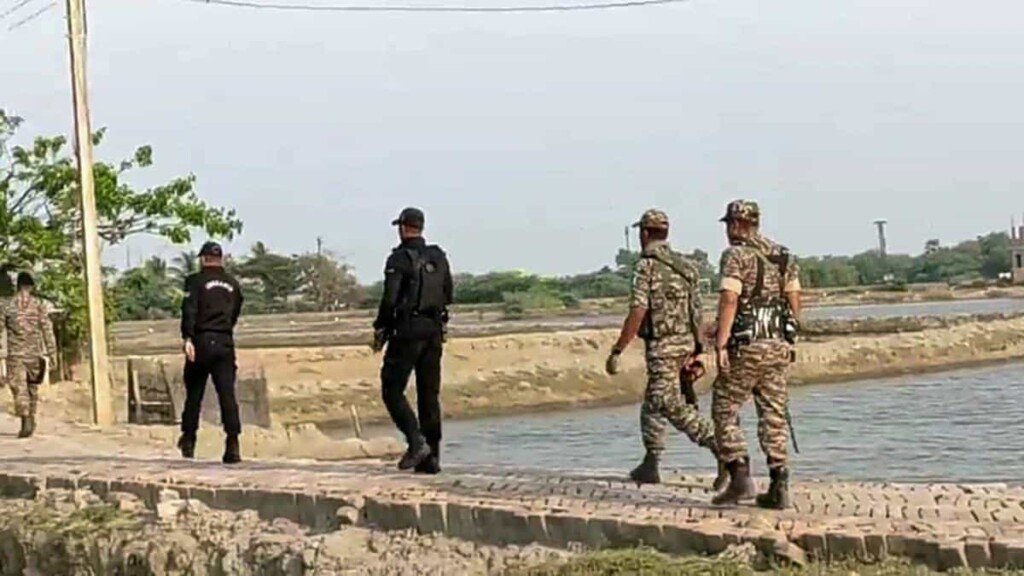
The recovery of arms and ammunition in Sandeshkhali, West Bengal, on April 26 has become a flashpoint in the state's politically charged atmosphere as the Lok Sabha elections progress. What began as a routine investigation by the Central Bureau of Investigation (CBI) into an earlier attack on Enforcement Directorate officials has escalated into a full-blown partisan clash, with the Trinamool Congress (TMC) alleging a conspiracy to defame the state government and the Bharatiya Janata Party (BJP) branding the find as an act of terror. The incident underscores how law enforcement actions are increasingly viewed through a partisan lens during election periods, particularly in West Bengal, where tensions between the ruling TMC and the opposition BJP have remained high. The involvement of multiple central agencies, including the NSG and bomb detection squads, has further fueled accusations of overreach, while the TMC has moved to challenge the raid's legitimacy before electoral authorities.
The operation, conducted across several locations in Sandeshkhali’s Agarhati village, involved a coordinated effort by the CBI, NSG bomb detection squad, central paramilitary forces, and West Bengal Police. According to officials, the search was linked to the January 5 attack on an ED team by a mob allegedly instigated by suspended TMC leader Shajahan Sheikh during a purported ration raid. The CBI reported seizing a cache that included three foreign-made revolvers, one foreign-made pistol, one Indian revolver, one Colt police revolver, one nation-made pistol, 120 nine mm bullets, 50 .45 calibre cartridges, 120 nine mm cartridges, 50 .380 cartridges, and eight .32 cartridges. The scale of the recovery, particularly the presence of foreign-made weapons, immediately drew sharp reactions from political leaders. The NSG’s deployment, typically reserved for high-risk terrorism or hostage situations, added weight to the BJP’s narrative of a serious security threat, while the TMC questioned the necessity of such force in what they described as an 'empty space'.
The Trinamool Congress swiftly condemned the operation, with state general secretary Kunal Ghosh accusing the BJP of using central agencies to malign the TMC during elections. Ghosh characterised the raid as part of a 'well-designed campaign' to discredit the state government, suggesting the timing and manner of the operation were politically motivated. The TMC filed a formal complaint with the West Bengal Chief Electoral Officer, arguing that the CBI conducted the raid without consulting state authorities or the local police, despite the state having a fully functional bomb disposal squad. The party contended that the raid took place at an 'empty space' during the second phase of polling, when elections were underway in neighbouring constituencies like Darjeeling, Raiganj, and Balurghat. The TMC’s letter to the CEO warned that the recovery of arms might have been staged, suggesting the weapons could have been 'surreptitiously planted' by the CBI or NSG to create a false narrative of lawlessness and to construct 'nationwide hatred' against the TMC and its candidates. The party claimed the incident demonstrated how the BJP had 'weaponised' central investigation agencies for electoral gain.
In response, senior BJP leader Amit Malviya dismissed the TMC’s concerns, declaring the arms haul an 'act of terror' and evidence of a war being waged against the nation. He questioned why the West Bengal government, under Mamata Banerjee as Home Minister, had approached the Supreme Court to block the CBI’s investigation, implying state complicity in shielding terrorists. Malviya argued that the recovery of such a large stockpile of illegal weapons in Sandeshkhali raised serious concerns about the state’s law and order situation, especially given the NSG’s deployment. BJP state spokesperson Samik Bhattacharya echoed this sentiment, blaming the TMC’s 'appeasement politics' for allowing 'anti-national elements' to operate freely in West Bengal. The BJP framed the raid not as an electoral stunt but as a necessary intervention to uncover a dangerous arms network that posed a threat to national security. Their stance positioned the CBI’s actions as a legitimate, long-overdue crackdown on illegal arms possession, rather than a politically timed maneuver.
The Sandeshkhali incident reflects a deeper pattern in Indian politics where central investigative agencies are frequently accused of bias during election cycles, particularly in opposition-ruled states. The TMC’s insistence that the raid was conducted without state consultation touches on ongoing debates about federalism and the appropriate use of central powers in law enforcement. While the CBI operates under central authority, its actions in states like West Bengal often trigger accusations of overreach when perceived to disadvantage ruling regional parties. The involvement of elite units like the NSG further blurs the line between routine investigation and counter-terrorism operations, raising questions about proportionality. For businesses and investors, such episodes signal potential instability in regions where political confrontation interferes with administrative functioning, potentially affecting local economic activity and investor confidence. The episode also highlights how electoral processes can become conduits for broader institutional conflicts, with law enforcement actions becoming battlegrounds for political legitimacy rather than tools for impartial justice.
The arms recovery in Sandeshkhali has transcended its origins as a criminal investigation to become a emblematic clash over governance, electoral integrity, and the use of central power in India’s federal system. As the Lok Sabha polls continue, the incident is likely to remain a reference point in the broader narrative of distrust between the TMC and BJP, with each side interpreting the same facts through radically opposed lenses. For observers, the episode serves as a reminder of how security operations, when conducted in highly polarised environments, can quickly become entangled in partisan warfare, potentially undermining public confidence in both law enforcement and democratic processes. Moving forward, the challenge lies in ensuring that investigative actions are perceived as credible and impartial, particularly when they occur amid heightened electoral competition.
Originally reported by thehindu.com. Adapted for our readers with AI assistance.
Keep reading
Business
An analysis of the structural and institutional factors that entrench governance failures in Nigeria, from patronage politics and weakened oversight to the urgent need…
Politics
Yari says the APC will emphasise Tinubu’s achievements in 2027. This analysis explains how voters can examine outcomes, baselines and campaign evidence.
Lifestyle
Obi says his wife funds her own purchases. This analysis separates his explanation, unverified handbag prices and the evidence needed to assess public spending.
TAMFIS NIG LTD
Electrical and instrumentation engineering, bid preparation and consulting, IT and software.

