
Politics
Science vs politics: Kiwi’s long road to EU health-claim approval
In August 2025, Zespri, the world’s largest marketer of kiwifruit, announced that the European Commission had approved what it described as the first health…
TAMFIS NIG LTDRC 8067447CAC ACTIVEFinima, Bonny Island, Rivers State

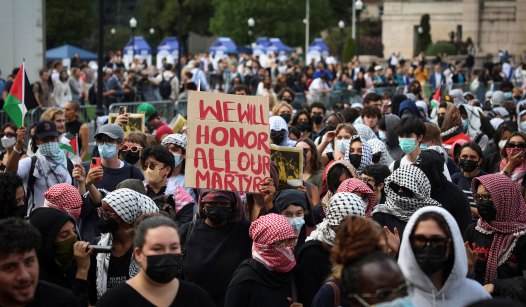
The notion that progressives have historically been staunch allies of Jewish communities is a widely held belief in contemporary political discourse. However, a closer examination of history and political dynamics reveals a more nuanced and, at times, contradictory relationship. From early 20th-century labor movements to modern-day policy debates, progressives have often been at odds with Jewish interests, reflecting ideological conflicts and shifting alliances. This article delves into the historical context, ideological divides, and political realities that demonstrate progressives were never unequivocal allies of the Jews.
In the early 20th century, many Jewish immigrants in the United States found themselves navigating a complex political landscape. While some Jewish individuals were active in progressive circles, the broader progressive movement frequently exhibited ambivalence or outright opposition to Jewish concerns. This was partly due to competing priorities within the labor and socialist movements, where class struggle often overshadowed ethnic or religious solidarity.
Progressive movements during this period sometimes tolerated or even promoted anti-Semitic sentiments, particularly when Jews were perceived as aligned with capitalism or as outsiders disrupting social cohesion. Such tensions were evident in urban centers where Jewish communities were prominent but faced discrimination from various political factions, including some self-identified progressives.
Moreover, the rise of Zionism and Jewish nationalism introduced another layer of complexity. Many progressives, committed to internationalism and anti-imperialism, viewed Zionist aspirations with suspicion or hostility. This ideological clash further complicated the relationship between progressives and Jewish communities, revealing fault lines that persist in different forms today.
Progressivism, with its emphasis on social justice, economic equality, and anti-discrimination, might seem naturally aligned with Jewish interests. However, ideological tensions often emerged, particularly regarding nationalism and identity politics. While many Jews valued cultural and religious distinctiveness, progressives frequently prioritized universalist ideals that downplayed particularistic identities.
This divergence became especially pronounced in debates over Israel and Middle East policy. Progressive skepticism toward nationalist projects, especially those involving statehood and self-determination, sometimes translated into criticism or delegitimization of Jewish national aspirations. Consequently, many Jews felt alienated by progressive rhetoric that appeared dismissive or hostile toward their historical experiences and security concerns.
Additionally, within progressive circles, there has been a strain of anti-Zionism that occasionally crosses into anti-Semitic tropes, blurring the lines between legitimate political critique and prejudice. This ideological conflict underscores the persistent challenges in reconciling progressive principles with Jewish communal priorities.
Jewish involvement in labor movements historically has been significant, with many Jews advocating for workers’ rights and social reforms. Yet, the progressive labor movement itself was not always welcoming or supportive of Jewish identity and concerns. Instances of anti-Semitism within unions and among labor leaders complicated this relationship.
Furthermore, some progressive labor activists viewed Jewish success in commerce and professional fields with suspicion, associating it with capitalist exploitation rather than proletarian solidarity. This perception created barriers to full alliance and mutual trust between Jewish communities and progressive labor factions.
Despite these challenges, Jewish activists contributed substantially to progressive causes, often navigating delicate political terrain to promote both class-based and communal interests. This dual engagement highlights the complexity of Jewish-progressive interactions, marked by cooperation and conflict.
Progressive movements have historically emphasized secularism and rationalism, sometimes at the expense of religious traditions, including Judaism. This secularist orientation occasionally led to friction with Jewish communities for whom religious identity remained central.
Moreover, progressive critiques of organized religion sometimes failed to differentiate between Christianity, Judaism, and other faiths, resulting in generalized suspicion or marginalization of religious practices. For Jews, this meant navigating a political environment that could be indifferent or even hostile to their religious expression.
This dynamic has persisted into contemporary politics, where debates over religious accommodations, cultural expression, and community autonomy reveal ongoing tensions between progressive secularism and Jewish religious life.
In recent decades, progressive movements have increasingly engaged with issues of social justice and minority rights, including those affecting Jewish communities. However, fractures remain, particularly regarding Israel, anti-Semitism, and identity politics.
The rise of intersectionality as a framework within progressivism has sometimes marginalized Jewish experiences by subsuming them under broader categories or by overlooking unique historical traumas such as the Holocaust. This has led to feelings of alienation among some Jewish activists and communities.
Additionally, progressive criticism of Israeli government policies has occasionally veered into anti-Semitic rhetoric, complicating efforts to build alliances. These challenges illustrate that progressive support for Jewish interests remains conditional and contested.
While progressivism broadly opposes discrimination, anti-Semitism has not been absent within its ranks. Various forms of anti-Jewish prejudice have surfaced, sometimes under the guise of anti-Zionism or anti-capitalism.
Historical examples include leftist intellectuals and activists who propagated stereotypes about Jewish control of finance or media, reflecting age-old tropes repackaged in modern ideological language. Such prejudices have undermined trust and cooperation between Jewish communities and progressive groups.
Recognizing and addressing these manifestations of anti-Semitism remains a critical challenge for progressives wishing to genuinely support Jewish rights and combat hate.
The historical and ideological complexities of Jewish-progressive relations have significant implications for contemporary politics. Jewish communities today must navigate a political landscape where progressive movements are influential but not always aligned with their interests.
Building effective alliances requires honest acknowledgment of past and present tensions, as well as efforts to bridge ideological divides. This includes confronting anti-Semitism within progressive spaces and fostering dialogue on contentious issues like Israel and religious identity.
Ultimately, understanding that progressives were never unequivocal allies of the Jews allows for a more realistic and strategic approach to political engagement and coalition-building.
To foster meaningful cooperation, both Jewish communities and progressive movements must engage in self-reflection and mutual respect. This involves recognizing the diversity within Jewish identities and the plurality of progressive perspectives.
Educational initiatives that address historical misunderstandings and contemporary prejudices can pave the way for more inclusive and empathetic alliances. Encouraging open dialogue about difficult topics such as nationalism, religion, and anti-Semitism is essential.
By confronting uncomfortable truths and committing to shared values of justice and equality, progressives and Jews can work toward partnerships that are honest, resilient, and mutually beneficial.
The common perception of progressives as natural allies of Jewish communities overlooks a history marked by ideological conflicts, prejudice, and contested priorities. While cooperation has occurred, it has often been conditional and complicated by divergent views on identity, nationalism, and religion. Acknowledging these complexities is crucial for fostering genuine alliances in contemporary politics. By confronting uncomfortable truths and committing to mutual respect and understanding, progressives and Jews can work towards partnerships built on honesty and shared values rather than assumptions or idealized narratives.
Originally reported by nationalreview.com. Adapted for our readers.
Keep reading
Politics
In August 2025, Zespri, the world’s largest marketer of kiwifruit, announced that the European Commission had approved what it described as the first health…
News
By Engr. Tamunofiniarisa BrownReading Time: 6 Minutes The conflict between Russia and Ukraine is often framed in the media as a simple battle between…
Politics
Twenty-five years after the September 11 attacks, the family of Marine Travis Fuller reflects on his death in the Iraq War, grappling with the…
TAMFIS NIG LTD
Electrical and instrumentation engineering, bid preparation and consulting, IT and software.