Politics
Yari’s 2027 Campaign Strategy: How to Evaluate Claims About Tinubu’s Record
Yari says the APC will emphasise Tinubu’s achievements in 2027. This analysis explains how voters can examine outcomes, baselines and campaign evidence.
TAMFIS NIG LTDRC 8067447CAC ACTIVEFinima, Bonny Island, Rivers State


In recent years, the political landscape in Canada has witnessed a notable shift as conservative figures increasingly draw inspiration from American right-wing movements, particularly the MAGA (Make America Great Again) phenomenon. Pierre Poilievre, a prominent Canadian Conservative leader, exemplifies this trend by adopting rhetoric and strategies reminiscent of former U.S. President Donald Trump’s political style. This alignment with MAGA-style politics signals a transformation within Canadian conservatism, one that carries significant consequences for domestic policy debates and Canada’s engagement with its southern neighbor.
The MAGA movement, initially characterized by nationalist and protectionist policies under Donald Trump’s leadership, has evolved into a broader cultural and ideological force. It encompasses hard-right positions on social issues such as abortion and LGBTQ+ rights, alongside expansive conspiracy theories and a combative stance against established institutions. While this movement originated in the United States, its influence has permeated Canadian conservative circles, reshaping political discourse and priorities.
Key figures like Christopher Rufo, though relatively unknown to the general public, have become influential in propagating MAGA-style culture wars. Rufo’s efforts in the U.S. to challenge critical race theory and promote anti-woke narratives have found receptive audiences in Canada, particularly among right-wing think tanks such as the Canada Strong and Free Network. This network, a successor to the Manning Centre for Building Democracy, has actively promoted Rufo’s message, signaling a deliberate importation of American conservative tactics.
Pierre Poilievre’s political approach demonstrates a conscious adoption of MAGA-style rhetoric and themes. His public statements echo Trump’s language, including warnings about “globalists” and conspiratorial “deep state” actors, often framed through critiques of entities like the World Economic Forum. Poilievre has also embraced contentious social issues, mirroring Republican attacks on transgender rights and adopting a tough stance on immigration that resonates with MAGA’s skepticism toward border policies.
This alignment is not merely rhetorical but strategic. By appealing to die-hard conservative bases, Poilievre seeks to consolidate support within his party and among voters energized by cultural and political grievances. However, this strategy carries risks, as it places Poilievre in a position where he must continually respond to the demands and expectations of a movement that is increasingly radicalized and driven by figures outside traditional Canadian political leadership.
Beyond Poilievre himself, other Canadian conservatives have embraced aspects of MAGA-style politics. Jamil Jivani, a Conservative MP and former president of the Canada Strong and Free Network, has publicly criticized critical race theory and positioned himself as a culture warrior, paralleling the rise of similar figures in the U.S. conservative movement.
The involvement of networks like the Canada Strong and Free Network in hosting figures such as Christopher Rufo illustrates the institutional support for this ideological shift. These organizations serve as hubs for disseminating right-wing ideas, coordinating messaging, and influencing policy debates, thereby embedding MAGA-style politics within Canadian conservatism’s infrastructure.
Traditionally, Canadian and American conservative movements have followed distinct trajectories, with limited ideological overlap beyond economic policies like deregulation. However, recent developments suggest a convergence driven by shared cultural and political concerns.
Despite ongoing challenges in the bilateral relationship—such as trade negotiations, defense spending, and border security—Poilievre’s engagement with MAGA-style politics shifts the focus from conventional diplomacy to ideological affinity. This shift means that Poilievre’s government, if elected, might prioritize cultural and political alignment with MAGA conservatives over traditional statecraft concerns.
Moreover, the uncertainty surrounding the U.S. political landscape, including the outcome of the 2024 presidential election, adds complexity. Regardless of who occupies the White House, the MAGA movement’s influence is likely to persist, shaping Canadian conservative politics and, by extension, Canada-U.S. relations.
While aligning with MAGA-style politics may energize a segment of the conservative base, it also exposes Poilievre to significant risks. By catering primarily to die-hard conservatives, he risks losing control over his own political movement, effectively placing himself at the mercy of more radical elements and external influencers like Rufo.
This dynamic can limit Poilievre’s flexibility as a leader, constraining his ability to appeal to broader electorates or moderate his positions when necessary. It also raises concerns about the potential normalization of divisive rhetoric and policies that could deepen societal polarization within Canada.
Critics argue that this strategy mirrors the destabilizing effects seen in the U.S. under Trump’s leadership, including the erosion of trust in democratic institutions and the proliferation of conspiracy theories. The Canadian context, while distinct, is not immune to these challenges.
Pierre Poilievre’s embrace of MAGA-style politics marks a significant development in Canadian political dynamics. While this strategy may consolidate a fervent conservative base, it also introduces vulnerabilities related to ideological rigidity and external influence. As Canada navigates its domestic challenges and its complex relationship with the United States, the rise of MAGA-inspired conservatism demands careful scrutiny. Understanding this shift is essential for voters, policymakers, and observers seeking to grasp the evolving contours of Canadian politics and its broader implications.
Originally reported by thewalrus.ca. Adapted for our readers with AI assistance.
Keep reading
Politics
Yari says the APC will emphasise Tinubu’s achievements in 2027. This analysis explains how voters can examine outcomes, baselines and campaign evidence.
Lifestyle
Obi says his wife funds her own purchases. This analysis separates his explanation, unverified handbag prices and the evidence needed to assess public spending.
Politics
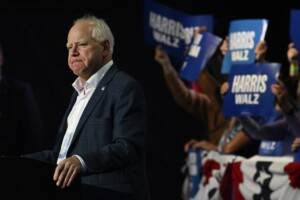
Politics tamfitronics Minnesota Gov. Tim Walz attends a rally in Asheville, North Carolina, on Sept. 17. Minnesota led the way on in...
TAMFIS NIG LTD
Electrical and instrumentation engineering, bid preparation and consulting, IT and software.