
News
RUSSIA versus NATO and BRICS vs. NATO Military SWOT
Recall that Poland’s Minister Sikorski’s core claim is partially supported by the numbers, but the framing “quite quickly” and “without the U.S.” does not…
TAMFIS NIG LTDRC 8067447CAC ACTIVEFinima, Bonny Island, Rivers State

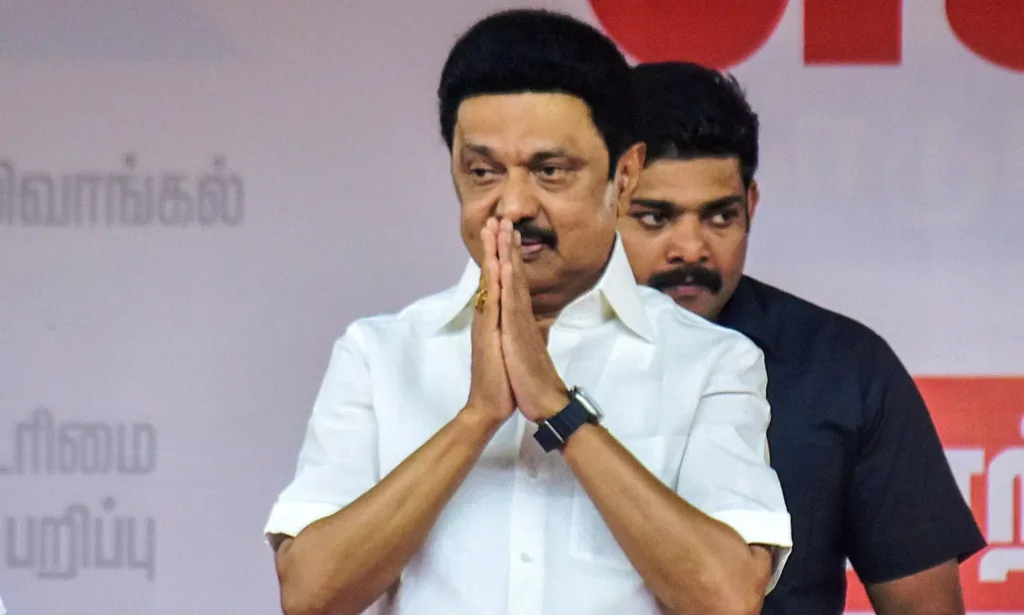
In the dynamic political landscape of India, cultural identity often becomes a battleground for ideological conflicts. Recently, Chief Minister M K Stalin launched a vehement critique against Prime Minister Narendra Modi’s remarks on other communities’ culinary customs, branding such commentary as 'cheap politics.' Stalin’s condemnation highlights the deeper tensions surrounding cultural respect, electoral strategies, and the safeguarding of democratic pluralism. This article delves into Stalin’s arguments, the context of his criticism, and the broader ramifications on India’s political and social fabric.
Chief Minister M K Stalin’s sharp critique of Prime Minister Narendra Modi emerged against the backdrop of recent Lok Sabha election campaigns, where cultural narratives have been prominently utilized. Modi’s comments on others’ culinary customs were perceived by Stalin as an attempt to polarize voters by undermining cultural practices that define India’s pluralistic society.
Stalin argues that such criticisms are not only misplaced but also reflect a strategy of 'cheap politics' aimed at garnering support by appealing to narrow cultural chauvinism. He emphasizes that India’s strength lies in its diversity, especially its rich culinary heritage, which should be celebrated rather than politicized.
By focusing on Modi’s remarks, Stalin is drawing attention to a broader political tactic where cultural identity is weaponized to create divisions. This approach, he contends, threatens the social harmony and communal amity that India has historically endeavored to maintain.
Culinary customs in India are deeply intertwined with regional, religious, and cultural identities. When political leaders critique these customs, it can have significant implications for social cohesion. Stalin’s condemnation of Modi’s comments highlights the risks of politicizing such sensitive cultural elements.
Stalin sees the politicization of culinary traditions as part of a larger pattern where cultural symbols are manipulated to create electoral advantages. This tactic can alienate communities and exacerbate communal tensions, undermining the democratic fabric of the nation.
Moreover, Stalin’s critique underscores the importance of respecting cultural plurality in political discourse. He advocates for politics rooted in inclusivity and mutual respect rather than divisive rhetoric that targets communities based on their customs or traditions.
Stalin’s criticism is not limited to culinary customs but extends to broader concerns about the direction of Indian democracy. During election rallies, he framed the polls as a choice between sustaining democratic values or sliding towards authoritarianism, emphasizing the need to protect the Constitution crafted by Dr. B R Ambedkar.
He highlighted the significance of electoral outcomes in determining whether India continues to uphold reservation policies and communal harmony or succumbs to divisive laws promoted by certain ideological groups. This framing situates culinary criticism within a larger debate about India’s identity and governance.
By linking cultural respect with democratic principles, Stalin positions himself as a defender of pluralism and constitutionalism. His campaign rhetoric thus appeals to voters concerned about preserving India’s secular and inclusive character.
Alongside cultural critiques, Stalin accused Prime Minister Modi of making false claims regarding developmental projects such as the Chennai Metro Rail, Sagarmala initiative, and AIIMS Madurai. He argued that these assertions were exaggerated or unfulfilled, reflecting a pattern of misleading the public.
Stalin’s allegations point to governance issues and accountability, suggesting that the BJP government’s promises have not translated into tangible benefits for the people. This critique complements his cultural arguments by questioning the credibility of the ruling party’s leadership.
By combining cultural and developmental criticisms, Stalin aims to present a comprehensive challenge to the BJP’s narrative, urging voters to scrutinize both ideological and practical aspects of governance before casting their ballots.
Reservation policies and social welfare schemes have been central to Stalin’s political discourse during the elections. He emphasized the importance of continuing reservation to ensure social justice and uplift marginalized communities, contrasting this with BJP’s alleged intent to alter these policies.
Stalin also highlighted Congress and DMK manifesto commitments, including abolition of NEET, financial assistance to women, and expansion of reservation quotas. These promises aim to resonate with diverse voter bases seeking equitable development and representation.
Through these policy discussions, Stalin seeks to frame the election as a referendum on social justice and inclusivity, reinforcing his critique of BJP’s cultural and political strategies.
Stalin expressed regret over Prime Minister Modi’s characterization of the Congress manifesto as a 'Muslim League manifesto,' condemning such labels as attempts to polarize voters based on religion. He argued that no political leader has the right to dictate what people should eat or believe, framing such interventions as cheap politics.
This response underscores Stalin’s broader commitment to secularism and communal harmony. By rejecting communal stereotyping, he advocates for politics that transcends religious divisions and respects India’s multiculturalism.
Stalin’s stance challenges the BJP’s narrative by promoting a politics of respect and coexistence, warning against divisive tactics that threaten national unity.
Stalin criticized the BJP manifesto for threatening to introduce the Uniform Civil Code, which he argued could deepen communal divides. He also accused the manifesto of recycling outdated promises, such as lowering the price of sanitary napkins, highlighting a lack of substantive new policies.
He pointed out contradictions in BJP’s approach, noting that sanitary pads were initially taxed under GST, leading to price hikes and protests until opposition intervention led to tax removal. This example illustrates perceived inconsistencies between rhetoric and action.
By exposing these contradictions, Stalin sought to undermine BJP’s credibility and present his party as a more reliable and progressive alternative.
Stalin accused the BJP government of misusing investigative agencies such as the Enforcement Directorate, Income Tax Department, and CBI to intimidate opposition parties and manipulate political outcomes. He claimed such actions threaten democratic integrity and fair political competition.
He cited examples of political engineering, including arrests of opposition leaders and coercion of industrialists, as evidence of authoritarian tendencies. This critique amplifies concerns about the erosion of democratic norms under current governance.
Stalin’s allegations serve to mobilize voters against what he perceives as undemocratic practices, reinforcing his call to preserve India’s constitutional values and democratic institutions.
Chief Minister M K Stalin’s sharp critique of Prime Minister Narendra Modi’s remarks on culinary customs highlights the intricate link between culture and politics in India. By branding such criticism as 'cheap politics,' Stalin emphasizes the need for respect towards India’s diverse traditions and warns against divisive electoral tactics. His broader political narrative underscores the stakes of the upcoming elections—whether India will uphold its democratic, pluralistic values or succumb to authoritarian and sectarian tendencies. This discourse invites voters to critically evaluate not just policy promises but the ethos underpinning political leadership in the world’s largest democracy.
Originally reported by deccanchronicle.com. Adapted for our readers.
Keep reading
News
Recall that Poland’s Minister Sikorski’s core claim is partially supported by the numbers, but the framing “quite quickly” and “without the U.S.” does not…
Politics
In August 2025, Zespri, the world’s largest marketer of kiwifruit, announced that the European Commission had approved what it described as the first health…
News
By Engr. Tamunofiniarisa BrownReading Time: 6 Minutes The conflict between Russia and Ukraine is often framed in the media as a simple battle between…
TAMFIS NIG LTD
Electrical and instrumentation engineering, bid preparation and consulting, IT and software.