Politics
Yari’s 2027 Campaign Strategy: How to Evaluate Claims About Tinubu’s Record
Yari says the APC will emphasise Tinubu’s achievements in 2027. This analysis explains how voters can examine outcomes, baselines and campaign evidence.
TAMFIS NIG LTDRC 8067447CAC ACTIVEFinima, Bonny Island, Rivers State

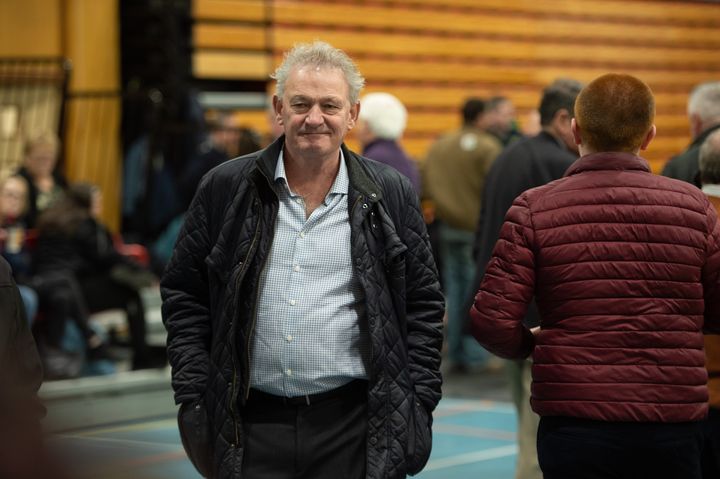
As the European Elections approach in June, political campaigns are intensifying across Ireland. Businessman and candidate Peter Casey has come under fire for putting up large election posters on the boundaries outside the World Safety Residence of Job (IPO) in Dublin. The IPO has been a focal point in recent weeks due to the emergence of a tent city housing asylum seekers, sparking public debate on immigration, housing, and social policy. Labour councillor Dermot Lacey has publicly condemned Casey’s poster placement, accusing him of stoking division and engaging in dog whistle politics. This article delves into the details of the controversy, reactions from political figures, the context of asylum seeker issues in Ireland, and the broader political and social ramifications.
Peter Casey, a businessman turned political candidate, recently placed large election posters on the fences outside the World Safety Residence of Job (IPO) in Dublin. This location has become a symbol of the ongoing asylum seeker crisis in Ireland, as a tent city has sprung up nearby to accommodate those seeking refuge. The posters, prominently displayed, immediately drew the attention of local politicians and the public alike.
Labour councillor Dermot Lacey was quick to respond, describing the act as cynical and opportunistic. He expressed his disgust at the choice of location, highlighting that the IPO and surrounding area have become sensitive due to the presence of vulnerable asylum seekers. Lacey argued that Casey’s move was not about genuine political discourse but rather about exploiting fears and divisions for electoral gain.
The controversy intensified on social media, where many debated whether Casey’s actions were a legitimate political strategy or an irresponsible attempt to deepen societal rifts. The use of such a charged location for political advertising raised questions about the ethics of campaign tactics and the responsibilities of candidates in handling sensitive community issues.
Dermot Lacey, a former Dublin Lord Mayor and current Labour councillor, was vocal in condemning Peter Casey’s decision to erect posters outside the IPO. He described the move as a form of “dog whistle politics,” suggesting that it subtly targeted asylum seekers and stoked fears around immigration without explicitly stating divisive messages.
Lacey emphasized that the asylum seeker topic is complex and sensitive, particularly as Ireland has seen a rapid increase in arrivals over the past few years. He warned that exploiting this issue for political gain risks inflaming tensions and undermining social cohesion. According to Lacey, politics should focus on problem-solving rather than creating fear or division.
Furthermore, Lacey criticized the timing and location of the posters, noting that Casey was not even running in the local constituency where the IPO is situated. He called the act “opportunistic” and expressed disappointment that such tactics were being used instead of fostering constructive dialogue around asylum and housing challenges.
In response to the backlash, Peter Casey dismissed the accusations as an attempt to garner negative media attention. He denied any intention to stoke division or engage in dog whistle politics. Instead, Casey framed his campaign strategy as addressing real issues affecting his potential constituents, including the housing crisis and asylum seeker policies.
Casey highlighted that many of his constituents work in Dublin, even though his electoral area is the Midlands-North West constituency. He argued that placing posters in Dublin was a way to draw attention to the high costs of living and commuting challenges faced by working people, linking these issues to the broader context of immigration and asylum.
Additionally, Casey expressed frustration that the posters remained up beyond 24 hours, stating he was unsettled by their removal being delayed. He clarified that the posters would be taken down after the election and asserted that the choice of location was intended to spark discussion rather than division.
The IPO, located on Mount Avenue in Dublin, has garnered significant attention due to the emergence of a tent city nearby, where asylum seekers have been living in temporary and often inadequate conditions. This situation has spotlighted Ireland’s struggles to provide sufficient housing and support for refugees and asylum applicants.
The proximity of Casey’s posters to the IPO thus takes on symbolic weight. For many, the site represents a humanitarian crisis and a test of Ireland’s social policies and capacities. Using this location for political advertising raises questions about the intersection of politics and human rights concerns.
The tent city and the IPO have also become flashpoints in public discourse about immigration, integration, and community resources. Casey’s campaign move has inadvertently tied his candidacy to these contentious issues, making the IPO a focal point of political debate in the lead-up to the elections.
Ireland has experienced a significant increase in asylum seeker arrivals in recent years. The government and local authorities have struggled to provide adequate housing and services, leading to temporary solutions like direct provision centers and informal tent encampments. These challenges have fueled public debate on immigration policy and social integration.
Housing shortages and rising rents have compounded the difficulties faced by asylum seekers and low-income residents alike. Many workers commute long distances due to unaffordable housing in Dublin and other urban centers, contributing to social and economic stress. These intertwined issues have become central themes in political campaigns and public policy discussions.
The intersection of asylum seeking and housing crises presents complex policy dilemmas. Political figures like Peter Casey have sought to address these issues in their platforms, though the manner and tone of their engagement can influence public perception and community relations, as seen in the recent controversy over campaign posters.
The accusation of ‘dog whistle politics’ against Peter Casey highlights concerns about subtle messaging intended to appeal to certain voter fears or prejudices without overtly expressing divisive views. This tactic can polarize communities and undermine constructive political discourse.
In the context of immigration and asylum, dog whistle politics often involves coded language or symbolic gestures that resonate with anxieties about national identity, security, or economic competition. Critics argue that such strategies exploit vulnerable populations and deepen societal divides for electoral gain.
The controversy underscores the need for political campaigns to balance addressing sensitive issues with responsibility and respect. The backlash against Casey’s posters reflects a broader societal demand for politics that promotes unity and problem-solving rather than fear and division.
The placement of the posters sparked widespread discussion on social media and in local news outlets. Many community members expressed concern over the use of the IPO location, viewing it as an insensitive politicization of a humanitarian situation. Others debated the legitimacy of Casey’s campaign tactics and the broader issues at stake.
Media coverage focused on the tensions between political strategy and ethical campaigning, highlighting the divergent perspectives of Casey and his critics. The incident served as a case study in how electioneering intersects with complex social challenges like immigration and housing.
Local advocacy groups and human rights organizations also weighed in, emphasizing the importance of protecting asylum seekers from political exploitation and ensuring their dignity amid public debates. The incident has prompted calls for more thoughtful engagement on these critical issues.
As the European Elections approach, the controversy surrounding Peter Casey’s posters may influence voter perceptions and campaign strategies. Candidates are likely to face increased scrutiny over how they address sensitive topics such as asylum and housing.
The incident highlights the importance of ethical considerations in political campaigning, especially in contexts involving vulnerable populations. Moving forward, politicians may need to adopt more nuanced approaches that prioritize dialogue and solutions over sensationalism.
Ultimately, the debate sparked by Casey’s actions could contribute to broader discussions on Ireland’s immigration policies, housing crisis, and the role of political discourse in fostering social cohesion. How candidates navigate these issues may shape the political landscape in the coming years.
The controversy surrounding Peter Casey’s election posters outside the IPO in Dublin has brought to the forefront the delicate balance between political campaigning and social responsibility. While Casey maintains his intent was to highlight real issues affecting his constituents, critics like Labour councillor Dermot Lacey view the move as a cynical exploitation of a humanitarian crisis. This incident underscores the challenges politicians face when addressing complex topics such as asylum and housing amid rising public sensitivities. Moving forward, there is a clear need for political discourse that fosters unity, respects vulnerable communities, and seeks genuine solutions rather than division. The upcoming European Elections will serve as a critical moment for Ireland to reflect on how it navigates these pressing social and political issues.
Originally reported by independent.ie. Adapted for our readers.
Keep reading
Politics
Yari says the APC will emphasise Tinubu’s achievements in 2027. This analysis explains how voters can examine outcomes, baselines and campaign evidence.
Lifestyle
Obi says his wife funds her own purchases. This analysis separates his explanation, unverified handbag prices and the evidence needed to assess public spending.
Politics
Politics tamfitronics Minnesota Gov. Tim Walz attends a rally in Asheville, North Carolina, on Sept. 17. Minnesota led the way on in...
TAMFIS NIG LTD
Electrical and instrumentation engineering, bid preparation and consulting, IT and software.