
Business
Nigeria’s Broken Systems: Why Failure Persists and What Must Change
An analysis of the structural and institutional factors that entrench governance failures in Nigeria, from patronage politics and weakened oversight to the urgent need…
TAMFIS NIG LTDRC 8067447CAC ACTIVEFinima, Bonny Island, Rivers State

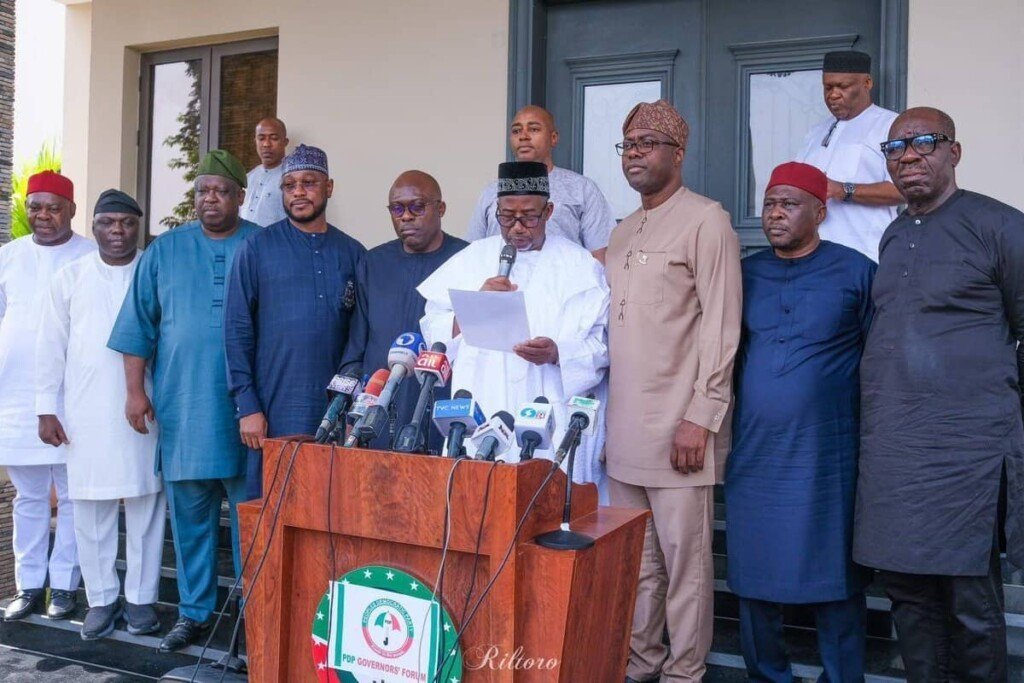
Nigeria's main opposition Peoples Democratic Party (PDP) faces a critical juncture as internal power struggles intensify between prominent figures Atiku Abubakar and Nyesom Wike, while state governors elected under the party's banner increasingly seek to assert their influence over the organisation's structure and leadership ahead of the 2027 general elections. Recent developments at the party's National Executive Committee (NEC) meeting reveal a complex interplay of constitutional provisions, regional ambitions, and strategic positioning that could significantly reshape Nigeria's political landscape. With over 100 members in the NEC including national officers, board of trustees members, legislators, and all state governors affiliated with the PDP, the party's governance framework provides multiple avenues for influence. Current PDP governors spanning from Adamawa to Zamfara states, several serving second terms, are reportedly evaluating options to either redirect the party's trajectory independently or position themselves as potential presidential candidates, reflecting broader trends in Nigerian politics where state leaders often transition to national prominence.
The Peoples Democratic Party's National Executive Committee operates under specific constitutional guidelines outlined in Part 31(1) of the party's constitution, establishing a structured yet inclusive leadership body.
This framework encompasses over 100 individuals including the national chairman (who also chairs the NEC), the president and vice-president as party members, board of trustees leadership, and various elected officials from legislative arms.
Crucially, the NEC includes all PDP-affiliated state governors, national working committee members, state chairmen, and designated ex-officio representatives from each of Nigeria's six geopolitical zones, ensuring broad geographical representation.
Past national officers including former chairmen, deputy national chairmen, national secretaries, and board trustees who remain party members also hold ex-officio status, creating layers of institutional memory within the committee's deliberations.
Among the current PDP governors, several serving second terms have emerged as particularly active in shaping internal party dynamics, including leaders from Adamawa, Bauchi, Bayelsa, Edo, and Oyo states.
Governor Bala Mohammed of Bauchi State, who chairs the PDP Governors' Forum, represents a key figure in these discussions, having recently addressed speculation about gubernatorial ambitions during a post-NEC meeting briefing.
Sources indicate that some second-term governors feel frustrated by the prolonged Atiku-Wike rivalry and are exploring independent pathways to influence the party's direction ahead of 2027.
However, alternative perspectives suggest that rather than pursuing neutral reforms, certain governors may be positioning to secure the presidential nomination for one of their peers, thereby transferring party control to a preferred candidate.
Despite shared objectives among some governors to influence candidate selection or party reorganisation, significant obstacles hinder unified action, primarily stemming from difficulties in achieving consensus across diverse regional interests.
The PDP Governors' Forum itself exhibits division regarding the continued tenure of acting national chairman Umar Damagum, with some members advocating for his retention due to upcoming off-season elections in Edo and Ondo states.
Following a closed-door forum meeting, Governor Mohammed emphasized that constitutional processes would guide decisions, stating the NEC would address leadership questions based on established provisions rather than gubernatorial preferences alone.
This tension highlights the complex balance between state-level ambitions and national party governance structures that characterises Nigeria's democratic evolution.
After their deliberations, the PDP governors issued a communique urging the National Working Committee to activate mechanisms for conducting credible state-level congresses where party officers' tenures have expired.
This call was endorsed by governors from Rivers, Adamawa, Akwa Ibom, Bayelsa, and Delta states, along with deputy governors from Edo and Enugu, demonstrating cross-regional support for organisational renewal at the grassroots level.
The focus on credible congresses reflects awareness that strong state-level structures are essential for national electoral competitiveness, particularly as parties prepare for subsequent general elections.
By prioritising procedural integrity in local party affairs, governors aim to build foundations that could support either independent initiatives or collaborative candidates in future electoral contests.
The current manoeuvring within the PDP occurs against a backdrop of intense preparation for the 2027 general elections, where opposition parties seek to challenge the ruling All Progressives Congress (APC).
How the PDP resolves its internal leadership question will significantly affect its ability to present a unified front and competitive nominee nationally.
Governor ambitions, whether directed toward independent reform or candidate sponsorship, reflect a broader pattern in Nigerian politics where state executives leverage regional bases for national aspirations.
The outcome of these internal deliberations will likely influence not only the PDP's immediate direction but also the overall competitiveness of Nigeria's opposition space in the coming electoral cycle.
The evolving situation within Nigeria's Peoples Democratic Party reveals a significant moment in the country's democratic development, where state-level leaders are actively engaging with national party structures to shape future political outcomes. As PDP governors navigate the complex interplay between regional ambitions and national party governance, their actions could determine whether the organisation emerges from its current internal struggles as a cohesive opposition force ready for 2027 or remains hampered by factional divisions. The constitutional frameworks designed to balance representation with effective decision-making are being tested in real-time, offering valuable insights into how Nigeria's major political parties adapt to leadership transitions and succession planning. For political observers, business analysts, and citizens invested in Nigeria's democratic trajectory, these developments warrant close attention as they may foreshadow broader patterns in how African democracies manage internal party renewal while preparing for consequential electoral contests. Ultimately, the PDP's ability to harness gubernatorial energy constructively—whether through independent initiatives or collaborative leadership selection—will be pivotal in determining its role in Nigeria's next electoral cycle.
Originally reported by politicsnigeria.com. Adapted for our readers with AI assistance.
Keep reading
Business
An analysis of the structural and institutional factors that entrench governance failures in Nigeria, from patronage politics and weakened oversight to the urgent need…
Politics
Yari says the APC will emphasise Tinubu’s achievements in 2027. This analysis explains how voters can examine outcomes, baselines and campaign evidence.
Lifestyle
Obi says his wife funds her own purchases. This analysis separates his explanation, unverified handbag prices and the evidence needed to assess public spending.
TAMFIS NIG LTD
Electrical and instrumentation engineering, bid preparation and consulting, IT and software.

