News
RUSSIA versus NATO and BRICS vs. NATO Military SWOT
Recall that Poland’s Minister Sikorski’s core claim is partially supported by the numbers, but the framing “quite quickly” and “without the U.S.” does not…
TAMFIS NIG LTDRC 8067447CAC ACTIVEFinima, Bonny Island, Rivers State

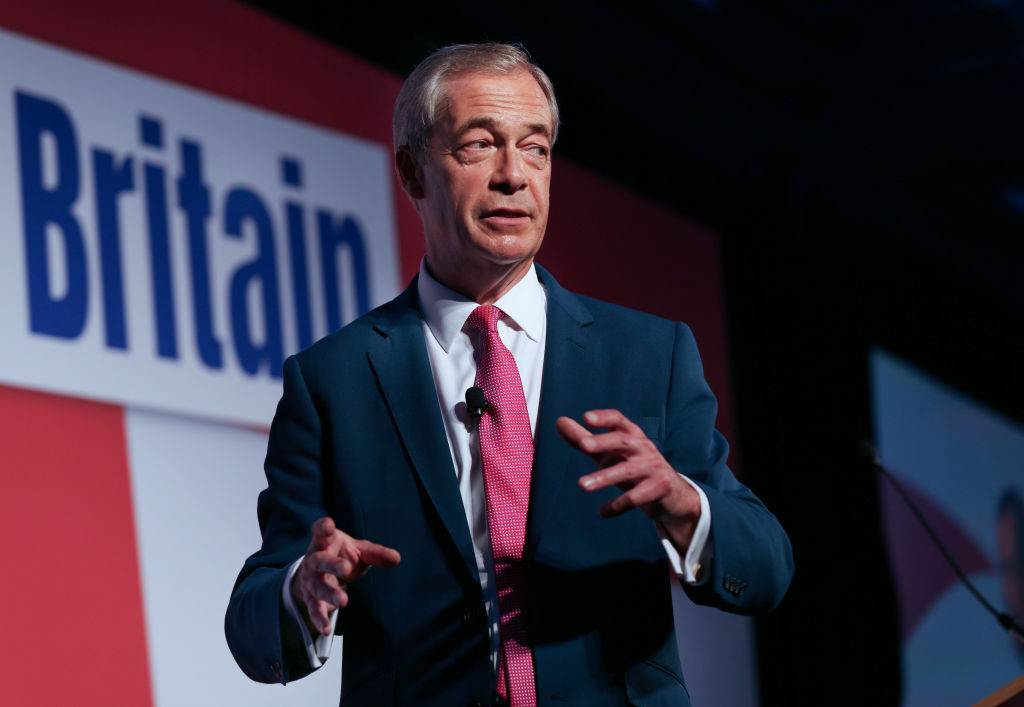
Nigel Farage, leader of Reform UK and a prominent figure in British politics, has recently come under fire from senior political figures, including former Conservative defence secretary Ben Wallace. Farage’s comments suggesting that the West provoked Vladimir Putin’s invasion of Ukraine have sparked intense debate and condemnation. Critics argue that Farage oversimplifies complex geopolitical issues and fails to engage with the realities of modern governance and international diplomacy. This article delves into the origins of these controversies, the responses from key political actors, and the implications for Farage’s political standing.
In a recent BBC Panorama interview, Nigel Farage made headlines by asserting that the West, through NATO and European Union expansion, provoked Russia’s invasion of Ukraine. He claimed that the eastward expansion since the fall of the Berlin Wall gave Vladimir Putin a pretext to justify military aggression. Farage’s argument hinges on the idea that Russia perceived NATO’s growth as an existential threat, leading to the conflict in eastern Europe.
Farage also expressed a complex view of Putin, stating that while he personally disliked the Russian leader, he admired him as a political operator who has maintained control over Russia for decades. Farage highlighted Putin’s long tenure as president or prime minister since 1999, despite elections widely criticised as lacking fairness. This nuanced, yet contentious stance has drawn significant criticism from across the political spectrum.
Farage further claimed that he had predicted the war years before it began, referencing a speech he gave in the European Parliament in 2014 warning of impending conflict in Ukraine. His insistence that Western policies contributed to the outbreak of war remains a divisive position, challenging mainstream narratives that place primary blame on Russian aggression.
Ben Wallace, who served as the UK’s defence secretary until recently, responded strongly to Farage’s assertions during an interview on BBC Radio 4’s Today Programme. He dismissed Farage’s approach as simplistic and uninformed, comparing him to a ‘pub bore’—a person who offers easy answers without grasping the complexities of governance or international relations.
Wallace emphasised that modern political challenges, especially those involving international security, demand nuanced understanding and pragmatic solutions. He questioned Farage’s hypothetical ability to manage the realities of dealing with a hostile leader like Putin, who has been linked to serious incidents including the Salisbury nerve agent attack that killed British citizen Dawn Sturgess.
The former defence minister underscored that governing a country and navigating global conflicts are far more complicated than Farage’s rhetoric suggests. Wallace’s criticism highlights a broader concern among establishment figures about the impact of simplistic political commentary on public discourse and policy formulation.
Farage’s comments did not go unchallenged by other senior politicians. Home Secretary James Cleverly took to X (formerly Twitter) to condemn Farage’s remarks, accusing him of echoing Russian President Putin’s ‘vile justification’ for invading Ukraine. Cleverly’s response reinforced the government’s firm stance against narratives that appear to excuse Russian aggression.
Labour’s shadow defence secretary, John Healey, also criticised Farage, accusing him of prioritising Putin’s interests over supporting the Ukrainian people. Healey’s remarks reflect the opposition’s commitment to holding Russia accountable and rejecting any attempts to rationalize the invasion.
Meanwhile, former defence minister Tobias Ellwood expressed his dismay, suggesting that Farage’s views would make Winston Churchill ‘turn in his grave.’ Ellwood’s historical reference underscores the perceived betrayal of Britain’s traditional stance against authoritarian aggression.
Nigel Farage’s political career has been marked by his leadership in the UK Independence Party (UKIP) and more recently Reform UK, which he founded after leaving UKIP. His populist rhetoric and eurosceptic stance helped shape the Brexit debate and influenced British politics profoundly over the past two decades.
Reform UK positions itself as a party critical of the current government’s handling of various issues, including foreign policy and economic management. Farage’s commentary on the Ukraine war fits within his broader narrative of challenging the establishment and advocating for a re-evaluation of Britain’s international commitments.
However, Farage’s approach has often courted controversy, with critics accusing him of oversimplifying complex issues and appealing to nationalist sentiments. His recent remarks on Ukraine have intensified scrutiny of his political judgment and the viability of Reform UK as a serious contender in British politics.
Farage’s argument that NATO’s eastward expansion provoked Russia’s invasion taps into a longstanding geopolitical debate. Since the Cold War’s end, NATO has welcomed several Eastern European countries, a move some analysts argue has heightened tensions with Moscow.
Critics of NATO expansion contend that it threatened Russia’s sphere of influence and security interests, potentially contributing to Putin's aggressive policies. Conversely, proponents argue that NATO enlargement has been a stabilising force, providing security guarantees to former Soviet bloc countries.
This debate remains highly contentious, with implications for current diplomatic efforts and future European security architecture. Farage’s comments have reignited discussion about the West’s role in the Ukraine conflict, though many experts caution against simplistic cause-and-effect narratives.
Farage’s statements have triggered significant political backlash, reflecting deep divisions within UK politics over foreign policy and national identity. His critiques resonate with some voters frustrated by perceived government mismanagement and international entanglements.
However, the strong condemnations from prominent Conservative figures and Labour politicians suggest that Farage’s views remain outside mainstream consensus. The controversy may further marginalise Reform UK, limiting its appeal beyond a niche electorate.
Public opinion on Farage’s stance is mixed, with some appreciating his contrarian perspective while others see it as dangerously naive or even harmful to Britain’s diplomatic efforts. The debate illustrates the challenges political figures face when addressing complex international crises in a highly charged media environment.
The discourse surrounding Farage’s comments coincided with other political controversies, including a heated dispute in Plymouth Moor View. Conservative candidate and veterans minister Johnny Mercer accused his Labour rival Fred Thomas of exaggerating military service credentials, highlighting sensitivities around military honour and political campaigning.
Thomas, a decorated ex-Royal Marine, defended his record, explaining that due to the sensitive nature of his service, he could not discuss details publicly. This controversy underscores the broader tensions within British politics concerning military service and authenticity.
Such disputes, occurring alongside the Farage controversy, reflect the volatile nature of contemporary UK politics, where personal credibility and national security issues frequently intersect and dominate public debate.
As Nigel Farage continues to vocalise his views on international affairs and domestic policies, his political future remains uncertain. Reform UK has yet to establish itself as a major force, and controversies like those sparked by Farage’s Ukraine comments may hinder its growth.
The party’s ability to influence mainstream political discourse will depend on how it navigates criticism and engages with increasingly complex policy challenges. Farage’s style of populist commentary may appeal to some voters but risks alienating others seeking pragmatic leadership.
Ultimately, the coming months will test whether Farage and Reform UK can broaden their appeal or remain confined to a polarising role within British politics. The ongoing war in Ukraine and related geopolitical issues will continue to shape the context in which these debates unfold.
Nigel Farage’s recent comments about the Ukraine conflict and Vladimir Putin have exposed deep divisions within UK politics and reignited contentious debates about NATO expansion and international diplomacy. While Farage’s perspective offers a contrarian view that resonates with some, senior politicians across parties have criticised his approach as simplistic and disconnected from the realities of modern governance. The backlash underscores the challenges faced by populist figures in addressing complex global issues responsibly. As Reform UK seeks to carve out its political niche, the party’s future will depend on its ability to balance provocative rhetoric with credible policy solutions. Meanwhile, the broader geopolitical and domestic political debates sparked by Farage’s remarks will continue to influence the UK’s political discourse in the months ahead.
Originally reported by cityam.com. Adapted for our readers.
Keep reading
News
Recall that Poland’s Minister Sikorski’s core claim is partially supported by the numbers, but the framing “quite quickly” and “without the U.S.” does not…
Politics
In August 2025, Zespri, the world’s largest marketer of kiwifruit, announced that the European Commission had approved what it described as the first health…
News
By Engr. Tamunofiniarisa BrownReading Time: 6 Minutes The conflict between Russia and Ukraine is often framed in the media as a simple battle between…
TAMFIS NIG LTD
Electrical and instrumentation engineering, bid preparation and consulting, IT and software.