Politics
How Minnesota Figures Into the Presidential Politics of Insulin Prices
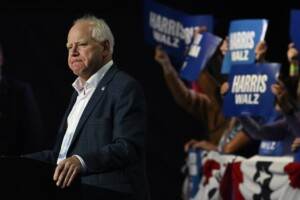
Politics tamfitronics Minnesota Gov. Tim Walz attends a rally in Asheville, North Carolina, on Sept. 17. Minnesota led the way on in...
TAMFIS NIG LTDRC 8067447CAC ACTIVEFinima, Bonny Island, Rivers State


Mike Rogers, the Republican nominee for the U.S. Senate seat in Michigan, has recently adopted a more skeptical view of the 2020 presidential election results. Previously known for his critical stance toward former President Donald Trump, Rogers now suggests that the election deserves further scrutiny, citing voting irregularities as a factor that impacted his earlier Senate campaign. This shift underscores the complex political landscape in Michigan and the growing influence of election skepticism within the Republican Party as the 2026 midterm elections approach.
Mike Rogers, a former congressman and the Republican nominee for the U.S. Senate in Michigan, has undergone a notable transformation in his political rhetoric. Initially, Rogers was openly critical of Donald Trump, distancing himself from the former president's more controversial claims and policies. However, as the 2026 Senate race heats up, Rogers has shifted his position, now expressing doubts about the integrity of the 2020 presidential election.
This change is significant because it reflects a broader trend among Republican candidates who are recalibrating their messages to align more closely with the party's base, which remains deeply divided over the legitimacy of the 2020 election. Rogers’ new stance suggests a strategic move to appeal to voters who continue to harbor concerns about election integrity, a topic that has become increasingly central to Republican campaigning.
Rogers’ shift also highlights the pressures candidates face in balancing personal convictions with political pragmatism. While he once criticized Trump’s unfounded election claims, the prevailing sentiment among many Republican voters has pushed Rogers to adopt a more skeptical view, signaling the enduring influence of Trump’s narrative within the party.
Rogers has claimed that voting irregularities played a decisive role in his unsuccessful Senate bid two years ago. Although he has not publicly detailed specific instances, his assertion aligns with a broader narrative embraced by some Republicans who seek to explain electoral defeats through allegations of flawed processes.
These claims resonate with a significant segment of the Republican electorate that remains skeptical about the fairness of recent elections, particularly the 2020 presidential race. Despite multiple investigations and audits confirming the integrity of the 2020 election, the persistence of such allegations continues to influence political discourse and voter attitudes.
The impact of these claims extends beyond individual campaigns. They contribute to heightened political polarization and complicate bipartisan efforts to enact meaningful election reforms. By framing past losses as a consequence of irregularities, candidates like Rogers galvanize their base but also risk deepening divisions within the electorate.
Michigan is a pivotal battleground state with a politically diverse electorate. The state narrowly voted for Joe Biden in the 2020 presidential election after supporting Donald Trump in 2016, underscoring its competitive nature and the importance of appealing to a broad range of voters.
Rogers’ shift toward election skepticism appears influenced by the need to consolidate support among Republican primary voters and conservative constituents who prioritize election security. By embracing doubts about the 2020 election results, Rogers aims to harness a potent issue that continues to resonate with many voters in Michigan.
However, this approach carries risks. While it may strengthen his standing with the Republican base, it could alienate moderate voters and independents who accept the legitimacy of the 2020 election and view skepticism as potentially undermining democratic institutions. Navigating this delicate balance will be crucial for Rogers as he seeks to build a coalition capable of winning a statewide election.
Michigan’s unique political dynamics, including its mix of urban, suburban, and rural voters, further complicate Rogers’ strategy. The state’s electorate is not monolithic, and the effectiveness of election skepticism as a campaign tool may vary significantly across different regions and demographic groups.
Rogers’ evolving position on the 2020 election is emblematic of a larger shift within the Republican Party, where election skepticism has become a defining feature for many candidates. This trend reflects ongoing tensions between traditional conservative principles and the populist wave that has reshaped the party in recent years.
The embrace of election skepticism presents challenges for the Republican Party’s efforts to present a unified front and appeal to a broad electorate. While it energizes a core segment of Republican voters, it may hinder outreach to independents and moderate Republicans who are wary of election denialism.
Moreover, this trend raises critical questions about the future of electoral integrity and public trust in democratic processes. Persistent doubts about election legitimacy can erode confidence in institutions and fuel political instability.
For political observers and voters alike, Rogers’ campaign serves as a case study in how election narratives are leveraged to mobilize support and influence electoral outcomes. It highlights the complex interplay between political strategy, voter sentiment, and the health of American democracy.
As the 2026 Senate race in Michigan unfolds, Rogers’ stance on election issues will likely remain a focal point. Observers will be closely monitoring how his message resonates with different voter groups, including Republican primary voters, independents, and moderates.
The race will also test the broader political climate in Michigan, particularly the impact of election-related rhetoric on voter turnout and engagement. Candidates on both sides will need to carefully balance appeals to their bases with efforts to attract undecided voters.
Additionally, the election will provide insights into how election skepticism continues to shape campaign strategies and voter behavior. The outcome could influence how future candidates across the country approach the topic of election integrity.
Ultimately, the 2026 Senate race in Michigan will serve as a barometer for the evolving dynamics of American electoral politics, reflecting broader national trends and the ongoing debate over the legitimacy and security of elections.
Mike Rogers’ transition from a critic of Donald Trump to an advocate for further scrutiny of the 2020 election highlights the evolving political landscape in Michigan and the Republican Party at large. While this shift may strengthen his appeal among certain voter segments, it also underscores the challenges facing American democracy as debates over election integrity continue to divide the electorate. As the 2026 Senate race progresses, the interplay between election skepticism and political strategy will remain a key factor to watch, offering insights into the future direction of electoral politics in Michigan and beyond.
Originally reported by nytimes.com. Adapted for our readers with AI assistance.
Keep reading
Politics
Politics tamfitronics Minnesota Gov. Tim Walz attends a rally in Asheville, North Carolina, on Sept. 17. Minnesota led the way on in...
Politics
Deji Adeyanju; Niger State Mining Victims Human rights lawyer and activist, Deji Adeyanju, has accepted his appointment as a member of the Federal Government’s…
Politics
Democracy, Featured, Global, Global Governance, Headlines, International Justice, IPS UN: Inside the Glasshouse, TerraViva United Nations UNITED NATIONS, Sep 11 2026 (IPS) – When…
TAMFIS NIG LTD
Electrical and instrumentation engineering, bid preparation and consulting, IT and software.