
News
RUSSIA versus NATO and BRICS vs. NATO Military SWOT
Recall that Poland’s Minister Sikorski’s core claim is partially supported by the numbers, but the framing “quite quickly” and “without the U.S.” does not…
TAMFIS NIG LTDRC 8067447CAC ACTIVEFinima, Bonny Island, Rivers State

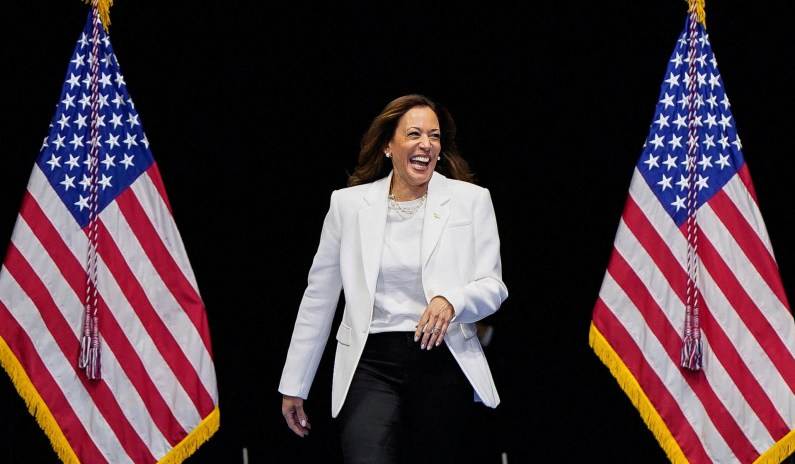
Kamala Harris’s reputation as a formidable, tough-on-crime prosecutor has been a defining narrative throughout her political ascent. From her tenure as San Francisco’s District Attorney to her role as California’s Attorney General, Harris has been depicted as a relentless enforcer of law and order. However, a comprehensive review of her actual record suggests a more complicated picture. Rather than embracing the traditional, hardline approach associated with tough-on-crime rhetoric, Harris’s prosecutorial decisions often reflected a nuanced balance between enforcement and reform. This article explores the contrast between the public perception and the reality of Kamala Harris’s crime-fighting record, shedding light on the policies, actions, and controversies that shaped her tenure.
Kamala Harris’s tough-on-crime image was carefully cultivated during her early career as a prosecutor. Elected as San Francisco’s District Attorney in 2010, she positioned herself as a progressive with a strong commitment to public safety. Her campaign emphasized a no-nonsense approach to crime, promising to hold offenders accountable while also addressing underlying social issues. This dual narrative helped her appeal to a broad constituency, blending reformist rhetoric with traditional law enforcement values.
Harris’s prosecutorial style was often described as assertive, and she was known for her courtroom presence and willingness to take on challenging cases. Her public statements frequently underscored the importance of protecting communities from violent crime, reinforcing her reputation as a tough prosecutor. This image was further amplified during her successful campaign for California Attorney General in 2016, where she continued to advocate for policies aimed at reducing crime rates while promoting criminal justice reform.
Media coverage and political opponents alike contributed to solidifying Harris’s tough-on-crime persona. Opponents labeled her as a relentless enforcer, while supporters highlighted her progressive initiatives. This complex portrayal laid the foundation for her national political career, including her selection as Vice President, where her law-and-order credentials were seen as an asset in appealing to moderate voters.
Kamala Harris’s tenure as San Francisco District Attorney was marked by a blend of progressive reforms and traditional prosecutorial practices. While she introduced initiatives aimed at reducing incarceration, such as diversion programs for low-level offenses, she also maintained aggressive prosecution for serious crimes. This dual approach reflected her attempt to navigate the competing demands of reform advocates and public safety concerns.
One notable aspect of Harris’s record was her handling of cases involving police misconduct and excessive force. Critics argue that her office was reluctant to prosecute officers, contributing to a perception of leniency toward law enforcement. Conversely, supporters contend that Harris sought to balance accountability with the realities of policing, avoiding decisions that could undermine public trust or hamper effective law enforcement operations.
Harris also faced criticism for her approach to cases involving nonviolent drug offenses. While she supported alternatives to incarceration, such as drug treatment programs, her office continued to pursue convictions that contributed to the mass incarceration problem in California. This inconsistency highlighted the challenges Harris faced in aligning her prosecutorial decisions with her reformist rhetoric.
As California’s Attorney General from 2017 to 2021, Kamala Harris expanded her influence on statewide criminal justice policies. She championed initiatives to combat human trafficking, protect consumers, and address environmental crimes. However, her record on criminal justice reform remained mixed, reflecting a cautious approach to systemic change.
Harris’s stance on the death penalty exemplified this complexity. Although personally opposed to capital punishment, she did not prioritize its abolition as Attorney General, focusing instead on upholding existing laws. This position drew criticism from abolitionists who expected more decisive leadership. Additionally, her office’s defense of California’s death penalty system in court appeared at odds with her stated opposition.
Another controversial aspect of Harris’s tenure involved her handling of cases related to police accountability. Despite public pressure to increase transparency and prosecute officers involved in misconduct, her office was perceived as slow to act. This perceived reluctance fueled skepticism among reform advocates and raised questions about her commitment to transforming law enforcement practices.
Kamala Harris has often been branded a “progressive prosecutor,” a term that suggests a commitment to reforming the criminal justice system to address inequities and reduce incarceration. While Harris did implement certain reforms, such as supporting diversion programs and advocating for juvenile justice improvements, her overall record reveals significant limitations.
For instance, Harris’s support for three-strikes laws and mandatory minimum sentences during her early career contradicted progressive reform principles. These policies contributed to California’s high incarceration rates and disproportionately affected communities of color. Although Harris later expressed regret for some of these positions, her earlier enforcement of such laws complicates the narrative of her as a reform-minded prosecutor.
Moreover, Harris’s prosecutorial discretion often favored conviction rates and public safety over systemic change. This pragmatism, while understandable in the context of her roles, meant that many reform initiatives were incremental rather than transformative. Consequently, her record reflects a balancing act between progressive ideals and the realities of political and institutional constraints.
The public perception of Kamala Harris as a tough-on-crime figure contrasts sharply with many of her prosecutorial decisions, which often revealed a more nuanced approach. While she projected strength and decisiveness, her policies sometimes prioritized pragmatism over ideology, leading to outcomes that did not always align with the tough-on-crime image.
For example, Harris’s reluctance to aggressively pursue certain nonviolent offenders and her willingness to implement diversion programs indicate a softer approach than her public persona suggests. This discrepancy has led to debates about the authenticity of her tough-on-crime stance and whether it was primarily a political strategy rather than a reflection of her prosecutorial philosophy.
Additionally, Harris’s handling of high-profile cases and public statements often aimed to appeal to diverse audiences, including progressives, moderates, and law enforcement officials. This balancing act contributed to a sometimes contradictory public image that complicates efforts to categorize her simply as either a hardline prosecutor or a reform advocate.
Kamala Harris’s prosecutorial record has had a significant impact on her political trajectory, shaping both her appeal and her vulnerabilities. Her tough-on-crime image helped her gain credibility among voters concerned about public safety, while her reformist rhetoric attracted progressive supporters. This dual appeal was instrumental in her rise to national prominence and her selection as Vice President.
However, Harris’s record has also been a source of criticism from various quarters. Progressive activists have questioned her commitment to criminal justice reform, citing her past support for policies that contributed to mass incarceration. Conversely, conservatives have highlighted her prosecutorial decisions as evidence of a law-and-order approach that contradicts her current political positioning.
The tension between Harris’s past record and her present political identity continues to influence public discourse and media coverage. As she navigates her role on the national stage, understanding the complexities of her prosecutorial history is essential to evaluating her policy positions and leadership style.
When compared to other prominent prosecutors and politicians, Kamala Harris’s record occupies a unique middle ground. Unlike some progressive prosecutors who have aggressively pursued decarceration and systemic reform, Harris maintained a more cautious approach, blending enforcement with selective reforms. This positions her differently from figures like Larry Krasner or Chesa Boudin, who have embraced more radical changes.
On the other hand, Harris’s record is less punitive than that of traditional tough-on-crime prosecutors who prioritized incarceration above all else. Her support for diversion programs and juvenile justice reforms sets her apart from more conservative counterparts. This nuanced positioning reflects the political and demographic complexities of California, where she built her career.
Understanding Harris’s place within the broader landscape of criminal justice policies helps contextualize her record. It illustrates the challenges prosecutors face in balancing public safety, political pressures, and reform demands, highlighting that Harris’s story is neither entirely one of toughness nor purely of progressivism.
As Vice President, Kamala Harris has the potential to shape national criminal justice policies, drawing from her extensive prosecutorial experience. Her record suggests she may continue to advocate for a balanced approach that seeks to reduce incarceration while maintaining public safety. However, the contradictions in her past also mean she will face scrutiny from both reform advocates and law enforcement interests.
Harris’s influence could be pivotal in advancing bipartisan criminal justice reforms, particularly in areas such as sentencing reform, police accountability, and rehabilitation programs. Her ability to navigate complex political landscapes may enable incremental progress, although transformative change may require broader shifts in political will and public opinion.
Ultimately, Harris’s prosecutorial history provides valuable insights into her approach as a policymaker. Recognizing the nuances of her record can inform expectations about her leadership and the direction of criminal justice reform efforts during her tenure.
Kamala Harris’s reputation as a tough-on-crime prosecutor is a narrative that simplifies a much more intricate reality. Her record demonstrates a prosecutorial approach that sought to balance the demands of public safety with the need for reform, often resulting in mixed outcomes that defy easy categorization. Understanding this complexity is crucial for evaluating her past actions and anticipating her future role in shaping criminal justice policy. As Harris continues to influence the national dialogue, recognizing the nuances of her record offers a more informed perspective on her leadership and the ongoing challenges in reforming the American criminal justice system.
Originally reported by nationalreview.com. Adapted for our readers.
Keep reading
News
Recall that Poland’s Minister Sikorski’s core claim is partially supported by the numbers, but the framing “quite quickly” and “without the U.S.” does not…
Politics
In August 2025, Zespri, the world’s largest marketer of kiwifruit, announced that the European Commission had approved what it described as the first health…
News
By Engr. Tamunofiniarisa BrownReading Time: 6 Minutes The conflict between Russia and Ukraine is often framed in the media as a simple battle between…
TAMFIS NIG LTD
Electrical and instrumentation engineering, bid preparation and consulting, IT and software.