
Business
Nigeria’s Broken Systems: Why Failure Persists and What Must Change
An analysis of the structural and institutional factors that entrench governance failures in Nigeria, from patronage politics and weakened oversight to the urgent need…
TAMFIS NIG LTDRC 8067447CAC ACTIVEFinima, Bonny Island, Rivers State

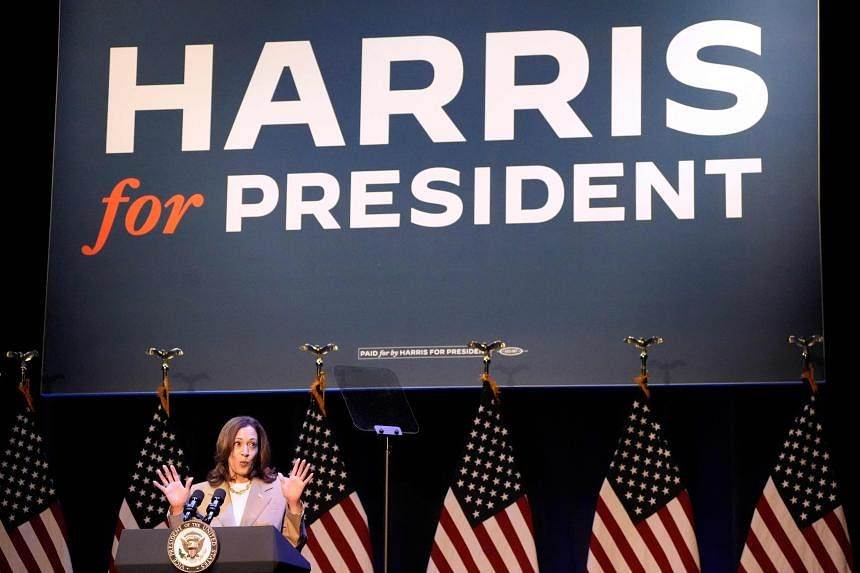
In a remarkable kickoff to her 2024 presidential bid, Vice President Kamala Harris's campaign announced it raised an impressive $268 million within the first seven days. This fundraising milestone, coupled with the rapid recruitment of 170,000 new volunteers, signals a reinvigorated Democratic front as Harris steps into the spotlight following President Joe Biden’s withdrawal. The financial and grassroots momentum sets the stage for a fiercely competitive race against former President Donald Trump, with national polls indicating a tightening contest. This article explores the multifaceted impact of Harris’s initial campaign surge and what it means for the upcoming election.
Kamala Harris’s campaign’s ability to raise $268 million in just one week marks one of the most significant fundraising achievements for a presidential candidate in modern history. This figure reflects strong donor enthusiasm, with 66% of contributions coming from new supporters who had not previously donated to Harris’s political efforts. The campaign’s robust financial backing provides a critical foundation for expansive outreach, advertising, and organizational efforts needed to compete in the high-stakes 2024 race.
The campaign’s deputy manager highlighted the importance of this influx of resources, noting that the funds will be strategically allocated to battleground states and key voter demographics. The rapid fundraising success exemplifies how Harris’s entry into the race has energized the Democratic base, reversing concerns about the party’s viability following President Biden’s exit. This surge in donations also demonstrates confidence among activists and donors in Harris’s leadership and candidacy.
Additionally, the campaign has emphasized the grassroots nature of their fundraising, with a large portion of contributions coming from small-dollar donors. This approach not only diversifies the campaign’s funding sources but also strengthens its connection with everyday voters. The ability to mobilize such widespread financial support early on is often a bellwether for sustained campaign momentum.
Beyond fundraising, Harris’s campaign has successfully signed up 170,000 new volunteers in the first week, a critical asset for ground-level organizing. Volunteers play a vital role in voter outreach, canvassing, phone banking, and event coordination, all of which are essential components of a robust electoral strategy. This surge in volunteerism reflects heightened enthusiasm within the Democratic base and underscores the campaign’s capacity to mobilize supporters nationwide.
The influx of volunteers also indicates effective campaign messaging and outreach efforts. By energizing new activists, the campaign is building a broad, engaged network capable of sustaining long-term voter engagement. This grassroots enthusiasm can translate into increased voter turnout, especially in swing states where margins are often narrow.
Moreover, the volunteer growth aligns with Harris’s broader strategy of inclusivity and representation, appealing to diverse communities across the country. The campaign’s ability to galvanize a varied coalition of supporters through volunteerism enhances its competitiveness against the well-established Republican apparatus.
President Joe Biden’s decision to end his re-election bid on July 21 and endorse Kamala Harris was a pivotal moment that reshaped the Democratic primary landscape. Citing concerns over his age and health after a challenging debate performance, Biden’s withdrawal cleared the way for Harris to become the presumptive nominee. His endorsement provides her campaign with added legitimacy and continuity within the party’s leadership.
Biden’s backing also helps unify the Democratic base, reducing potential factionalism that could have emerged from a contested primary. As the sitting president, Biden’s support signals institutional confidence in Harris’s candidacy and encourages party donors and activists to rally behind her.
However, the transition has not been without challenges. Harris must now establish her own identity as the nominee while addressing voter concerns that previously centered on Biden. The campaign’s early fundraising and volunteer figures suggest she is successfully navigating this transition, setting a strong foundation for the general election.
Recent polls reveal a tightening race between Kamala Harris and former President Donald Trump, indicating a highly competitive election ahead. Various surveys, including those from Reuters/Ipsos and The New York Times/Siena College, show Harris either narrowly leading or closely trailing Trump, highlighting the volatility and intensity of voter sentiment.
These polling results reflect a shift from earlier stages when Biden held a lead over Trump, suggesting that Harris’s entry into the race has reinvigorated Democratic prospects. The polls also underscore the importance of battleground states, where voter preferences remain fluid and campaign efforts are most concentrated.
The close polling margins suggest that every aspect of the campaign—from fundraising and volunteer mobilization to policy messaging and debate performances—will be critical in shaping voter decisions. Harris’s campaign must capitalize on its early momentum to maintain and expand support in the coming months.
While Harris’s $268 million haul in her first week is impressive, it is important to contextualize this figure against Donald Trump’s campaign fundraising. Earlier in July, Trump’s campaign reported raising $442.8 million in the second quarter and holding $284.9 million in cash on hand, underscoring his formidable financial resources.
The financial arms race between the two campaigns highlights the intense competition for campaign dollars, which are essential for advertising, staff hiring, and voter outreach. Despite Trump’s substantial war chest, Harris’s ability to generate a large influx of funds rapidly demonstrates her campaign’s growing strength and appeal.
Both campaigns will likely continue aggressive fundraising efforts to sustain their operations through the final 100 days leading up to the November vote. The financial dynamics will play a crucial role in determining the reach and efficacy of campaign strategies on both sides.
Kamala Harris has already secured the support of a majority of delegates ahead of the Democratic National Convention, virtually guaranteeing her nomination in August. This consolidation within the party is crucial for presenting a united front against the Republican nominee and minimizing intra-party divisions.
Democratic National Committee Chair Jaime Harrison confirmed that Harris is the presumptive nominee, with the official vote scheduled for August 1. The party’s leadership has rallied behind Harris, emphasizing the importance of cohesion to maximize electoral chances.
The convention will serve as a platform for Harris to outline her vision, unify diverse factions within the party, and energize voters. It will also mark the formal transition from the primary phase to the general election campaign, where the stakes are significantly higher.
Despite the promising start, Kamala Harris’s campaign faces several strategic challenges moving forward. She must navigate a polarized political environment, address voter concerns about her policy positions, and counter aggressive attacks from the Trump campaign. Maintaining donor enthusiasm and volunteer engagement over an extended period will also be critical.
However, the campaign’s early successes offer numerous opportunities. The robust fundraising provides the resources needed for targeted advertising and voter outreach, while the large volunteer base enhances grassroots mobilization. Harris’s historic candidacy as the first female vice president seeking the presidency adds symbolic significance that resonates with many voters.
The coming months will test the campaign’s ability to translate initial momentum into consistent voter support, particularly in key swing states. Effective messaging, coalition-building, and strategic deployment of resources will be essential in navigating a tightly contested election.
Political analysts have described Kamala Harris’s first week of campaigning as one of the most impressive in recent political history. Campaign co-chair Mitch Landrieu remarked that Harris had “one of the best weeks that we’ve seen in politics in the last 50 years,” highlighting the unprecedented scale of fundraising and volunteer mobilization.
Experts emphasize that while early momentum is crucial, sustaining it requires disciplined campaign management and adaptability to evolving political dynamics. Harris’s team will need to navigate media scrutiny, policy debates, and voter outreach challenges to maintain their edge.
The consensus among political strategists is that the 2024 election will be highly competitive, with Harris’s campaign setting a strong foundation but facing a formidable opponent in Trump. The next 100 days will be decisive in shaping the ultimate outcome of this historic race.
Kamala Harris’s presidential campaign has burst onto the 2024 political scene with unprecedented financial and grassroots momentum. Raising $268 million and mobilizing 170,000 volunteers within a single week reflects a reinvigorated Democratic base energized by her candidacy. With Joe Biden’s endorsement and a solid delegate lead, Harris is well-positioned as the presumptive nominee facing off against former President Donald Trump in a closely contested race. The coming months will test her campaign’s ability to sustain this momentum amid fierce competition, but early indicators suggest a dynamic and historic election cycle ahead.
Originally reported by straitstimes.com. Adapted for our readers.
Keep reading
Business
An analysis of the structural and institutional factors that entrench governance failures in Nigeria, from patronage politics and weakened oversight to the urgent need…
Politics
Yari says the APC will emphasise Tinubu’s achievements in 2027. This analysis explains how voters can examine outcomes, baselines and campaign evidence.
Lifestyle
Obi says his wife funds her own purchases. This analysis separates his explanation, unverified handbag prices and the evidence needed to assess public spending.
TAMFIS NIG LTD
Electrical and instrumentation engineering, bid preparation and consulting, IT and software.

