Politics
Yari’s 2027 Campaign Strategy: How to Evaluate Claims About Tinubu’s Record
Yari says the APC will emphasise Tinubu’s achievements in 2027. This analysis explains how voters can examine outcomes, baselines and campaign evidence.
TAMFIS NIG LTDRC 8067447CAC ACTIVEFinima, Bonny Island, Rivers State

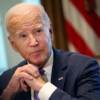
As President Joe Biden seeks reelection in 2024, one pressing question dominates political discussions: why hasn’t he received more credit for the strong U.S. economy? The nation is experiencing steady economic growth, historically low unemployment, significant inflation reduction, and rising wages. Yet, Biden’s approval ratings remain in the negative, a perplexing disconnect for many observers. A comparative analysis of global political leaders, especially following the recent G-7 summit, offers critical insights into this phenomenon. This article examines the interplay between economic performance, public sentiment, and political approval, situating Biden’s popularity within a broader international context.
The U.S. economy under President Biden has shown remarkable resilience and growth since the COVID-19 pandemic’s onset. Key indicators such as steady GDP growth, unemployment rates at historic lows, substantial wage increases, and a significant drop in inflation point to a robust recovery. These economic achievements largely stem from Biden’s aggressive fiscal policies, including substantial relief and recovery spending aimed at jumpstarting the economy.
However, these positive economic data points often come with caveats. Critics argue that inflation, while reduced, remains a burden, and high interest rates have made homeownership more challenging for many Americans. Additionally, some suggest that Biden’s age or other political factors might overshadow economic successes in voters’ minds. While these considerations merit attention, they do not fully explain the broader political dynamics at play.
The recent G-7 summit in Italy provided a revealing snapshot of global political leadership and public sentiment. Leaders from major industrial democracies, including Germany, the United Kingdom, France, Canada, and Japan, all face deep net disapproval ratings. For instance, German Chancellor Olaf Scholz and UK Prime Minister Rishi Sunak hover around a net negative 50-point approval rating, while French President Emmanuel Macron and Canadian Prime Minister Justin Trudeau also experience significant public dissatisfaction.
In this context, Joe Biden’s net approval rating of approximately -18.5, while negative, is comparatively favorable. Even Italy’s Prime Minister Giorgia Meloni, who enjoys a recent surge in popularity due to her party’s success in European elections, remains about 10 points underwater. This comparison underscores that widespread political discontent is a common feature among major democracies, not unique to the United States.
Unlike many of its G-7 counterparts, the U.S. economy has rebounded more vigorously from the pandemic-induced downturn. While European and East Asian economies have struggled with stagnation and persistent inflation, the American economy’s nominal growth and employment gains have been notably stronger. This divergence is largely attributable to differing policy approaches.
Biden’s administration embraced Keynesian fiscal stimulus measures, prioritizing relief spending to support households and businesses. In contrast, many European nations adopted austerity-tinged policies that slowed recovery. This policy difference has translated into tangible economic outcomes, positioning the U.S. as an outlier in terms of post-pandemic economic performance.
Despite the economic upswing, Biden’s approval ratings have not surged accordingly. This apparent paradox has led to various speculative explanations, ranging from generational biases against an older president to the impact of high interest rates on housing affordability. Yet, these factors only partially account for the disconnect.
A broader perspective suggests that public pessimism following the COVID-19 pandemic is a dominant force shaping voter attitudes across industrial democracies. Economic recovery alone does not erase the lingering uncertainty and dissatisfaction felt by many citizens. In this environment, the U.S. economy’s strength serves more as a stabilizing factor than a source of overwhelming political goodwill.
The international comparison reveals that Biden’s approval ratings, while negative, are relatively resilient given the global context. In many countries, leaders are facing far deeper disapproval, reflecting widespread political and social anxieties that transcend national borders.
This insight reframes the narrative around Biden’s popularity: it is not that voters are blind to economic improvements, but rather that the broader mood of skepticism and caution tempers political enthusiasm. The U.S. economy’s robust performance, driven by deliberate policy choices, helps prevent a steeper decline in approval that other leaders have experienced.
President Joe Biden’s experience in the current political landscape illustrates the complex relationship between economic performance and public approval. While the U.S. economy has rebounded impressively, buoyed by proactive fiscal policies, this success does not translate straightforwardly into political popularity. Instead, Biden’s relative approval ratings reflect a global pattern of political skepticism and uncertainty following the COVID-19 pandemic. Recognizing this broader context helps clarify why Biden’s economic achievements have not resulted in overwhelming political credit but have nonetheless provided a crucial buffer against deeper discontent. As the 2024 election approaches, understanding these dynamics will be essential for interpreting voter behavior and the challenges facing incumbents in industrial democracies worldwide.
Originally reported by talkingpointsmemo.com. Adapted for our readers with AI assistance.
Keep reading
Politics
Yari says the APC will emphasise Tinubu’s achievements in 2027. This analysis explains how voters can examine outcomes, baselines and campaign evidence.
Lifestyle
Obi says his wife funds her own purchases. This analysis separates his explanation, unverified handbag prices and the evidence needed to assess public spending.
Politics
Politics tamfitronics Minnesota Gov. Tim Walz attends a rally in Asheville, North Carolina, on Sept. 17. Minnesota led the way on in...
TAMFIS NIG LTD
Electrical and instrumentation engineering, bid preparation and consulting, IT and software.