Business
Nigeria’s Broken Systems: Why Failure Persists and What Must Change
An analysis of the structural and institutional factors that entrench governance failures in Nigeria, from patronage politics and weakened oversight to the urgent need…
TAMFIS NIG LTDRC 8067447CAC ACTIVEFinima, Bonny Island, Rivers State

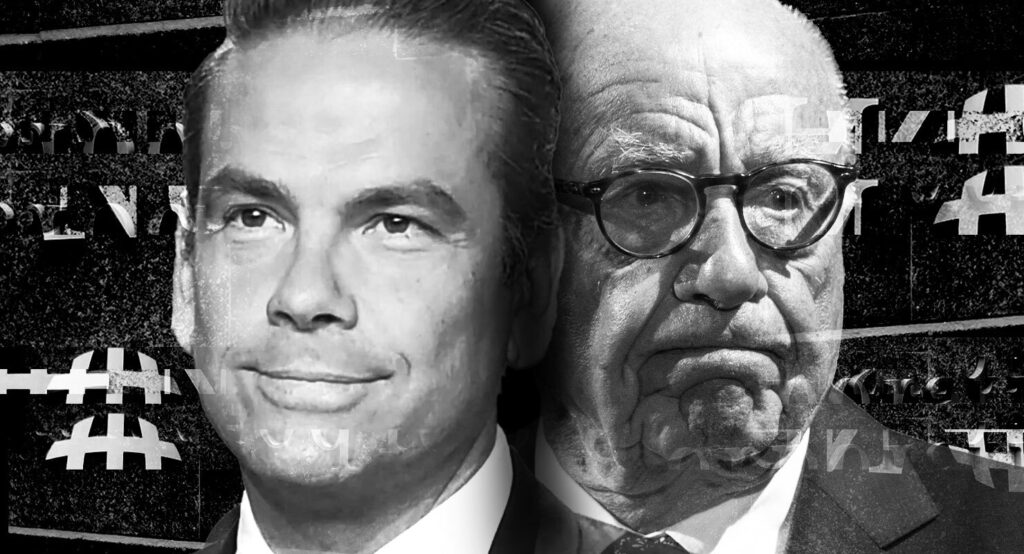
The Murdoch media empire, a dominant force in conservative media across the United States, the United Kingdom, and Australia, is facing an unprecedented challenge. A scathing legal finding from a Nevada probate commissioner has cast doubt on the succession plans within the Murdoch family, potentially disrupting control of News Corporation and Fox Corporation. This legal battle, centered on allegations of bad faith and dishonesty, raises critical questions about the future leadership of a media dynasty that has shaped political discourse for decades.
In a sealed court ruling released in Reno, Nevada, probate commissioner Edmund J. Gorman Jr delivered a decisive judgment against Rupert and Lachlan Murdoch. The commissioner concluded that the Murdochs acted in “bad faith” when attempting to alter the family’s irrevocable trust. This trust was originally designed to ensure equal control among Rupert Murdoch’s four eldest children—Lachlan, James, Elisabeth, and Prudence—after his death.
The legal dispute centers on a plan initiated by Lachlan Murdoch in mid-2023, dubbed “Project Family Harmony.” This initiative aimed to consolidate Lachlan’s control over News Corporation and Fox Corporation by amending the trust to favor his succession. Commissioner Gorman described the plan as driven by “a dishonesty of purpose and motive,” concluding that it was an attempt to secure Lachlan’s leadership in a way that would be immutable after Rupert’s passing.
While the plan might have succeeded without scrutiny, the evidentiary hearing revealed the true intentions behind the maneuver. The court’s verdict effectively invalidated the attempt to alter the trust in Lachlan’s favor, signaling that the existing equal division among the siblings should remain intact.
The ruling has thrown the leadership of both News Corporation and Fox Corporation into uncertainty. Together, these companies hold a market capitalization of approximately US$40 billion and wield significant influence in global media.
Non-family shareholders, who own over 80% of each company, are now faced with the prospect that their chairman, Lachlan Murdoch, may lose his leadership role after Rupert’s death. The family’s internal legal conflict has exposed vulnerabilities in the governance structure, unsettling investors and markets that generally dislike uncertainty.
For Lachlan Murdoch, the ruling is a significant blow. His siblings, empowered by the commissioner’s findings, are positioned to challenge his control and potentially remove him from leadership. This internal strife complicates Lachlan’s ability to steer the family’s media interests effectively while simultaneously defending his position in court.
Rupert Murdoch, at 93 years old, faces a complex dilemma. With the family feud intensifying and the empire’s future uncertain, he might consider drastic measures such as selling the companies or their key assets to resolve the impasse and stabilize the business.
The Murdoch media empire’s influence extends deeply into politics, particularly through outlets like Fox News and the New York Post in the US, The Sun and The Times in the UK, and The Australian and Sky News in Australia. The outcome of this family dispute could significantly impact the editorial direction and political stance of these outlets.
Fox News, in particular, is entering a period of heightened value and influence with the advent of a new Trump presidency. Should the Murdoch family decide to sell or restructure their holdings, the ownership and editorial independence of Fox News could shift, potentially altering the conservative media landscape in the US.
Similarly, the fate of News Corp’s Australian newspapers hangs in the balance. A sale or privatization could reshape media ownership in Australia, with possible repercussions for political discourse and public opinion.
Unlike typical family disputes that revolve around financial assets, this conflict centers on control over political influence and media power. The stakes are not merely economic but also ideological, affecting how news is reported and how political narratives are shaped across three major democracies.
At the heart of this dispute is a fracture within one of the world’s most powerful media families. Rupert Murdoch’s statement to his children at a special trust meeting last year underscored his support for Lachlan as the designated leader of the companies. However, the commissioner’s ruling challenges the legitimacy of Lachlan’s bid for sole control, revealing a contentious family struggle.
The other three siblings—James, Elisabeth, and Prudence—are described in the proceedings as “objectors,” opposing Lachlan’s attempt to consolidate power. Their legal challenge and the court’s findings suggest a deep mistrust and a battle for influence that goes beyond typical sibling rivalry.
This internal discord raises questions about the future cohesion of the Murdoch family and their ability to present a unified front in managing their media empire. The legal fight exposes vulnerabilities that could invite external pressures and complicate succession planning.
The Murdoch empire now faces a crossroads. The legal ruling has destabilized the succession plan, leaving the future leadership of News Corp and Fox in doubt. With Rupert Murdoch still alive and actively involved, the next steps remain unclear.
One possible outcome is a negotiated settlement within the family that preserves the trust’s original equal division, allowing the siblings to share control or appoint leadership collaboratively. Alternatively, the dispute could escalate to further legal challenges, prolonging uncertainty and impacting company performance.
Another scenario involves Rupert Murdoch deciding to divest significant parts of the empire to resolve the family conflict and provide clarity to shareholders and markets. Such a move could lead to new ownership structures and potentially alter the political influence of Murdoch-owned media outlets.
For shareholders and the public, these developments underscore the fragility of media empires built on family control and the complex interplay between personal dynamics and corporate governance.
The Murdoch family’s internal legal battle marks a pivotal moment for one of the world’s most influential media empires. The court’s finding of bad faith and the ensuing uncertainty over leadership expose the vulnerabilities inherent in family-controlled corporations. As the dispute unfolds, it will not only shape the future governance of News Corporation and Fox Corporation but also potentially redefine the political media landscape across multiple countries. Stakeholders—from shareholders to the public—will be watching closely as the Murdochs navigate this complex and high-stakes chapter in their storied legacy.
Originally reported by crikey.com.au. Adapted for our readers with AI assistance.
Keep reading
Business
An analysis of the structural and institutional factors that entrench governance failures in Nigeria, from patronage politics and weakened oversight to the urgent need…
Lifestyle
Obi says his wife funds her own purchases. This analysis separates his explanation, unverified handbag prices and the evidence needed to assess public spending.
Politics
Yari says the APC will emphasise Tinubu’s achievements in 2027. This analysis explains how voters can examine outcomes, baselines and campaign evidence.
TAMFIS NIG LTD
Electrical and instrumentation engineering, bid preparation and consulting, IT and software.

