Politics
How Minnesota Figures Into the Presidential Politics of Insulin Prices
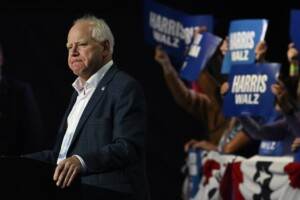
Politics tamfitronics Minnesota Gov. Tim Walz attends a rally in Asheville, North Carolina, on Sept. 17. Minnesota led the way on in...
TAMFIS NIG LTDRC 8067447CAC ACTIVEFinima, Bonny Island, Rivers State

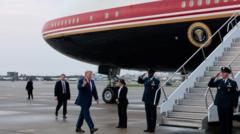
In July 2026, during a NATO summit in Ankara, Turkey, President Donald Trump executed a covert plane switch prompted by a credible security threat. The secretive operation involved leaving the official Air Force One and boarding a smaller military aircraft, a move that was kept hidden from journalists and some White House staff. This extraordinary event has since sparked discussion about the nature of threats facing U.S. leadership abroad, the protocols for presidential security, and the implications for those traveling alongside the president.
On July 8, 2026, President Trump was seen boarding the official Air Force One at Ankara airport following the NATO summit. However, reports later revealed that shortly after boarding, he discreetly exited the plane using a catering truck elevated to the aircraft’s door level on the opposite side from where he had entered. From there, he was transported to a smaller C-32A military jet, a modified Boeing 757 often used by the vice-president.
This maneuver was orchestrated by the Secret Service and military officials in response to a credible threat. The decoy Air Force One continued its flight with members of Trump’s cabinet and journalists on board, who were unaware that the president was no longer on the plane. Journalists were instructed to keep window shades down, a precaution that raised suspicions but was explained only later.
The smaller plane, using the call sign "Reach 18" instead of the usual Air Force One designation, carried Trump safely away from the potential danger. Meanwhile, the decoy plane maintained the Air Force One call sign to preserve the illusion of the president’s presence.
U.S. intelligence agencies had detected a credible threat from Iran to target the president’s aircraft with a missile. Reports indicated that a person near the NATO summit was spotted with a shoulder-fired missile, raising alarms within the U.S. security apparatus.
This threat came amid heightened tensions between the United States and Iran, following renewed U.S. military strikes after failed negotiations to end ongoing conflicts. President Trump himself has stated that he is Iran’s "number one target," acknowledging the persistent risks he faces while traveling internationally.
Officials confirmed that the threat was serious enough to warrant immediate and secretive action to protect the president, underscoring the volatile geopolitical environment surrounding U.S.-Iran relations.
The decision to leave journalists and some White House staff on the decoy plane without informing them of the president’s absence has raised ethical and safety concerns. Journalists were reportedly unaware of the threat or the secret plane swap, limiting their ability to assess their own safety.
Jose Zamora, regional director for the Americas at the Committee to Protect Journalists, emphasized that the administration has a responsibility to ensure the safety of journalists covering the president. He argued that reporters should be informed of credible threats to make informed decisions about their security.
The unusual instruction to keep window shades closed during the flight further heightened suspicions among the media pool, though the full context was only revealed after the event. This secrecy has prompted debate about balancing operational security with transparency and safety for accompanying personnel.
The plane swap was executed with precision, involving coordinated efforts by the Secret Service, military, and White House staff. Defence Secretary Pete Hegseth boarded the C-32A separately to maintain the appearance of normalcy.
After the covert flight, President Trump traveled to the United Kingdom and then back to the United States, reboarding the older Air Force One before transferring to the newer Boeing 747-8 donated by Qatar for the final leg home. The logistics of moving between aircraft remained undisclosed.
Throughout subsequent flights, President Trump acknowledged the threats but did not initially disclose the plane swap. He described having "a lot of threats" and being Iran’s top target, underscoring the personal risks he faces.
The incident has been widely covered by major news outlets, with detailed reports from The Washington Post, The New York Times, and the BBC shedding light on the complexity and secrecy of presidential security operations.
The plane swap occurred against a backdrop of escalating tensions between the United States and Iran. Renewed military strikes and failed diplomatic efforts have increased the threat landscape for U.S. officials abroad.
Presidential security protocols have always been stringent, but this incident highlights the evolving nature of threats in a geopolitical climate marked by unconventional warfare tactics, including targeted missile attacks.
The use of decoys and secretive maneuvers reflects an adaptive security strategy aimed at protecting the president while managing public perception and media presence.
However, the event also raises questions about the transparency of such operations and the ethical considerations of placing unknowing staff and journalists in potentially hazardous situations.
The secretive plane swap executed by President Trump following the NATO summit in Turkey reveals the high stakes and intricate security measures involved in protecting the U.S. president abroad. While the operation successfully mitigated a credible missile threat, it also exposed challenges in balancing operational secrecy with transparency and safety for accompanying journalists and staff. As geopolitical tensions with Iran persist, such incidents highlight the need for ongoing evaluation of security protocols and ethical considerations to ensure the safety of all individuals involved in presidential travel. This episode serves as a stark reminder of the risks faced by world leaders and the complexities of safeguarding them in an unpredictable global environment.
Originally reported by bbc.co.uk. Adapted for our readers with AI assistance.
Keep reading
Politics
Politics tamfitronics Minnesota Gov. Tim Walz attends a rally in Asheville, North Carolina, on Sept. 17. Minnesota led the way on in...
Politics
Deji Adeyanju; Niger State Mining Victims Human rights lawyer and activist, Deji Adeyanju, has accepted his appointment as a member of the Federal Government’s…
Politics
Democracy, Featured, Global, Global Governance, Headlines, International Justice, IPS UN: Inside the Glasshouse, TerraViva United Nations UNITED NATIONS, Sep 11 2026 (IPS) – When…
TAMFIS NIG LTD
Electrical and instrumentation engineering, bid preparation and consulting, IT and software.