
Politics
Science vs politics: Kiwi’s long road to EU health-claim approval
In August 2025, Zespri, the world’s largest marketer of kiwifruit, announced that the European Commission had approved what it described as the first health…
TAMFIS NIG LTDRC 8067447CAC ACTIVEFinima, Bonny Island, Rivers State

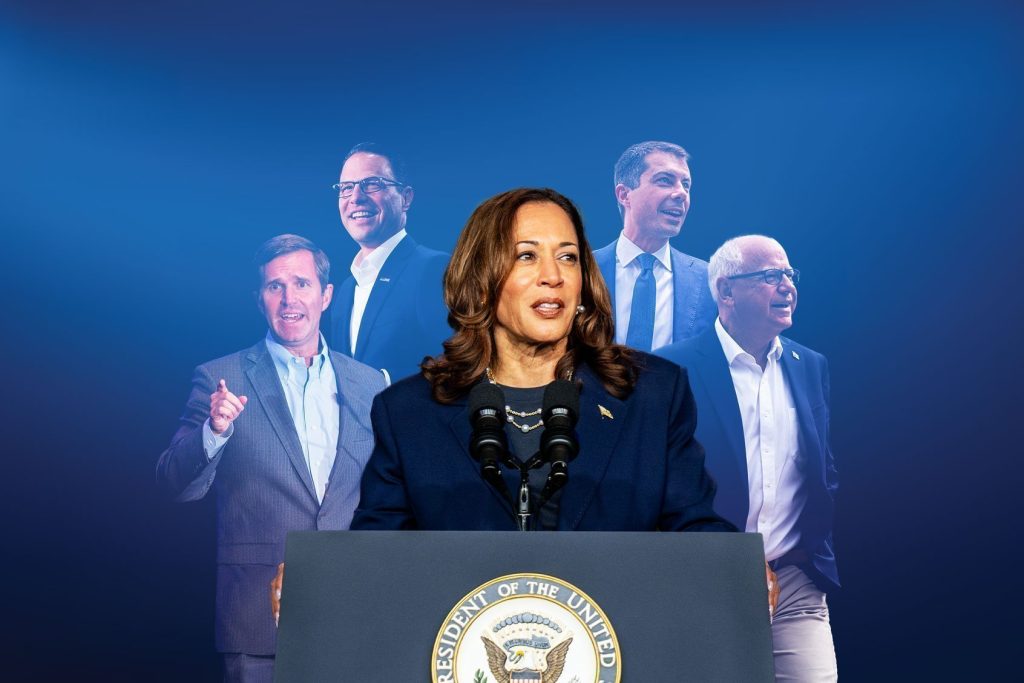
The term 'identity politics' often sparks heated debate in American political discourse, yet its meaning and application remain contested. As Vice President Kamala Harris weighs her options for a running mate, speculation centers on a likely white male candidate, prompting renewed discussion about identity politics. Unlike the 2020 vice presidential selection process, where Joe Biden’s choice of Harris was widely seen as a deliberate embrace of identity politics, the current scenario reveals shifting perceptions and underlying complexities. This article delves into the evolving understanding of identity politics, its historical roots, and its implications for political strategy and social equity.
In the lead-up to Kamala Harris’s vice presidential pick, social media has been abuzz with memes humorously labeling potential white male candidates as various types of “whites,” akin to wine selections. These lighthearted jabs underscore a serious underlying theme: the expectation that Harris’s choice will be a white man, a marked departure from the identity-driven considerations that shaped Biden’s 2020 pick.
Such memes reflect a broader cultural commentary on how identity factors into political decisions. While they poke fun at the predictability of a white male selection, they also highlight the absence of significant criticism or concern about diversity in this context, a contrast to previous election cycles.
When Joe Biden selected Kamala Harris as his running mate in 2020, it was widely viewed as a strategic embrace of identity politics. Biden had committed to choosing a woman of color, which many saw as a deliberate effort to address historic underrepresentation and appeal to diverse voter bases.
Critics at the time accused Biden of being constrained by identity politics, suggesting that his choice was more about fulfilling demographic expectations than policy alignment or experience. However, this criticism is notably muted in the current discussion about Harris’s potential VP pick, despite the likelihood that she will choose a white man.
This disparity in critique reveals shifting attitudes toward identity politics and raises questions about why similar strategies are judged differently depending on who employs them.
The term 'identity politics' often carries a negative connotation, used to criticize political moves perceived as pandering to specific groups rather than focusing on broader issues. It is frequently framed as something 'others' do, implying that considering one’s identity in politics is improper or divisive.
However, political theorists like K. Anthony Appiah and Francis Fukuyama argue that all politics inherently involve identity to some degree, including the political interests of straight white Christian men. Despite this, the popular narrative rarely acknowledges such perspectives as identity politics, reflecting a biased application of the term.
This selective labeling underscores how identity politics is often weaponized to delegitimize marginalized groups’ efforts to gain representation and equity, while similar actions by dominant groups are normalized or ignored.
The concept of identity politics originated with the Combahee River Collective in 1977, a group of Black, queer feminists who emphasized the interconnectedness of various systems of oppression. Their approach was to recognize and politicize their own identities to dismantle these oppressive structures.
From this perspective, identity politics is not merely about group affiliation but a strategic means of building solidarity among oppressed communities to challenge systemic inequality. It is a tool for empowerment and social justice rather than a tactic for maintaining existing power dynamics.
Therefore, when white men engage in politics that prioritize their group interests, it does not align with the original intent of identity politics, as it tends to preserve the status quo rather than dismantle oppression.
Political philosophers distinguish between ideal and non-ideal theory to better understand justice and political action. Ideal theory describes a just world where people are treated equally, possibly without group distinctions, rendering identity politics unnecessary.
Non-ideal theory, however, acknowledges that the real world is marked by inequality and systemic bias. In such a context, identity politics becomes a pragmatic strategy for marginalized groups to improve their social and political standing and move society closer to the ideal.
This framework helps explain why identity politics is viewed as legitimate and necessary for some groups, while similar group-based strategies by dominant groups may not be considered identity politics in the same sense.
Given these distinctions, Kamala Harris’s original selection as Joe Biden’s running mate fits the definition of identity politics: a deliberate choice to elevate a woman of color to challenge systemic inequities and broaden representation.
Conversely, if Harris chooses a white male running mate, it is unlikely to be characterized as identity politics because it does not serve to dismantle oppression or build solidarity among marginalized groups. Instead, it may be seen as a strategic move to appeal to a broader or more traditional voter base.
Recognizing this difference is crucial for a nuanced understanding of identity politics and avoids oversimplifying political decisions as merely identity-driven or not.
The discourse surrounding Kamala Harris’s vice presidential pick reveals the complexities and evolving perceptions of identity politics in American politics. While identity considerations are inherent in political decision-making, the original intent of identity politics—as a tool for marginalized groups to combat systemic oppression—remains a critical lens for evaluating such choices. Harris’s 2020 selection as Biden’s running mate was a clear example of identity politics aimed at expanding representation and challenging inequality. In contrast, a potential choice of a white male running mate reflects different political calculations and should not be conflated with the same concept. Recognizing these distinctions allows for a more nuanced understanding of political strategy and the ongoing struggle for equity and inclusion in governance.
Originally reported by salon.com. Adapted for our readers with AI assistance.
Keep reading
Politics
In August 2025, Zespri, the world’s largest marketer of kiwifruit, announced that the European Commission had approved what it described as the first health…
News
By Engr. Tamunofiniarisa BrownReading Time: 6 Minutes The conflict between Russia and Ukraine is often framed in the media as a simple battle between…
Politics
Twenty-five years after the September 11 attacks, the family of Marine Travis Fuller reflects on his death in the Iraq War, grappling with the…
TAMFIS NIG LTD
Electrical and instrumentation engineering, bid preparation and consulting, IT and software.