
Business
Nigeria’s Broken Systems: Why Failure Persists and What Must Change
An analysis of the structural and institutional factors that entrench governance failures in Nigeria, from patronage politics and weakened oversight to the urgent need…
TAMFIS NIG LTDRC 8067447CAC ACTIVEFinima, Bonny Island, Rivers State

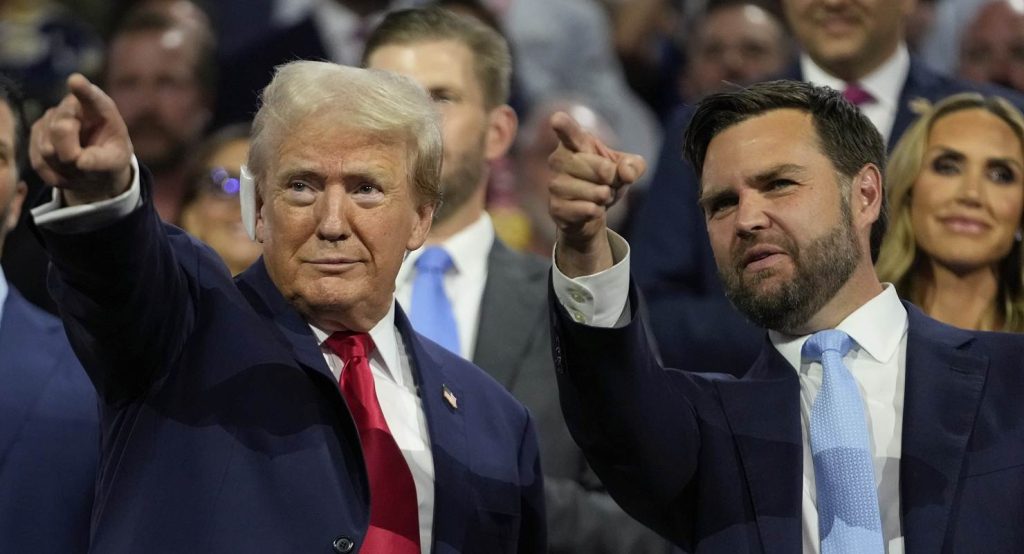
The selection of JD Vance as Donald Trump's vice-presidential running mate has intensified scrutiny on how an America First administration might recalibrate US foreign policy. With Vance's limited congressional record but clear ideological positioning, his views on Ukraine aid, China trade and regional security alliances offer concrete indicators of potential policy directions. For Nigerian importers, exporters and tech firms navigating global markets, understanding these shifts is critical for strategic planning amid evolving trade tensions and defence realignments.
Vance's candid assessment that he 'doesn't really care what happens to Ukraine' marks a stark departure from traditional Republican support for Eastern European security. His argument that the US has provided 'a blanket of security to Europe for far too long' suggests potential pressure on European NATO members to increase defence spending independently. This stance could accelerate existing trends where European nations are already boosting military budgets in response to regional threats.
For Nigerian defence contractors and security technology providers, a potential reduction in US-led Ukraine support might create opportunities in European defence markets seeking alternative suppliers. Simultaneously, businesses reliant on Ukrainian grain exports or neon gas supplies for semiconductor manufacturing should monitor how altered US engagement affects Black Sea trade routes and commodity prices.
The broader implication extends to procurement tenders across Africa, where European peacekeeping missions often source equipment and services locally. Any NATO burden-sharing shift could redirect defence spending patterns, influencing bid opportunities for West African firms in logistics, communications and protective gear sectors.
Historical precedents show that when the US reduces direct military involvement in regional conflicts, European allies often increase their own defence expenditures to fill the gap. This dynamic could particularly benefit Nigerian firms with established track records in supplying peacekeeping operations across the continent, as European nations may look to diversify their supplier base beyond traditional European and American vendors.
Vance's economically nationalist approach to China centres on increasing tariffs and revitalising US manufacturing, particularly in rust-belt states. His endorsement of the CHIPS and Science Act reveals a nuanced position where strategic tech independence outweighs strict free-market principles. This could translate into sustained pressure on Chinese imports through tariff mechanisms, affecting global electronics and textile supply chains.
Nigerian importers of Chinese goods ranging from electronics to textiles may face increased costs if Vance-influenced policies lead to higher US tariffs that disrupt global trade flows. Conversely, African nations positioning themselves as alternative manufacturing hubs could benefit from supply chain diversification efforts driven by US-China tensions.
The focus on semiconductor self-sufficiency presents specific opportunities for Nigerian tech firms involved in electronics assembly or component distribution. Increased US investment in domestic chip production might create parallel demand for testing, packaging and logistics services that African providers could capture through regional value chain integration.
Recent data indicates that US tariffs on Chinese goods have already prompted some supply chain shifts toward Southeast Asian and African nations. Vance's advocacy for revoking China's favoured trade status would amplify these trends, potentially creating new manufacturing corridors that Nigerian industrial zones could tap into with appropriate infrastructure investment and policy support.
Despite prioritising Indo-Pacific focus, Vance's relatively limited commentary on Asian alliances suggests a pragmatic rather than ideological approach. His self-description as a 'fan of AUKUS' indicates continuity with existing trilateral security arrangements between Australia, the UK and the US. This stance provides reassurance for businesses operating in Southeast Asian markets concerned about potential US retrenchment.
For Nigerian firms engaged in maritime security, underwater cable maintenance or port logistics, sustained US engagement with AUKUS partners suggests stable demand for related services in the Indian and Pacific Oceans. The emphasis on encouraging regional allies to align with US perspectives could create consulting opportunities for firms specialising in defence cooperation frameworks.
Vance's economic framing of Taiwan's importance – linking potential invasion risks to US economic decimation – highlights how tech-dependent industries might influence defence policy. Nigerian ICT companies should monitor how semiconductor supply chain vulnerabilities affect both defence procurement and commercial technology investment patterns across global markets.
The AUKUS partnership, while primarily focused on nuclear-powered submarine technology, also encompasses broader cooperation in cyber capabilities, artificial intelligence and undersea warfare. Nigerian companies with expertise in maritime domain awareness or oceanographic surveying could find niche opportunities within this expanded security framework, particularly as Indo-Pacific nations seek to enhance their maritime surveillance capabilities.
Vance's shifting stance on climate change – from acknowledging the 'climate problem' to expressing scepticism about human responsibility – introduces uncertainty for green technology markets. His opposition to electric vehicle tax credits, particularly those benefiting Chinese-made vehicles, signals potential resistance to certain climate initiatives perceived as favouring foreign competitors.
This volatility affects Nigerian businesses investing in solar energy, battery storage or electric transportation infrastructure. Policy shifts in major economies like the US can influence global financing trends for renewable projects, affecting access to green bonds and climate-focused investment funds that support African clean energy transitions.
However, Vance's focus on economic nationalism may inadvertently support certain green technologies if they align with domestic manufacturing goals. Nigerian producers of solar components or battery materials could find opportunities if US policies prioritise friend-shoring of clean energy supply chains over geographic purity.
The intersection of trade policy and climate initiatives creates complex scenarios where Nigerian entrepreneurs must navigate competing priorities. For instance, while Vance may resist subsidies for Chinese-made electric vehicles, he could support domestic battery production that utilizes African-mined lithium or cobalt, creating potential value chains that benefit Nigerian resource sectors while advancing US industrial policy objectives.
JD Vance's potential vice presidency represents not a radical departure but a strategic reorientation of US foreign policy through an economic nationalist lens. For Nigerian businesses operating in global markets, the key insight lies in understanding how security alliances, trade policies and technology competition intersect to create both risks and opportunities. Rather than preparing for isolationism, firms should anticipate a recalibrated engagement where economic interests dictate foreign policy adjustments. This environment demands enhanced supply chain resilience, proactive market diversification and sophisticated monitoring of how US domestic political debates translate into international commercial realities. By focusing on the economic motivations underlying Vance's foreign policy views, Nigerian entrepreneurs and corporate strategists can better navigate the evolving landscape of global trade, defence procurement and technology investment.
Originally reported by crikey.com.au. Adapted for our readers with AI assistance.
Keep reading
Business
An analysis of the structural and institutional factors that entrench governance failures in Nigeria, from patronage politics and weakened oversight to the urgent need…
Politics
Yari says the APC will emphasise Tinubu’s achievements in 2027. This analysis explains how voters can examine outcomes, baselines and campaign evidence.
Lifestyle
Obi says his wife funds her own purchases. This analysis separates his explanation, unverified handbag prices and the evidence needed to assess public spending.
TAMFIS NIG LTD
Electrical and instrumentation engineering, bid preparation and consulting, IT and software.

