
Business
Nigeria’s Broken Systems: Why Failure Persists and What Must Change
An analysis of the structural and institutional factors that entrench governance failures in Nigeria, from patronage politics and weakened oversight to the urgent need…
TAMFIS NIG LTDRC 8067447CAC ACTIVEFinima, Bonny Island, Rivers State

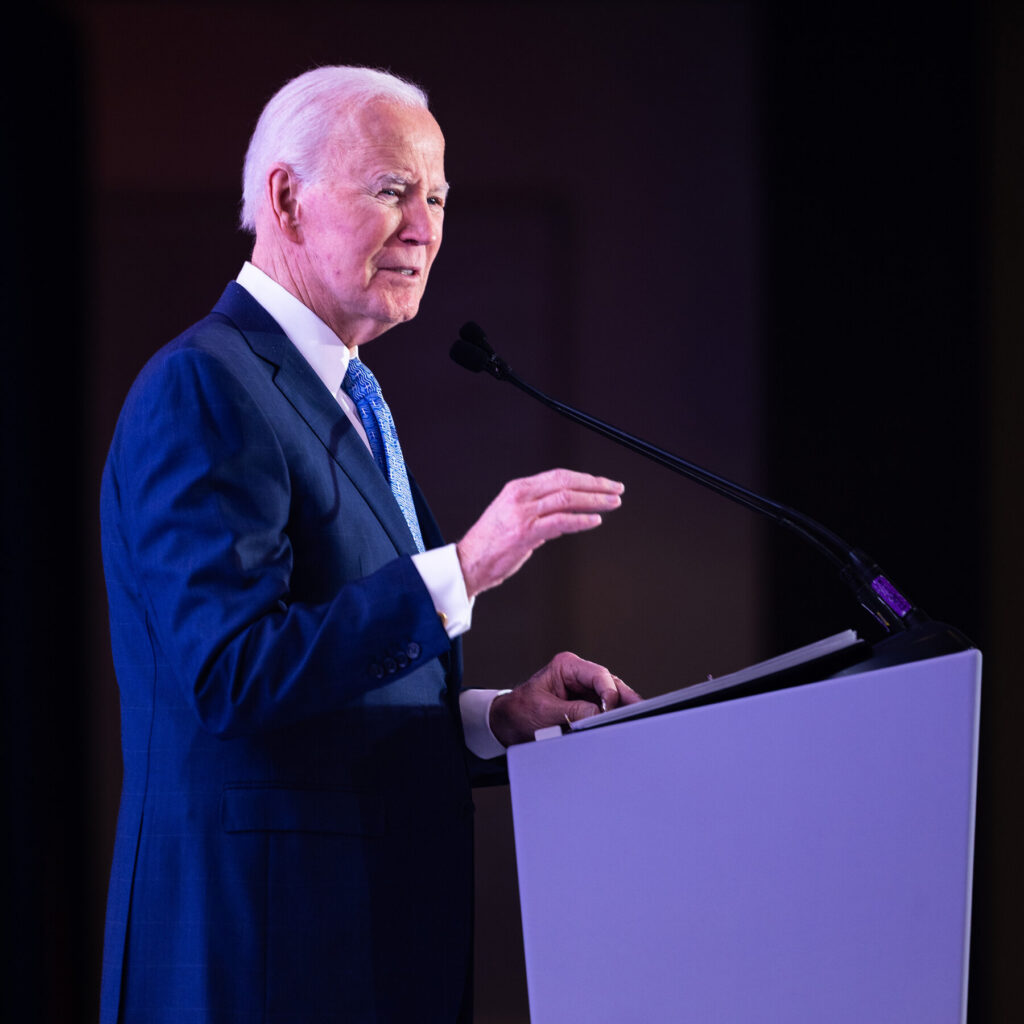
The health of a sitting president is never purely a private matter. When Hunter Biden spoke to the BBC this week, he confirmed what many had long suspected: his father's prostate cancer has advanced beyond the gland and taken root in the skeleton. Bone metastases mark a decisive shift in the disease's trajectory, bringing pain, fatigue and a treatment regimen that will inevitably intersect with the relentless demands of the Oval Office. What follows is an examination of the medical realities, the constitutional implications and the delicate balance between a leader's right to privacy and the public's need to know.
Prostate cancer remains the most frequently diagnosed malignancy in men over sixty-five, yet its behaviour varies enormously. Many tumours are indolent, caught early through PSA screening and managed with active surveillance or localised therapy. When cancer breaches the prostatic capsule and seeds the skeleton, however, the clinical picture changes fundamentally. Bone metastases — most commonly in the spine, pelvis and ribs — produce mechanical pain, risk of pathological fracture, spinal-cord compression and a cascade of metabolic disturbances including hypercalcaemia.
The shift from localised to metastatic disease reclassifies the illness from potentially curable to chronically controllable. Median survival with modern systemic therapy now stretches into years rather than months, but the symptom burden and treatment intensity rise sharply. For a head of government, the practical consequences include unpredictable energy levels, scheduling constraints for infusions or radiation sessions, and the cognitive side-effects of opioid analgesia or hormonal blockade.
Family members of presidents have historically served as gatekeepers, offering carefully calibrated health updates that reassure without alarming. Hunter Biden's decision to name bone involvement explicitly breaks that pattern. The language — "spreading into his bones and leading to increased discomfort" — is clinically precise and emotionally unvarnished. It suggests a deliberate strategy: inoculate the public against future visible decline, pre-empt speculative reporting, and frame the narrative around resilience rather than secrecy.
No detailed treatment plan has been released, but standard-of-care pathways for hormone-sensitive metastatic prostate cancer are well established. Androgen-deprivation therapy (ADT) remains the backbone, increasingly combined with novel androgen-receptor inhibitors such as enzalutamide or abiraterone, or with docetaxel chemotherapy for high-volume disease. Bone-targeted agents — denosumab or zoledronic acid — reduce skeletal-related events. Radium-223 dichloride may be deployed for symptomatic bone metastases without visceral spread. Each modality carries a distinct toxicity profile that must be weighed against presidential duties.
The US Constitution provides two mechanisms for presidential incapacity: voluntary transfer of power under Section 3 of the Twenty-Fifth Amendment, invoked during anaesthesia for colonoscopies by Presidents Reagan, Bush and Biden himself, and the involuntary route of Section 4, never yet used. Chronic, progressive illness occupies a grey zone. A president may remain cognitively intact while physically diminished, raising questions about what constitutes "inability to discharge the powers and duties of his office".
Precedent offers limited guidance. Woodrow Wilson's post-stroke seclusion was concealed by his wife and physician; Franklin Roosevelt's declining cardiovascular health was masked until his death; John F. Kennedy's Addison's disease and steroid dependence were undisclosed. Modern expectations of transparency are higher, yet the line between necessary privacy and democratic accountability remains contested. The White House Medical Unit's periodic summaries — traditionally brief and optimistic — will face pressure for greater granularity without violating HIPAA or the president's personal dignity.
Polling consistently shows voters value candour over perfection. A 2024 Pew Research study found 78 per cent of Americans believe a president should disclose serious illness promptly, yet only 42 per cent trust the White House to do so voluntarily. Sympathy for a leader confronting mortality can coexist with anxiety about decision-making capacity, particularly in nuclear command-and-control scenarios where minutes matter.
Allies will frame the disclosure as evidence of character; opponents may weaponise every stumble or cancelled appearance. The 2024 cycle already demonstrated how age and health narratives dominate coverage. With the midterms approaching, the administration's ability to project vigour while managing a complex oncology regimen will test both communications discipline and institutional resilience.
Contemporary metastatic prostate cancer care is multidisciplinary. Medical oncologists, radiation oncologists, urologists, palliative-care specialists, physiotherapists and clinical pharmacologists collaborate to sequence therapies that maximise survival while preserving performance status. Intermittent ADT schedules can mitigate fatigue and metabolic syndrome. Stereotactic body radiation therapy (SBRT) offers precise pain control with fewer fractions. Early integration of palliative care — shown in lung-cancer trials to improve both quality of life and survival — is increasingly standard.
For a patient who is also commander-in-chief, the care team must navigate unique constraints: secure infusion suites, travelling pharmacy, real-time secure communication with the National Command Authority during treatment windows. The White House Medical Unit functions as both primary-care provider and operational hub, coordinating with Walter Reed and the National Institutes of Health. Continuity of care during foreign travel adds another layer of logistical complexity.
Hunter Biden's interview may establish a new normative baseline: that families of principals can speak frankly when official channels default to minimisation. The alternative — discovery by investigative journalism or foreign intelligence — erodes trust far more damagingly. A structured framework for presidential health disclosure, perhaps modelled on the UK's sovereign medical bulletins or corporate insider-trading notification rules, could reduce ad-hoc decision-making.
Congress has periodically debated legislation mandating independent medical evaluations, but separation-of-powers concerns have stalled such efforts. Voluntary adoption of a transparent protocol — annual comprehensive examination, standardised summary release, defined triggers for interim updates — would serve both the office and the electorate. The current moment, while deeply personal for the Biden family, offers an opportunity to institutionalise lessons learned.
The revelation that President Biden's cancer has spread to bone is a human story before it is a political one. It reminds voters that the presidency is occupied by a mortal body subject to the same biology as any citizen. Modern oncology offers genuine hope of measured, meaningful time — time to govern, to legislate, to shape foreign policy and to prepare an orderly succession if needed. What the coming months demand is not speculation but a sustained commitment to candour: regular, clinically grounded updates that respect the man while informing the electorate. In that transparency lies the strongest defence of democratic legitimacy.
Originally reported by nytimes.com. Adapted for our readers with AI assistance.
Keep reading
Business
An analysis of the structural and institutional factors that entrench governance failures in Nigeria, from patronage politics and weakened oversight to the urgent need…
Politics
Yari says the APC will emphasise Tinubu’s achievements in 2027. This analysis explains how voters can examine outcomes, baselines and campaign evidence.
Lifestyle
Obi says his wife funds her own purchases. This analysis separates his explanation, unverified handbag prices and the evidence needed to assess public spending.
TAMFIS NIG LTD
Electrical and instrumentation engineering, bid preparation and consulting, IT and software.

