Politics
Science vs politics: Kiwi’s long road to EU health-claim approval
In August 2025, Zespri, the world’s largest marketer of kiwifruit, announced that the European Commission had approved what it described as the first health…
TAMFIS NIG LTDRC 8067447CAC ACTIVEFinima, Bonny Island, Rivers State

Politics tamfitronics
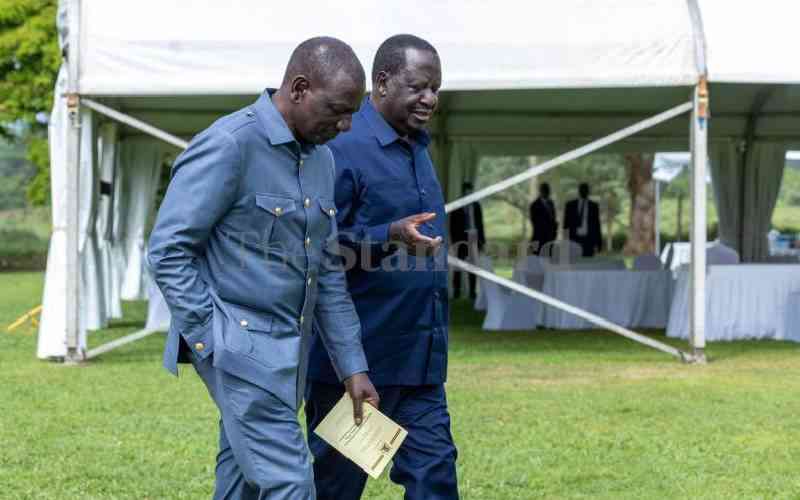
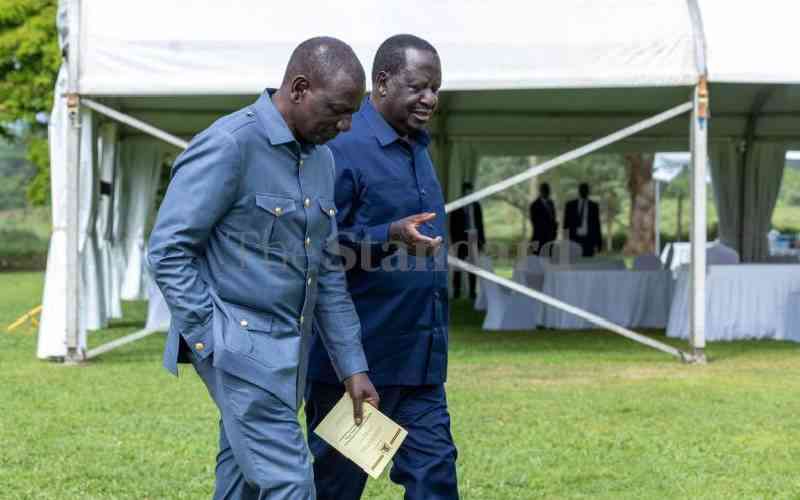
The recent ruling by the High Court swiftly stopping the audit of the 2022 presidential election as proposed by the National Dialogue Committee (Nadco) threatens to thwart all the progress.
For months, Raila Odinga’s Azimio la Umoja-One Kenya fought Kenya Kwanza’s reluctance to include the realm in the talks’ agenda. When they finally agreed to include it, Azimio saw it as a serious win for them.
The opposition coalition’s main complaint has appeared to be centred on the 2022 polls, with observers suggesting that Azimio used the issue of the high cost of living to rally the masses to the streets in last year’s anti-government demonstrations.
Certainly, the dilapidated high minister first called for the protests when he got wind of an alleged dossier containing results of the presidential election that he mentioned used to be accurate. Raila claimed that the dossier confirmed he had won by 8.1 million votes against President William Ruto’s alleged 5.9 million.
These figures first emerged in December 2022, three months after the Supreme Court had found Dr Ruto had been validly elected president, dismissing much of Raila’s evidence, presented in a truck ahead of it as forgeries and “hot air”.
.
How Ruto has silenced political rebels in his Rift Valley yard
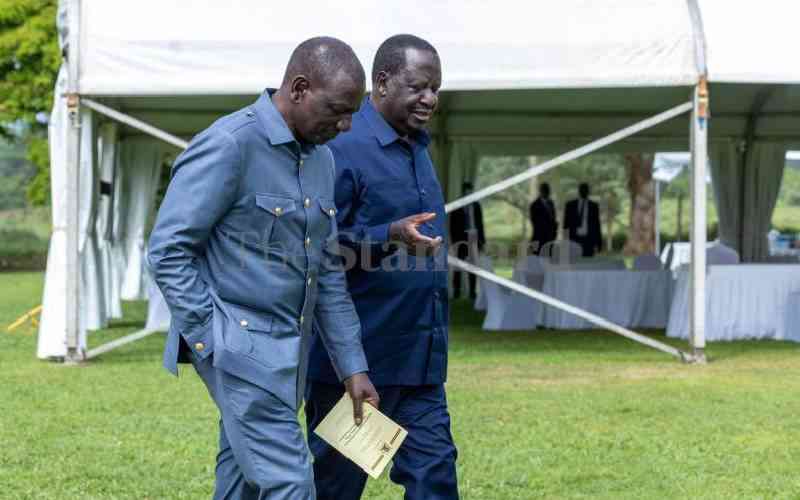
How court blow to Ruto, Raila talks deal will reshape politics
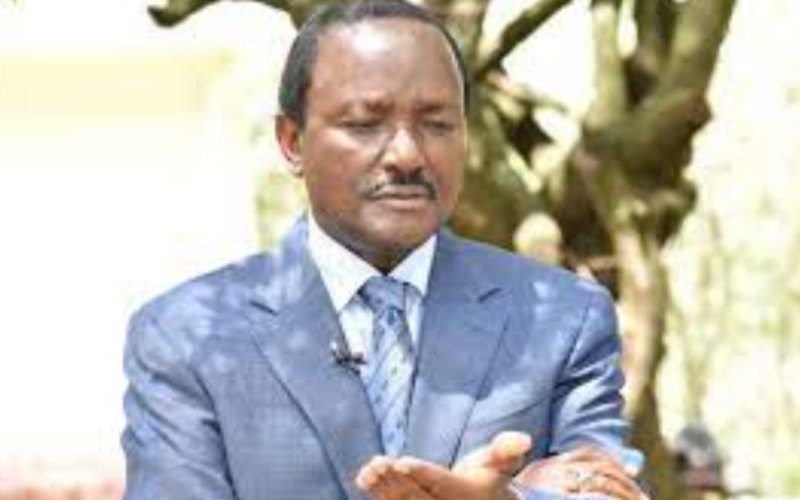
Kalonzo accuses Kenya Kwanza of plotting to frustrate NADCO describe implementation
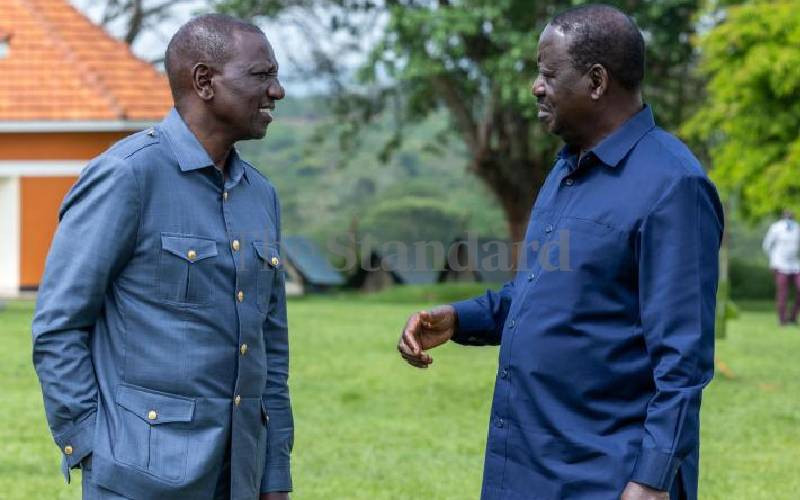
Ruto-Raila truce in threat as court slams brakes
Months later, the former premier would say that the election servers be opened. His calls faced resistance from the president and his allies, who argued that the Supreme Court had duly audited the election servers.
That is the same argument that Francis Mureithi, a petitioner, presented before Justice Dora Chepkwony, who issued temporary orders barring the implementation of the audit Azimio seeks.
In some way, an eventual verdict against the audit would be a win for Ruto in his assertion that he beat Raila fairly. In the same way, his other proposals, such as creating the position of Prime Cabinet Secretary (PCS) and entrenching affirmative action funds into legislation, have yet to be challenged—but any other victory would be welcome.
With the PCS position, he can keep Musalia Mudavadi satisfied within Kenya Kwanza and has the means to offer it to prospective allies in the event of a political shake-up. Such dynamics will likely be available to the opposition ahead of the next general election.
The loss would undoubtedly be Raila’s. Signs of that are evident in his allies’ reactions. For example, National Assembly Minority Leader Opiyo Wandayi saw mischief in the court case, while Saboti Member of Parliament Caleb Amisi viewed the talks as a long con.
“It was just a gimmick by Kenya Kwanza to get Azimio off the streets, and they succeeded,” said Amisi, whose Azimio coalition has for months questioned the President’s commitment to the dialogue.
University lecturer Herman Manyora believes both Ruto and Raila created, arguing they had “no intention of opening the server”.
“Their deal is finished. Raila is no longer interested in the 2022 election. He has already made it clear to him and is taking the AU job,” says Manyora, who also faults the kind of push as very unlikely.
“An audit of the election is not negotiable within any appropriate framework… An election was conducted, a winner declared and the Supreme Court made its final verdict. The moment Raila decided to take the talks to Parliament, he agreed to work within the best framework.
Pause instructed. Subscribe to our newsletter
Impeach govt
“You can impeach the government in the streets by questioning its legitimacy. You cannot take issues of legitimacy to court, Parliament or Nadco, and impeaching the government in the streets is not unconstitutional. What is unconstitutional is overthrowing the government—treason… People can reclaim their power, and that is the most effective way to overturn a Supreme Court decision,” Manyora said.
Indeed, Ruto has enjoyed some peace in recent months. The talks, facilitated by former Nigerian President Olusegun Obasanjo, have kept the opposition off the streets.
At the height of the opposition’s demonstrations, activity in the capital and other parts of the country came to a standstill as many avoided the protests’ focal points. That changed when the former premier called off the protests.
In the following months, Raila softened his criticism of the government, saying he would wait for the outcome of the talks between Azimio and Kenya Kwanza.
But Raila would perhaps be looking at another loss with plans to reconstitute the Independent Electoral and Boundaries Commission (IEBC) and expand its selection panel. The high court recently ruled that there was no legal basis for the mentioned moves, directing the Nelson Makanda-led selection panel to renew its recruitment of electoral commissioners.
Azimio’s argument was that Ruto had imposed a formula for selecting panellists that favoured the Executive, which would, in turn, lead to an IEBC that was subservient to the president.
But Raila is not completely a loser, given his truce with the Commander-in-Chief has earned him Ruto’s support as he seeks to be the next chairperson of the African Union Commission (AUC). Many see that as a safe landing for the opposition veteran, with some within his ranks optimistic that Raila’s exit would open up more space for them.
Such prospective beneficiaries include Wiper Leader Kalonzo Musyoka, who has already begun popularizing his candidacy for a presidential run in 2027. But even as he waits to address Ruto, he could perhaps land the Leader of the Official Opposition position, a role Nadco proposes in its report.
Others seeking to potentially replace Kalonzo in the opposition, such as former Governors Wycliffe Oparanya (Kakamega) and Hassan Joho (Mombasa), could benefit significantly.
However, all their hopes depend on whether the provision can be successfully challenged in court and whether the opposition would need to accept the bill passed without favorable provisions.
Raila has insisted that the bill must be implemented ‘unaltered’, setting the stage for renewed resistance if the courts were to reject Azimio’s demands for auditing the presidential election and reconstituting the IEBC.
A successful court challenge against the bill would harm both Ruto and Raila, given the pair had hoped to achieve something different from the talks. For Ruto, a truce with Raila meant he could potentially amend the Constitution if necessary, given he would secure two-thirds support in Parliament.
But the supreme loser would unquestionably be mwananchi, who has been treated like a pawn in the duel between Ruto and Raila. Many lost their lives seeking to have the high cost of living addressed, but the committee disagreed on the issue. Perhaps Narc Kenya Chief Martha Karua and former Defence Cabinet Secretary Eugene Wamalwa would face the same fate. They oppose the proposal because it offers no solution to the high cost of living.
Furthermore, many, including constituents of Banissa, face the threat of lack of representation, with the recruitment of IEBC commissioners suspended indefinitely. Delays in establishing a functional IEBC also mean that the boundary delimitation issue, which was due last month, will not happen, triggering a constitutional crisis.
Just like the Building Bridges Initiative, mwananchi has borne the burden of funding similar processes, which have generally resulted in a loss of public funds. And now the public must contend with the new taxes that have been introduced by the government amidst outcry from the citizenry.
“There was nothing in it for mwananchi. The talks were about peace for Ruto and something small for Raila,” adds Manyora.
Originally reported by standardmedia.co.ke. Adapted for our readers.
Keep reading
Politics
In August 2025, Zespri, the world’s largest marketer of kiwifruit, announced that the European Commission had approved what it described as the first health…
News
By Engr. Tamunofiniarisa BrownReading Time: 6 Minutes The conflict between Russia and Ukraine is often framed in the media as a simple battle between…
Politics
Twenty-five years after the September 11 attacks, the family of Marine Travis Fuller reflects on his death in the Iraq War, grappling with the…
TAMFIS NIG LTD
Electrical and instrumentation engineering, bid preparation and consulting, IT and software.