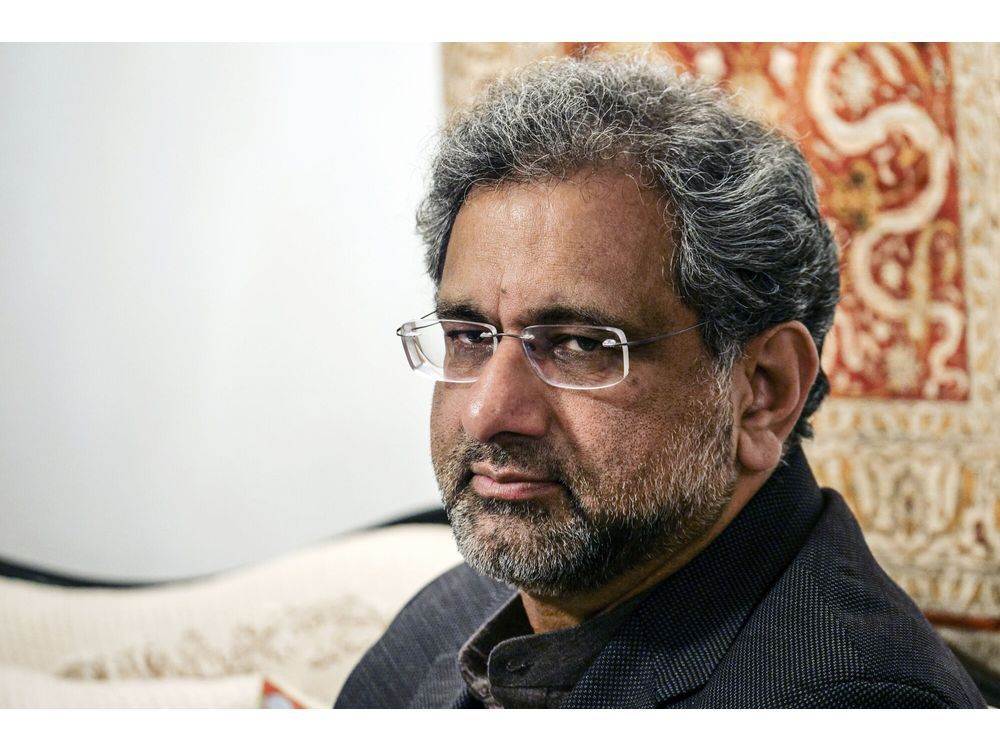
Former Sharif Ally Forms New Party to Change Pakistan’s Politics
In a significant political development, Shahid Khaqan Abbasi, Pakistan’s former prime minister and long-time ally of the Sharif family, has launched a new political party named Awam Pakistan. This move marks a notable shift in Pakistan’s political dynamics, as Abbasi breaks away from the powerful Pakistan Muslim League-Nawaz (PML-N) amid growing public unrest over economic austerity and political instability. The emergence of Awam Pakistan highlights the evolving challenges within Pakistan’s political arena, including the contentious role of the military and the dominance of dynastic parties.
The Birth of Awam Pakistan: A Break from the Sharif Legacy
Shahid Khaqan Abbasi, who served as Pakistan’s prime minister from 2017 to 2018, officially launched Awam Pakistan on a recent Saturday in Islamabad. The party was formed alongside several former members of the Pakistan Muslim League-Nawaz (PML-N), signaling a clear departure from the Sharif clan’s political orbit. Abbasi had been a stalwart ally of Nawaz Sharif for over three decades but parted ways with the party last year, citing concerns over undemocratic practices within the leadership.
Abbasi’s decision to establish a new party reflects a broader frustration with the entrenched political dynasties that have dominated Pakistan’s landscape for decades. He emphasized the need for political and economic stability, stating that the Pakistani people have exhausted their options with existing parties. This new formation aims to offer an alternative to voters disillusioned by the status quo.
Economic Challenges and Public Discontent
The launch of Awam Pakistan comes at a time of heightened economic strain in Pakistan. The current government, led by Prime Minister Shehbaz Sharif—Nawaz Sharif’s brother and PML-N leader—has implemented significant austerity measures, including record tax hikes and increased energy prices. These steps are part of efforts to secure a new loan program from the International Monetary Fund (IMF) amid a severe debt repayment crisis.
Abbasi has been openly critical of the government’s budget, labeling it the worst in Pakistan’s history. The austerity measures have fueled public anger and dissatisfaction, creating fertile ground for political challengers like Abbasi’s new party to gain traction. This economic backdrop underscores the urgency for political alternatives that can address the country’s financial instability while restoring public confidence.
Political Tensions and the Role of the Military
Pakistan’s political environment remains volatile, with former Prime Minister Imran Khan contesting the legitimacy of the February 2024 elections, where his candidates secured the most seats despite restrictions on using his party’s official name and symbols. Abbasi has criticized both the military and the Sharif family for allegedly rigging these elections, accusations that have been consistently denied by the accused parties.
Leaders of Awam Pakistan have expressed concerns about the close ties between recent governments and the military establishment. Miftah Ismail, a former finance minister and member of the new party, pointed out that both Imran Khan and Nawaz Sharif have maintained alliances with the army at different times. Abbasi himself has stressed the importance of constitutional boundaries in civil-military relations, warning that Pakistan suffers when these relations exceed constitutional limits.
This stance highlights a critical issue in Pakistani politics: the military’s influential role in governance and electoral processes. The new party’s emphasis on constitutionalism and civilian supremacy aims to address these longstanding challenges.
Challenges Ahead for Awam Pakistan
Despite the enthusiasm surrounding its formation, Awam Pakistan faces significant hurdles in establishing itself as a major political force. According to Madiha Afzal, a foreign policy fellow at the Brookings Institution, the party will struggle to gain substantial national support due to Pakistan’s entrenched parliamentary system and the dominance of established dynastic parties.
The PML-N and Pakistan Tehreek-e-Insaf (PTI), led by Imran Khan, have deep-rooted voter bases and extensive organizational structures. Displacing their vote shares will be a formidable task for any new entrant. Moreover, the political landscape is complicated by the military’s influence and the ongoing rivalry between these major parties.
Nonetheless, the presence of prominent figures such as Miftah Ismail, who served as finance minister under Shehbaz Sharif, and Zafar Mirza, a former health minister and Imran Khan aide, lends credibility and experience to the new party. Their involvement signals an attempt to bridge divides and present a pragmatic alternative to voters.
Implications for Pakistan’s Political Future
The emergence of Awam Pakistan could reshape political alignments in Pakistan, especially if it manages to capitalize on public discontent with austerity and political dynasties. Abbasi’s break from the Sharif family and critique of both major parties reflect a growing desire among some politicians and voters for change beyond traditional loyalties.
However, the party’s success will depend on its ability to navigate Pakistan’s complex political environment, which includes managing relations with the military, addressing economic challenges, and appealing to a diverse electorate. The upcoming elections and political developments will serve as critical tests for Awam Pakistan’s viability as a national contender.
Ultimately, the party’s formation underscores the dynamic and often unpredictable nature of Pakistani politics, where alliances shift, and new actors emerge in response to evolving public demands and institutional pressures.
What this means
The launch of Awam Pakistan by Shahid Khaqan Abbasi marks a noteworthy development in Pakistan’s political arena, reflecting deepening public frustration with existing parties and economic hardships. While the new party seeks to offer a fresh alternative grounded in constitutional principles and political stability, it confronts formidable obstacles in a landscape dominated by powerful dynasties and military influence. The coming months will be crucial in determining whether Awam Pakistan can transform political dissatisfaction into meaningful electoral success and contribute to reshaping Pakistan’s future governance.
Originally reported by financialpost.com. Adapted for our readers with AI assistance.
Obi says his wife funds her own purchases. This analysis separates his explanation, unverified handbag prices and the evidence needed to assess public spending.
Yari says the APC will emphasise Tinubu’s achievements in 2027. This analysis explains how voters can examine outcomes, baselines and campaign evidence.