Politics
How Minnesota Figures Into the Presidential Politics of Insulin Prices
Politics tamfitronics Minnesota Gov. Tim Walz attends a rally in Asheville, North Carolina, on Sept. 17. Minnesota led the way on in...
TAMFIS NIG LTDRC 8067447CAC ACTIVEFinima, Bonny Island, Rivers State

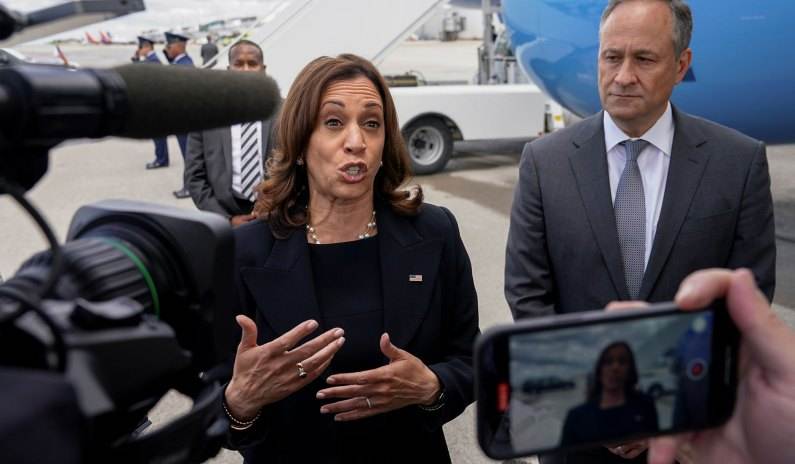
Kamala Harris, the Vice President of the United States, has been a prominent figure in American politics for years. However, her political record contains several contentious decisions and actions that have sparked debate. Interestingly, many of these issues have been downplayed or ignored by fact-checkers, leading to accusations of media bias and selective reporting. This article explores the dynamics behind fact-checkers’ handling of Harris’s record, analyzing the implications for public discourse and electoral transparency.
Fact-checkers play a crucial role in today’s political landscape by verifying claims made by politicians, media outlets, and public figures. Their purpose is to provide the public with accurate information, helping voters make informed decisions. However, the increasing polarization of politics has placed fact-checkers under intense scrutiny, as accusations of bias and inconsistency frequently arise.
In theory, fact-checkers should maintain neutrality regardless of political affiliation. Yet, their selection of which claims to investigate and how they present findings can influence public perception. This power makes the integrity and transparency of fact-checking organizations vital to democratic discourse.
The case of Kamala Harris exemplifies the challenges faced by fact-checkers. While her political career includes several controversial moments, many fact-checkers have either avoided or softened critiques of her record, raising questions about whether they are fulfilling their mandate impartially.
Kamala Harris’s tenure as California’s Attorney General and later as a U.S. Senator has been marked by notable controversies. Critics point to her prosecutorial decisions, such as her stance on criminal justice reform and handling of cases involving police misconduct, as areas of concern.
Her involvement in policies that arguably contributed to mass incarceration has drawn significant criticism from criminal justice advocates. For example, Harris supported measures that increased penalties for certain offenses, which some say disproportionately affected minority communities.
Additionally, Harris’s record on issues like bail reform and her interactions with law enforcement agencies have been scrutinized for not aligning with progressive expectations. These aspects of her record have been focal points in political debates but often receive limited coverage in mainstream fact-checking reports.
A review of major fact-checking organizations reveals a pattern of selective engagement with Kamala Harris’s controversial record. Many fact-checks focus on clarifying misstatements or exaggerations by her opponents rather than critically analyzing her own past decisions.
When Harris’s actions are addressed, fact-checkers often provide context that mitigates negative perceptions, such as emphasizing her evolution on criminal justice issues or highlighting her advocacy on other fronts. While context is important, this approach can sometimes obscure the full scope of legitimate criticisms.
Moreover, fact-checkers tend to prioritize immediate claims made during campaigns over deeper investigations into a candidate’s historical record. This practice can result in an incomplete public understanding of a politician’s background, especially for complex figures like Harris.
The media landscape’s ideological divisions inevitably affect fact-checking, as many organizations are affiliated with or influenced by larger media entities. This relationship can create conflicts of interest or unconscious biases that shape which stories receive attention.
In Kamala Harris’s case, mainstream media outlets have generally portrayed her in a favorable light, which appears to extend to their affiliated fact-checking arms. This alignment can lead to underreporting of controversial aspects of her record or framing them in a way that minimizes their significance.
Such media bias undermines the public’s trust in fact-checking as a neutral arbiter of truth. When fact-checkers seem to protect certain politicians, it fuels skepticism and contributes to the polarization of information sources.
When fact-checkers fail to thoroughly examine or report on contentious elements of a politician’s record, voters are deprived of a comprehensive understanding necessary for informed decision-making. This gap can distort electoral outcomes and public opinion.
Overlooking inconvenient facts also diminishes accountability, allowing politicians to evade scrutiny for past actions that may conflict with their current platforms or public statements. This lack of accountability can erode democratic norms over time.
Furthermore, selective fact-checking contributes to the spread of misinformation by allowing narratives favorable to certain figures to go unchallenged. It undermines the role of fact-checking as a tool for combating falsehoods and promoting transparency.
Recognizing the challenges posed by bias and selective reporting, experts and observers have called for reforms in fact-checking practices to enhance transparency and accountability. These reforms include clearer standards for claim selection and more rigorous methodologies.
Some propose independent oversight bodies for fact-checking organizations to monitor fairness and consistency in their work. Such oversight could help build public trust and ensure that fact-checkers hold all political figures to the same standards.
Additionally, expanding fact-checking to include comprehensive historical analyses rather than focusing solely on recent claims could provide voters with a fuller picture of candidates’ records. This approach would require more resources but could significantly improve the quality of political discourse.
In an environment where fact-checkers may not always provide complete or unbiased information, voters must take an active role in critically evaluating political claims. This includes seeking multiple sources and understanding the context behind political records.
Media consumers should approach fact-checking results with a discerning eye, recognizing that no source is entirely free from bias. Cross-referencing fact-checks with investigative journalism and primary documents can help uncover a more nuanced truth.
Ultimately, an informed electorate is essential for a healthy democracy. By demanding greater transparency from fact-checkers and holding media accountable, voters can contribute to a more honest and robust political conversation.
The controversy surrounding fact-checking of Kamala Harris’s record highlights broader challenges in maintaining transparency and accountability in modern politics. Ensuring that fact-checkers serve the public interest requires ongoing vigilance and reform.
As political figures continue to rise and shape national discourse, fact-checkers must evolve to meet the demands of impartiality and thoroughness. Only then can they effectively fulfill their mission of promoting truth in a polarized environment.
Increased collaboration between fact-checkers, journalists, and academic researchers may offer pathways to more comprehensive and balanced evaluations of political records, fostering greater trust among the public.
The examination of fact-checkers’ treatment of Kamala Harris’s political record reveals significant gaps in transparency and impartiality that warrant attention. While fact-checking remains a critical tool for democratic engagement, its effectiveness depends on rigorous, unbiased application. To safeguard the integrity of political discourse, fact-checkers must address inconvenient truths with the same diligence as they do popular narratives. Meanwhile, voters and media consumers bear responsibility for demanding higher standards and engaging critically with the information presented to them. Only through collective effort can fact-checking fulfill its promise as a guardian of truth in the political arena.
Originally reported by nationalreview.com. Adapted for our readers.
Keep reading
Politics
Politics tamfitronics Minnesota Gov. Tim Walz attends a rally in Asheville, North Carolina, on Sept. 17. Minnesota led the way on in...
Politics
Deji Adeyanju; Niger State Mining Victims Human rights lawyer and activist, Deji Adeyanju, has accepted his appointment as a member of the Federal Government’s…
Politics
Democracy, Featured, Global, Global Governance, Headlines, International Justice, IPS UN: Inside the Glasshouse, TerraViva United Nations UNITED NATIONS, Sep 11 2026 (IPS) – When…
TAMFIS NIG LTD
Electrical and instrumentation engineering, bid preparation and consulting, IT and software.