
News
RUSSIA versus NATO and BRICS vs. NATO Military SWOT
Recall that Poland’s Minister Sikorski’s core claim is partially supported by the numbers, but the framing “quite quickly” and “without the U.S.” does not…
TAMFIS NIG LTDRC 8067447CAC ACTIVEFinima, Bonny Island, Rivers State

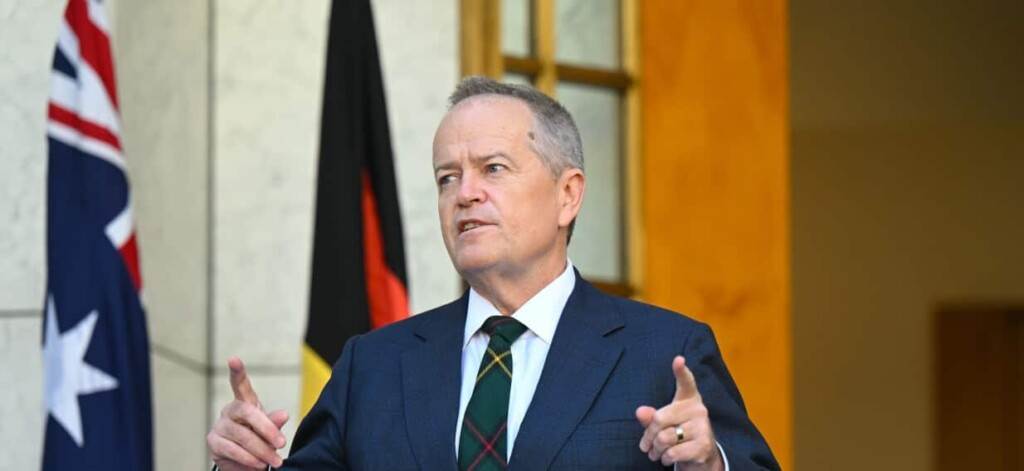
Bill Shorten’s announcement of his retirement from politics marks the end of an influential chapter in Australian political history. Serving as the Member for Maribyrnong since 2007 and leading the Australian Labor Party (ALP) for six years, Shorten has been a central figure in shaping policy and party dynamics. His career, described by himself as filled with 'extraordinary highs and some extraordinary lows,' reflects dedication to public service, advocacy for the disadvantaged, and resilience in political leadership. As he prepares to transition into academia as the vice-chancellor of the University of Canberra, this comprehensive article delves into his political legacy, key contributions, and what lies ahead.
Bill Shorten’s political career spans nearly two decades, beginning with his election to the House of Representatives in 2007 as the Member for Maribyrnong, a Melbourne electorate. Known for his unwavering commitment to social justice, Shorten entered politics with a clear mission: to stand up for those who started life with fewer advantages. His tenure in parliament has been marked by a persistent focus on policies aimed at reducing inequality and supporting vulnerable Australians.
Throughout his career, Shorten held several important ministerial roles under the Kevin Rudd and Julia Gillard governments, including Minister for Education and Minister for Employment and Workplace Relations. These roles allowed him to influence key areas such as industrial relations, education reform, and social policy, solidifying his reputation as a pragmatic yet passionate politician.
In 2013, Shorten was elected leader of the Australian Labor Party, a position he held until 2019. His leadership period was characterized by efforts to rebuild the party’s unity and electoral competitiveness, culminating in a fiercely contested 2019 federal election. Despite the loss, Shorten remained a respected figure within the party and the broader political landscape.
One of Bill Shorten’s most significant legacies is his role as the architect of the National Disability Insurance Scheme (NDIS). Introduced under the Gillard government, the NDIS represents a transformative approach to supporting Australians with disabilities, providing them with individualized funding and services tailored to their needs.
Shorten’s involvement in the creation and defense of the NDIS legislation highlights his commitment to social equity and his ability to navigate complex policy landscapes. His return to the portfolio as Minister for the NDIS in the current government underscores the importance of his expertise and dedication to the scheme’s success.
The NDIS has been widely regarded as a landmark reform in Australian social policy, improving the quality of life for hundreds of thousands of people. Shorten’s leadership in this area has been praised by colleagues and advocacy groups alike, cementing his status as a champion for disability rights.
Bill Shorten’s political journey has been marked by notable successes and challenging setbacks. He openly acknowledges experiencing 'extraordinary highs and some extraordinary lows' throughout his career, reflecting the turbulent nature of political life. These highs include his leadership of the Labor Party and his role in significant policy achievements like the NDIS.
Conversely, Shorten faced political defeats, most notably the 2019 federal election loss to then-Liberal leader Scott Morrison. This defeat led to his resignation as party leader but did not diminish his influence or commitment to public service. Instead, it highlighted his resilience and willingness to continue contributing in other capacities.
Shorten’s candid reflections on his career demonstrate a grounded perspective on politics, emphasizing the privilege of public service and the importance of perseverance despite adversity.
Before entering the federal parliament, Bill Shorten built his reputation as a formidable union leader. He served as the Victorian state secretary and later the national secretary of the Australian Workers' Union (AWU), where he championed workers' rights and better conditions. His union background provided a strong foundation for his political values and advocacy.
Shorten’s transition from union leadership to parliamentary politics was driven by his commitment to social justice and equal opportunity. His rise to prominence was accelerated by his response to the Beaconsfield mine disaster in Tasmania in 2006, where he advocated fiercely for miners and affected families, earning widespread respect.
This union experience deeply influenced his approach to policy and leadership within the Labor Party, reinforcing his focus on industrial relations, social equity, and the empowerment of working Australians.
Over his extensive political career, Bill Shorten has held a variety of ministerial portfolios, each reflecting his diverse interests and capabilities. These include education, industrial relations, superannuation, and most recently, the National Disability Insurance Scheme. His ministerial work has often centered on improving social welfare and economic security for Australians.
As Minister for Education, Shorten championed reforms aimed at enhancing access and quality, emphasizing education as a critical pathway from disadvantage to opportunity. His tenure highlighted the importance he places on education as a tool for social mobility.
In the industrial relations portfolio, Shorten worked to balance the interests of workers and employers, navigating complex debates over workplace laws and conditions. His pragmatic approach sought to protect workers while fostering economic growth, reflecting his union roots and political acumen.
Bill Shorten's leadership of the Australian Labor Party was marked by both challenges and achievements. He is credited with uniting the party after years of internal divisions, re-energizing the caucus, and rebuilding Labor as a credible alternative government. His tenure saw efforts to modernize the party’s policies and outreach.
Despite facing two prime ministers during his leadership and enduring a tough electoral defeat, Shorten maintained a reputation for hard work, energy, and commitment. His leadership style combined strategic thinking with a genuine passion for advocacy, inspiring many within the party and beyond.
Prime Minister Anthony Albanese, who succeeded Shorten as Labor leader, praised his predecessor’s dedication and impact, noting that Shorten brought 'energy, enthusiasm, ideas, and ambition' to the party’s cause. This endorsement underscores Shorten’s lasting influence on the ALP’s direction.
Following his retirement from politics, Bill Shorten will embark on a new chapter as vice-chancellor of the University of Canberra, starting in February. This role marks a significant transition from political leadership to academic administration, reflecting his longstanding interest in education as a tool for social change.
Shorten has emphasized the transformative power of education, describing it as the 'modern means of taking someone from disadvantage to advantage.' His new position will enable him to influence higher education policy and institutional leadership, continuing his commitment to equity and opportunity.
This career move also highlights the versatility of Shorten’s leadership skills and his dedication to public service beyond the political arena. As vice-chancellor, he aims to foster innovation, inclusivity, and academic excellence at the University of Canberra.
Bill Shorten’s announcement to retire from politics invites reflection on a career characterized by dedication, resilience, and significant contributions to Australian society. From union advocacy to national policy development and party leadership, his journey embodies a commitment to improving the lives of ordinary Australians.
He has often spoken about the privilege of serving in parliament and the satisfaction derived from helping those 'who don’t start out with the same set of advantages.' This ethos has guided his work and shaped his legacy as a politician who prioritized social justice.
As he prepares to leave the political stage, Shorten’s impact is evident in the policies he helped shape, the party he helped rebuild, and the lives he influenced. His story serves as an example of steadfast public service amid the complex realities of political life.
Bill Shorten’s retirement from politics marks the conclusion of a remarkable career defined by advocacy, leadership, and resilience. His influence on Australian politics, particularly through the creation of the National Disability Insurance Scheme and his leadership of the Labor Party, has left a lasting imprint. As he moves into his new role in academia, Shorten’s dedication to education and social equity continues to inspire. His journey from union halls to parliamentary chambers and soon to university leadership exemplifies a lifelong commitment to advancing opportunity and justice for all Australians.
Originally reported by sbs.com.au. Adapted for our readers.
Keep reading
News
Recall that Poland’s Minister Sikorski’s core claim is partially supported by the numbers, but the framing “quite quickly” and “without the U.S.” does not…
Politics
In August 2025, Zespri, the world’s largest marketer of kiwifruit, announced that the European Commission had approved what it described as the first health…
News
By Engr. Tamunofiniarisa BrownReading Time: 6 Minutes The conflict between Russia and Ukraine is often framed in the media as a simple battle between…
TAMFIS NIG LTD
Electrical and instrumentation engineering, bid preparation and consulting, IT and software.