
Politics
Science vs politics: Kiwi’s long road to EU health-claim approval
In August 2025, Zespri, the world’s largest marketer of kiwifruit, announced that the European Commission had approved what it described as the first health…
TAMFIS NIG LTDRC 8067447CAC ACTIVEFinima, Bonny Island, Rivers State

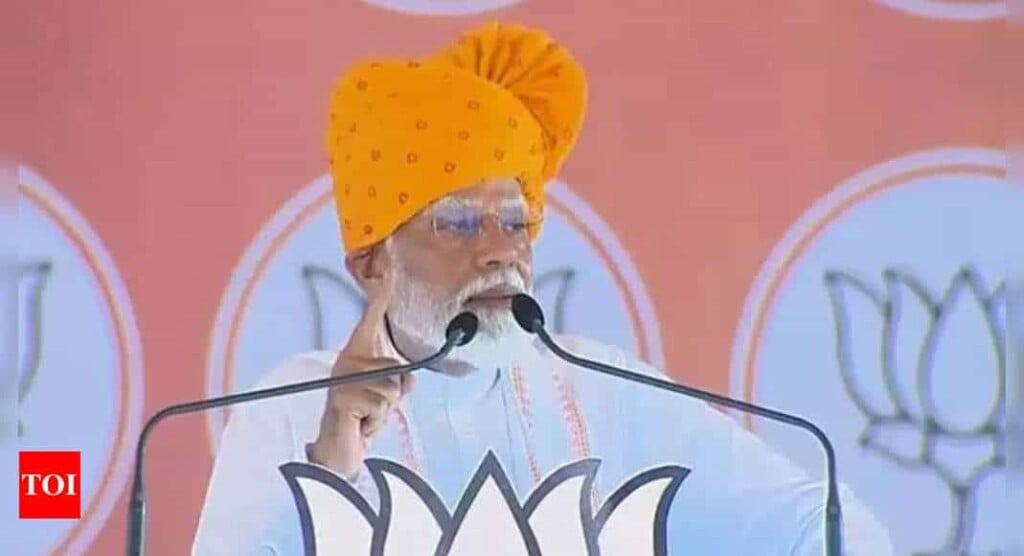
The issue of reservation and affirmative action for marginalized communities such as Scheduled Castes, Scheduled Tribes, and Other Backward Classes has long been a focal point in India's socio-political landscape. Recently, Prime Minister Narendra Modi publicly accused the Congress party of attempting to dilute these communities' rights by snatching their reservation benefits and reallocating them to other groups, particularly Muslims. This charge, made during election rallies, has ignited a heated debate on the politics of reservation, social justice, and vote-bank strategies. This article delves into the historical context, the specifics of Modi's allegations, the Congress party's stance, and the broader implications for India's democracy and social fabric.
Reservation policies in India were instituted as affirmative action measures to uplift historically marginalized communities, primarily Scheduled Castes (SC), Scheduled Tribes (ST), and Other Backward Classes (OBCs). These measures, enshrined in the Indian Constitution, aim to provide equitable opportunities in education, employment, and political representation to these communities that faced centuries of social discrimination and exclusion.
The genesis of reservation can be traced back to the efforts of social reformers and leaders like Dr. B.R. Ambedkar, who championed the rights of Dalits and other marginalized groups during the framing of the Constitution. Over time, the scope and extent of reservations have evolved, with various governments implementing policies to address the changing socio-economic dynamics and demands of different communities.
However, reservation policies have also been a subject of political contestation and debate. Different political parties have adopted varying approaches towards these policies, often influenced by electoral considerations and the need to balance social justice with meritocracy. The tension between preserving the rights of historically disadvantaged groups and addressing the aspirations of other communities remains a complex challenge.
During election rallies in Rajasthan, Prime Minister Narendra Modi accused the Congress party of attempting to snatch the reservation rights of SC, ST, and OBC communities. He alleged that Congress engaged in vote-bank politics that prioritized appeasement of particular groups, specifically Muslims, at the expense of the historically marginalized communities.
Modi referred to Congress’s initiatives in Andhra Pradesh between 2004 and 2010, where attempts were made to extend reservation benefits to Muslims by reallocating quotas originally meant for SCs and STs. According to him, these efforts were thwarted due to legal hurdles and the vigilance of the Supreme Court, which protected the constitutional sanctity of reservations.
He further claimed that in 2011, Congress tried to implement this reallocation nationwide, which he described as a conspiracy to redistribute the nation's wealth and opportunities unfairly. Modi stated that once his government came to power, it reversed these policies, restoring the original reservation framework for SCs, STs, and OBCs.
The Congress party has denied the allegations made by PM Modi, asserting that their policies have always aimed at inclusive development and social justice for all marginalized sections, including SCs, STs, OBCs, and minorities. They argue that reservation is a tool for empowerment and that their initiatives have sought to broaden the scope of affirmative action to other disadvantaged communities as well.
Congress leaders contend that the attempts to introduce reservations for Muslims in Andhra Pradesh were part of a pilot project aimed at addressing socio-economic backwardness in specific regions and were not intended to undermine the rights of SC/ST/OBC communities. They emphasize that such measures were subject to judicial review and democratic processes.
Moreover, Congress accuses the BJP of politicizing sensitive social justice issues to polarize voters and divert attention from governance challenges. They maintain that the reservation system must evolve to reflect current realities and ensure that all disadvantaged groups receive equitable opportunities.
Reservation in India is constitutionally protected under Articles 15 and 16, which prohibit discrimination and allow for affirmative action in education and employment for socially and educationally backward classes. Any attempt to alter reservation benefits must comply with constitutional provisions and withstand judicial scrutiny.
The Supreme Court of India has played a critical role in adjudicating disputes related to reservation, including cases challenging the extension of quotas to new groups or the reallocation of existing reservations. The court has emphasized the need to balance social justice with the principles of equality and meritocracy.
In the context of the allegations against Congress, the judiciary’s vigilance was highlighted as a key factor preventing the unilateral implementation of policies perceived as diluting SC/ST/OBC rights. These legal safeguards ensure that any changes to reservation policies undergo rigorous examination to protect constitutional mandates.
Reservation policies have a profound impact on electoral politics in India, as they influence voter alignments and party strategies. Political parties often engage in vote-bank politics by promising or modifying reservation benefits to secure support from specific communities, leading to complex social coalitions.
PM Modi’s accusations against Congress reflect this dynamic, as both parties seek to consolidate their core voter bases by appealing to the interests of marginalized communities. The debate around reservation has become a tool for political mobilization, with parties framing themselves as protectors or reformers of social justice.
Such politicization, however, risks deepening social divisions and detracting from the broader goal of inclusive development. It also places pressure on policymakers to balance competing demands while maintaining social harmony and constitutional integrity.
The communities directly affected by reservation policies—SCs, STs, OBCs, and minorities—hold diverse perspectives on the ongoing debates. While many members of SC/ST/OBC groups view reservation as essential for overcoming historical disadvantages, there is also concern about attempts to dilute or reallocate these benefits.
Muslim communities, particularly in regions where they face socio-economic challenges, have sought greater inclusion in affirmative action schemes. This has led to demands for sub-categorization of OBCs and the extension of reservations to religious minorities, which remains a contentious issue.
The discourse around reservation often involves balancing the aspirations of various disadvantaged groups, requiring sensitive dialogue and policy formulation that recognizes intersectional identities and regional disparities.
The judiciary has been a pivotal institution in safeguarding the rights of marginalized communities by interpreting constitutional provisions related to reservation and adjudicating challenges to government policies. Its role ensures that any changes to reservation schemes adhere to principles of justice and equality.
Civil society organizations, activists, and social movements have also contributed to raising awareness, advocating for the rights of SC/ST/OBC communities, and holding political parties accountable. Their engagement helps maintain democratic checks and balances in the policymaking process.
Together, the judiciary and civil society act as guardians of social justice, ensuring that affirmative action remains a tool for empowerment rather than political manipulation.
The future of reservation policies in India will likely involve continued debates on expanding, modifying, or refining affirmative action measures to address evolving social realities. Policymakers must consider empirical data, community feedback, and constitutional mandates to design effective and equitable schemes.
Innovations such as sub-categorization within OBCs, economic criteria for reservation, and targeted welfare programs are being explored to enhance the impact of affirmative action. However, these efforts must be carefully balanced to avoid unintended marginalization or social fragmentation.
Ultimately, the goal remains to build a more inclusive society where historical injustices are redressed, and all citizens have equal access to opportunities, fostering national unity and social cohesion.
The allegations by Prime Minister Narendra Modi against the Congress party regarding attempts to snatch the rights of SC/ST/OBC communities bring to light the sensitive and complex nature of reservation politics in India. While the debate underscores the challenges of balancing social justice with political strategies, it also reaffirms the importance of constitutional safeguards, judicial oversight, and inclusive policymaking. As India continues to evolve socially and politically, the reservation system must adapt thoughtfully to ensure that it remains a powerful instrument for empowerment, equity, and national integration rather than a tool for political expediency. Constructive dialogue, empirical assessment, and commitment to constitutional values will be essential to navigate these challenges and advance the cause of social justice for all marginalized communities.
Originally reported by timesofindia.indiatimes.com. Adapted for our readers.
Keep reading
Politics
In August 2025, Zespri, the world’s largest marketer of kiwifruit, announced that the European Commission had approved what it described as the first health…
News
By Engr. Tamunofiniarisa BrownReading Time: 6 Minutes The conflict between Russia and Ukraine is often framed in the media as a simple battle between…
Politics
Twenty-five years after the September 11 attacks, the family of Marine Travis Fuller reflects on his death in the Iraq War, grappling with the…
TAMFIS NIG LTD
Electrical and instrumentation engineering, bid preparation and consulting, IT and software.