Politics
Science vs politics: Kiwi’s long road to EU health-claim approval
In August 2025, Zespri, the world’s largest marketer of kiwifruit, announced that the European Commission had approved what it described as the first health…
TAMFIS NIG LTDRC 8067447CAC ACTIVEFinima, Bonny Island, Rivers State

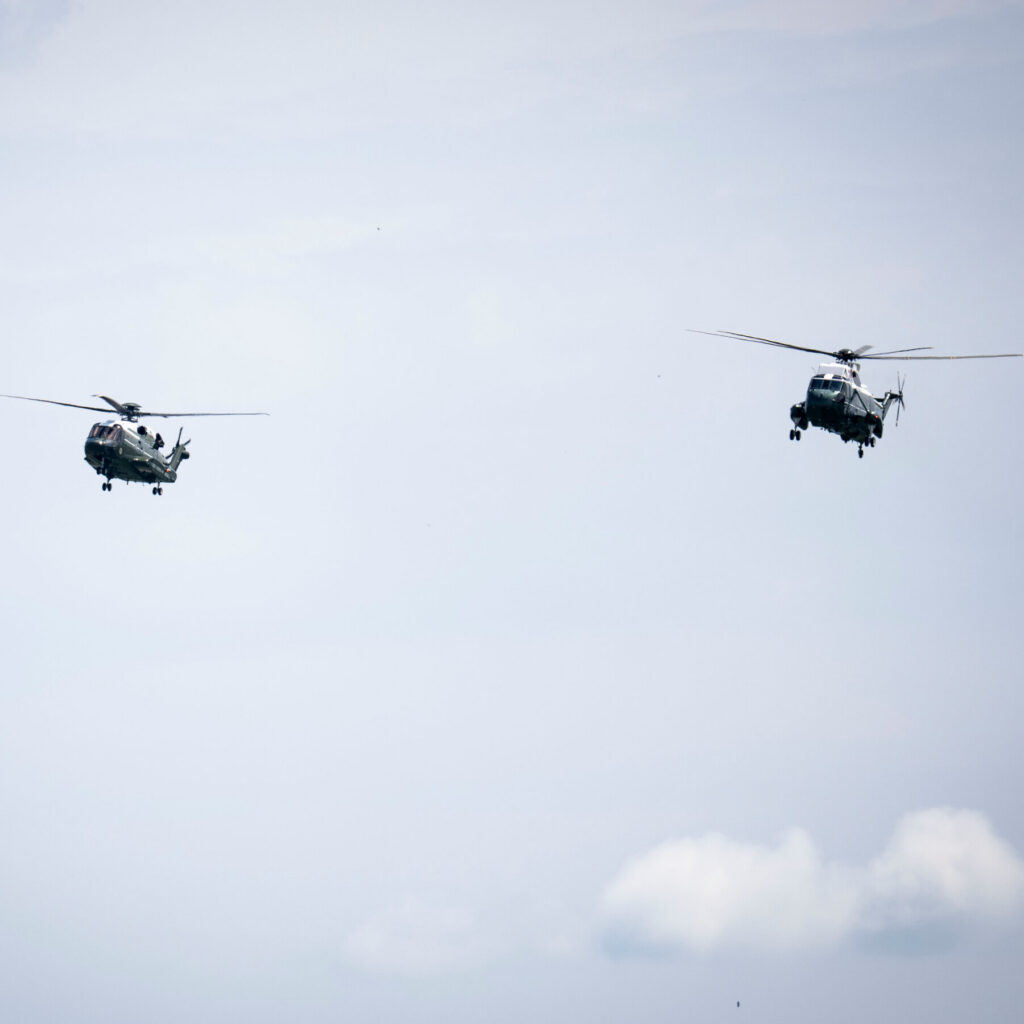
On a busy August day in Washington, D.C., Marine One, the helicopter designated for presidential transport, came alarmingly close to a commercial passenger jet operated by Envoy Air. The proximity of less than a mile between the two aircraft has reignited discussions about the safety and management of air traffic in the heavily congested skies around the nation’s capital. This incident underscores the intricate challenges faced by air traffic controllers and raises questions about protocols governing the movement of high-profile and commercial flights in restricted airspace.
On Tuesday, Marine One, responsible for ferrying the President of the United States, flew within less than a mile of an Envoy Air passenger jet. This near encounter occurred in the restricted and highly trafficked airspace surrounding Washington, D.C. While no collision occurred, the proximity was close enough to prompt concern among aviation experts and regulators.
The incident highlights the unique challenges posed by the coexistence of military, presidential, and commercial flights in a relatively confined airspace. Marine One operates under specific security protocols that often require rapid and flexible routing, which can complicate coordination with commercial air traffic.
Given the high stakes involved in presidential transport, even a near miss prompts a thorough review of air traffic management practices to ensure such close encounters are minimized in the future.
Washington’s airspace is among the most complex and restricted in the United States. It includes a series of security zones, no-fly areas, and special flight rules designed to protect the capital and its high-profile occupants. These restrictions require air traffic controllers to manage a dense mix of government, military, and commercial flights, often under tight security constraints.
The close proximity of Marine One to a commercial flight reveals the delicate balancing act controllers must perform. They need to ensure safety while accommodating the unpredictable movements of presidential transport, which can deviate from standard flight paths for security reasons.
Moreover, the presence of multiple airports in the region, including Ronald Reagan Washington National Airport and Washington Dulles International Airport, adds layers of complexity. Each airport handles a significant volume of commercial traffic, which must be carefully coordinated with restricted and military flights.
The overlapping airspace of these airports, combined with the security-imposed restrictions, creates a challenging environment where controllers must maintain strict separation standards while managing dynamic flight operations.
Air traffic controllers in the Washington area operate under intense pressure to maintain separation between aircraft. The incident involving Marine One and the Envoy Air flight raises questions about whether existing protocols are sufficient or if additional measures are needed.
Marine One’s operations are governed by strict security protocols that sometimes necessitate sudden changes in flight paths. These maneuvers can challenge controllers’ ability to maintain safe distances from other aircraft, especially in congested airspace.
Experts suggest that improved communication and coordination between military and civilian controllers could reduce risks. Additionally, advances in radar technology and real-time tracking systems may help provide better situational awareness, enabling controllers to anticipate and manage potential conflicts more effectively.
Furthermore, integrating data from various sources and enhancing controller training on handling unpredictable flight patterns could strengthen safety margins in this sensitive airspace.
While no accident occurred, the near miss has implications for public confidence in the safety of air travel around the capital. Passengers and the general public expect rigorous safety standards, especially in an area with heightened security concerns.
The incident serves as a reminder of the potential risks when different types of flights share limited airspace. It also underscores the need for continuous review and improvement of air traffic management practices to prevent future close calls.
Regulatory bodies may consider this event a catalyst for revisiting airspace management policies, potentially leading to stricter controls or enhanced training for controllers managing presidential and commercial flights.
Public trust in aviation safety depends on transparent investigations and proactive measures to address any identified vulnerabilities exposed by such incidents.
Marine One’s role in presidential transport requires a balance between security imperatives and aviation safety. The helicopter’s flight paths are often unpredictable to reduce security risks, but this unpredictability can complicate air traffic control efforts.
Security measures necessitate rapid response capabilities and sometimes non-standard flight routes, which can increase the complexity of maintaining safe distances from other aircraft. This incident highlights the ongoing challenge of integrating security protocols with standard aviation safety practices.
Future strategies may involve enhanced coordination protocols between security agencies and aviation authorities to ensure that presidential transport does not compromise overall airspace safety.
Developing specialized procedures and communication channels tailored to presidential flights could help mitigate risks while preserving necessary security measures.
The near encounter between Marine One and a commercial passenger jet serves as a critical reminder of the complexities involved in managing Washington’s restricted and congested airspace. While no incident occurred, the event highlights the need for continuous vigilance, improved coordination, and technological enhancements to ensure the safety of all flights operating near the nation’s capital. As air traffic volumes grow and security demands evolve, aviation authorities and security agencies must work closely to balance the imperatives of safety and security, reducing risks and maintaining public confidence in air travel. Ongoing collaboration and investment in air traffic control infrastructure will be essential to prevent future close calls and safeguard the skies over Washington, D.C.
Source: Helicopter Carrying Trump Flies Near Passenger Jet in Washington Airspace via www.nytimes.com.
This article was curated with AI assistance.
Keep reading
Politics
In August 2025, Zespri, the world’s largest marketer of kiwifruit, announced that the European Commission had approved what it described as the first health…
News
By Engr. Tamunofiniarisa BrownReading Time: 6 Minutes The conflict between Russia and Ukraine is often framed in the media as a simple battle between…
Politics
Twenty-five years after the September 11 attacks, the family of Marine Travis Fuller reflects on his death in the Iraq War, grappling with the…
TAMFIS NIG LTD
Electrical and instrumentation engineering, bid preparation and consulting, IT and software.