
Politics
Science vs politics: Kiwi’s long road to EU health-claim approval
In August 2025, Zespri, the world’s largest marketer of kiwifruit, announced that the European Commission had approved what it described as the first health…
TAMFIS NIG LTDRC 8067447CAC ACTIVEFinima, Bonny Island, Rivers State

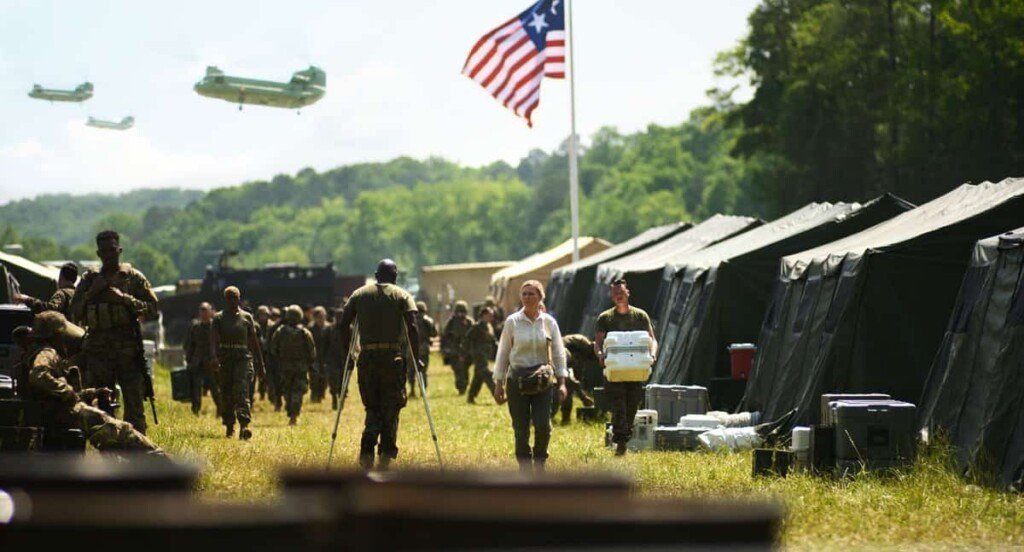
Alex Garland’s film 'Civil Battle' emerges as a daring exploration of the intense ideological conflict consuming modern America. By refusing to cast either side as purely right or wrong, Garland crafts a narrative that examines the motivations, fears, and misconceptions driving both left-wing and right-wing factions. This article evaluates the film’s thematic depth, its reflection of real-world tensions, and Garland’s unique perspective on the political schism that threatens the nation’s cohesion.
Set against a backdrop of severe political polarization, 'Civil Battle' resonates deeply with contemporary societal fractures in the United States. Garland’s screenplay was developed during a period marked by rising extremism, conspiracy theories, and a volatile political climate. This environment influenced the film’s depiction of a country on the verge of internal collapse, reflecting anxieties prevalent across the nation.
The film’s narrative draws inspiration from real-world movements, including the Boogaloo movement, a loosely organized far-right extremist group that gained media attention in early 2020. While Garland and the film’s distributors declined direct commentary on these influences, the thematic parallels suggest a conscious or subconscious integration of such ideologies into the story’s fabric.
By embedding these elements, Garland anchors 'Civil Battle' in a recognizable reality, making the fictional conflict both plausible and urgent. The film’s portrayal of radicalized groups and their motivations offers viewers a window into the complex dynamics fueling political unrest today.
Garland’s approach to depicting ideological divides is notably nuanced, emphasizing the complexity rather than the binary of right versus left. In interviews, he described the conflict as fundamentally ideological arguments about governance and economic policy, rather than clear-cut battles of right and wrong. This framing challenges audiences to reconsider preconceived notions about political identities.
He distinguishes between low taxation to stimulate economic growth and higher taxation aimed at supporting social welfare, presenting these as differing but valid ideological positions. This perspective encourages a more empathetic understanding of opposing viewpoints, suggesting that the conflict is less about morality and more about competing visions for society’s future.
However, Garland’s interpretation has faced criticism for oversimplifying or misrepresenting the broader sociopolitical realities. Some argue that his libertarian-tinged viewpoint risks glossing over the more dangerous aspects of far-right extremism and systemic inequalities that define the current political landscape.
A significant theme in 'Civil Battle' is the impact of media and cultural references on radicalization, especially among young, white men on the far-right. The film highlights how these individuals often co-opt misunderstood or ambiguous artworks, such as 'The Matrix' or 'Fight Club,' to construct their ideological narratives.
Political analyst Jared Yates Sexton notes that this phenomenon reflects a broader cultural appropriation of art as a tool for justifying extremist beliefs. This misuse of media contributes to the perpetuation of conspiracy theories and white supremacist rhetoric, which have become increasingly mainstreamed in certain circles.
By incorporating this insight, Garland’s film underscores the dangerous interplay between culture and politics, illustrating how symbolic references can fuel real-world violence and division. It invites viewers to critically examine the media they consume and its potential for manipulation.
Unlike many politically charged films that demonize one side, 'Civil Battle' attempts to portray both the left and right wings with complexity and depth. Garland’s narrative avoids simplistic moral judgments, instead presenting characters whose beliefs stem from genuine concerns, fears, and aspirations.
This balanced depiction challenges audiences to empathize with individuals across the spectrum, recognizing that ideological opponents are often motivated by similar desires for security, identity, and justice. It also reflects Garland’s belief that ideological conflicts are fundamentally debates about how to govern society rather than battles between good and evil.
However, this approach has sparked debate regarding its effectiveness. Critics argue that by equating the two sides, the film risks minimizing the real threats posed by extremist ideologies, particularly those associated with white supremacy and authoritarianism.
'Civil Battle' employs brutal and realistic violence to convey the stakes of ideological extremism and civil unrest. Scenes depicting tanks rolling into Washington, DC, and street-level clashes immerse viewers in a harrowing vision of societal breakdown.
This visceral portrayal serves to evoke a strong emotional response, fostering an aversion to the chaos and destruction that political polarization can unleash. Garland has expressed that one of his intentions is for audiences to feel this aversion, prompting reflection on the consequences of radicalization and division.
Yet, the depiction of violence also raises questions about its impact on different audience segments. While many may interpret it as a cautionary tale, there is concern that extremist viewers could perceive it as validation or inspiration, highlighting the complex reception of politically charged media.
Upon its premiere at SXSW and subsequent release, 'Civil Battle' received mixed reactions from critics and audiences alike. Praise focused on the film’s ambition, cinematic craftsmanship, and willingness to tackle difficult subjects without resorting to caricature.
Conversely, some critics took issue with Garland’s framing of ideological conflict, arguing that it blurs important distinctions between legitimate political discourse and dangerous extremist movements. The director’s comments on the nature of left and right wing ideologies fueled further debate about the film’s political stance.
This polarized reception reflects the broader challenges artists face when addressing contentious political topics. 'Civil Battle' serves as a catalyst for conversation, forcing viewers to confront uncomfortable truths about America’s divisions and the narratives that shape them.
'Civil Battle' provides valuable insights into the mechanisms driving political polarization in the United States. By humanizing individuals on both sides and illustrating their motivations, the film encourages a more empathetic and critical engagement with current sociopolitical issues.
Garland’s work highlights the dangers of ideological echo chambers, media manipulation, and cultural misappropriation in deepening divides. It suggests that overcoming polarization requires acknowledging the complexity of beliefs and the underlying fears that fuel conflict.
Ultimately, the film challenges audiences to reflect on their own perceptions and biases, advocating for dialogue over demonization. In doing so, it contributes to broader discussions on how societies might bridge divides and prevent the escalation of internal conflicts.
Garland has stated that the core message he hopes audiences will take from 'Civil Battle' is one of aversion—aversion to the violence, hatred, and chaos spawned by ideological extremism. His vision is to prompt reflection on the costs of division and the urgent need for understanding.
The film’s refusal to offer easy answers or clear heroes and villains aligns with this goal, instead presenting a mirror to society’s fractured state. It invites viewers to grapple with uncomfortable realities and consider the human consequences of political conflict.
While interpretations of this message vary, 'Civil Battle' undeniably provokes important conversations about the nature of ideology, identity, and the future of democracy in a polarized world.
'Civil Battle' stands as a compelling and thought-provoking cinematic examination of America’s deepening political schism. Through its nuanced depiction of ideological conflict, realistic portrayal of violence, and engagement with contemporary extremist influences, Alex Garland challenges audiences to move beyond simplistic binaries and confront the complexities underlying societal division. While the film’s approach invites debate and controversy, it ultimately serves as a critical cultural artifact urging empathy, reflection, and dialogue in an era marked by fragmentation and unrest. As political polarization intensifies globally, 'Civil Battle' offers a timely and necessary exploration of the forces shaping our collective future.
Originally reported by wired.com. Adapted for our readers.
Keep reading
Politics
In August 2025, Zespri, the world’s largest marketer of kiwifruit, announced that the European Commission had approved what it described as the first health…
News
By Engr. Tamunofiniarisa BrownReading Time: 6 Minutes The conflict between Russia and Ukraine is often framed in the media as a simple battle between…
Politics
Twenty-five years after the September 11 attacks, the family of Marine Travis Fuller reflects on his death in the Iraq War, grappling with the…
TAMFIS NIG LTD
Electrical and instrumentation engineering, bid preparation and consulting, IT and software.