Politics
How Minnesota Figures Into the Presidential Politics of Insulin Prices
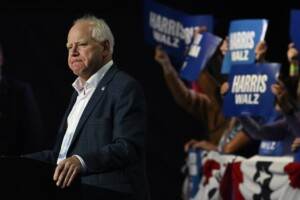
Politics tamfitronics Minnesota Gov. Tim Walz attends a rally in Asheville, North Carolina, on Sept. 17. Minnesota led the way on in...
TAMFIS NIG LTDRC 8067447CAC ACTIVEFinima, Bonny Island, Rivers State

With the 2024 U.S. election looming, the intersection of faith and politics has once again taken center stage among evangelical communities. More than 300 Christian leaders from diverse backgrounds have united in endorsing the 'Confession of Evangelical Conviction,' a statement that calls believers to prioritize the Gospel and Christian character above political allegiance. This collective effort aims to foster respectful dialogue and thoughtful engagement in the public sphere, encouraging Christians to evaluate candidates beyond mere promises or electoral success. In this article, we delve into the origins, messages, and impact of this confession, highlighting its role as a pastoral call to unify and elevate Christian witness during a politically charged season.
As political tensions intensify ahead of the 2024 election, evangelical leaders have sought ways to navigate the complex relationship between faith and politics. The 'Confession of Evangelical Conviction' emerged as a response to growing polarization within Christian circles, aiming to provide a common ground rooted in biblical principles. This statement was signed by over 300 leaders, signaling a broad coalition across denominational and ideological lines.
The confession articulates a shared belief that Christian engagement in politics should reflect the character and teachings of Jesus Christ, rather than partisan loyalty or political expediency. It encourages believers to assess candidates and policies through the lens of the Gospel, emphasizing integrity, humility, and love. This approach seeks to transcend political divisions and foster unity among evangelicals.
Importantly, the confession is not targeted at any specific individual or party. Instead, it serves as a pastoral appeal to the Church to engage in the public square with grace and truth. Leaders from diverse backgrounds—including Pentecostal, evangelical, progressive, and traditional streams—have endorsed the document, underscoring its inclusive and unifying intent.
Central to the confession is the call for Christians to prioritize the Gospel above political affiliations. The document stresses that allegiance to Christ must supersede loyalty to any candidate or party. This emphasis invites believers to reflect on how their faith informs their political decisions and public behavior during the election season.
Another significant message is the encouragement to evaluate political candidates based on character rather than promises or political success. The confession highlights the importance of integrity, honesty, and moral consistency, urging voters to look beyond campaign rhetoric. This focus on character aligns with biblical teachings about leadership and accountability.
Moreover, the confession advocates for respectful and civil discourse. It warns against name-calling, harsh criticism, and uncivil behavior that can damage the Church’s witness. By promoting dialogue marked by grace and truth, the statement aims to cultivate a spirit of unity and mutual respect among Christians, regardless of political differences.
The confession has been signed by a diverse group of influential Christian leaders, including Russell Moore, former head of the Southern Baptist Convention’s Ethics and Religious Liberty Commission, and Rev. Gabriel Salguero, president of the National Latino Evangelical Coalition. Their participation reflects a broad spectrum of evangelical thought and experience.
Other signatories include Revs. Galen Carey and Walter Kim of the National Association of Evangelicals, progressive author Shane Claiborne of Red Letter Christians, Christian rapper Lecrae, and megachurch pastor Joel C. Hunter. This mix of voices—from conservative to progressive—demonstrates the confession’s wide-reaching appeal and commitment to unity.
Despite some signatories being vocal critics of former President Donald Trump and his evangelical supporters, the confession deliberately avoids partisan language. Leaders like Salguero emphasize that the document is a pastoral call rather than a political statement, aiming to foster dialogue grounded in Christ’s teachings rather than political agendas.
The confession underscores the vital role that faith plays in shaping Christian political engagement. It calls believers to bring their spiritual convictions into the public arena thoughtfully and prayerfully. This approach encourages Christians to engage not as partisans but as followers of Christ, seeking justice, mercy, and humility.
By framing political involvement as a Gospel-centered endeavor, the statement challenges Christians to balance grace and truth without compromising biblical principles. It calls for a public witness marked by love and respect, even amid disagreement. This perspective aims to elevate political discourse and avoid the pitfalls of polarization.
The confession also reminds believers that their ultimate allegiance is to God, not any earthly power. This theological foundation encourages Christians to hold political leaders accountable while maintaining a spirit of forgiveness and reconciliation. It fosters a posture of humility and service rather than domination or division.
The 'Confession of Evangelical Conviction' has the potential to influence evangelical voters by providing a framework for discerning political choices through a biblical lens. It encourages individuals to look beyond party lines and campaign promises, focusing instead on the character and values of candidates.
For evangelical communities, the confession offers a unifying document that transcends internal divisions. By rallying around shared convictions, churches and ministries can foster healthier conversations about politics, reducing conflict and promoting mutual understanding. This unity can strengthen the Church’s collective witness during the election.
Additionally, the statement may inspire greater engagement in the political process that is both informed and prayerful. It invites believers to participate actively but responsibly, emphasizing the importance of integrity and civility. This balanced approach could help reshape evangelical involvement in politics in a more constructive and Gospel-centered manner.
While the confession has been widely praised for its call to unity and Gospel-centered engagement, it has also faced some criticism. Some observers question whether such a statement can genuinely bridge deep political divides within evangelicalism, especially given the highly charged nature of the 2024 election.
Others express concern that the document’s emphasis on character and civility might be interpreted as a call for political neutrality or disengagement, potentially diluting the prophetic voice of the Church. These critics argue that faithful political engagement sometimes requires boldness that transcends polite discourse.
Despite these challenges, signatories maintain that the confession neither promotes passivity nor ignores political realities. Instead, it seeks to encourage a posture that combines conviction with compassion, allowing Christians to witness authentically without surrendering their commitment to truth and justice.
Rev. Gabriel Salguero, a key figure behind the confession, expressed hope that the document would be seen as a pastoral call rather than a political statement. He emphasized the importance of engaging public issues ‘in the spirit of Christ’ and avoiding language that damages the Church’s credibility.
Russell Moore highlighted the confession’s balance of grace and truth, noting that it challenges evangelicals to hold firm to biblical convictions while refraining from harsh rhetoric. This balance is crucial for maintaining a credible Christian witness in a polarized society.
Progressive voices like Shane Claiborne appreciate the confession’s inclusive nature, seeing it as an opportunity to build bridges across evangelical divides. For Claiborne and others, the document represents a hopeful step toward a more unified and Gospel-driven political engagement among Christians.
While the immediate focus of the confession is the 2024 election, its implications extend far beyond this political moment. By establishing a framework for Gospel-centered political engagement, the statement sets a precedent for how evangelicals might approach future elections and social issues.
The confession invites ongoing reflection about the role of faith in public life, encouraging churches to cultivate a culture of respectful dialogue and principled involvement. This legacy could help mitigate polarization and foster greater unity within evangelicalism over time.
Ultimately, the confession challenges Christians to integrate their faith authentically into every aspect of civic life. Its long-term impact may be measured not only by voter decisions but by the Church’s ability to embody Christ’s love and truth in a fractured political landscape.
The 'Confession of Evangelical Conviction' represents a significant moment of unity and reflection within the evangelical community as the 2024 election approaches. By calling believers to prioritize the Gospel, evaluate candidates based on character, and engage in respectful dialogue, the confession offers a timely and necessary framework for political involvement rooted in faith. Its broad endorsement across diverse evangelical voices underscores a shared commitment to uphold Christ’s teachings amid a polarized political climate. As Christians navigate this critical election season, the confession serves as both a reminder and an invitation to embody grace, truth, and humility in public life—principles that hold enduring value beyond any single election.
Originally reported by crosswalk.com. Adapted for our readers.
Keep reading
Politics
Politics tamfitronics Minnesota Gov. Tim Walz attends a rally in Asheville, North Carolina, on Sept. 17. Minnesota led the way on in...
Politics
Deji Adeyanju; Niger State Mining Victims Human rights lawyer and activist, Deji Adeyanju, has accepted his appointment as a member of the Federal Government’s…
Politics
Democracy, Featured, Global, Global Governance, Headlines, International Justice, IPS UN: Inside the Glasshouse, TerraViva United Nations UNITED NATIONS, Sep 11 2026 (IPS) – When…
TAMFIS NIG LTD
Electrical and instrumentation engineering, bid preparation and consulting, IT and software.